
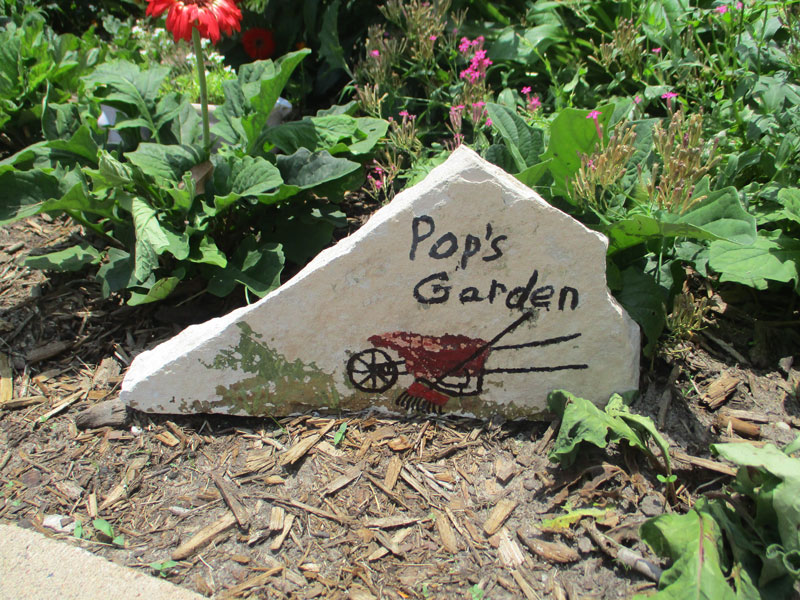
Pop’s garden … from the ground up – by Diane Morey Sitton
It’s not unusual to find a small table at the end of John and Mary Hayes’ driveway filled with fresh veggies and a bucket of colorful cut flowers. The bounty is excess from the Hayes’ garden, and it’s there for the taking!
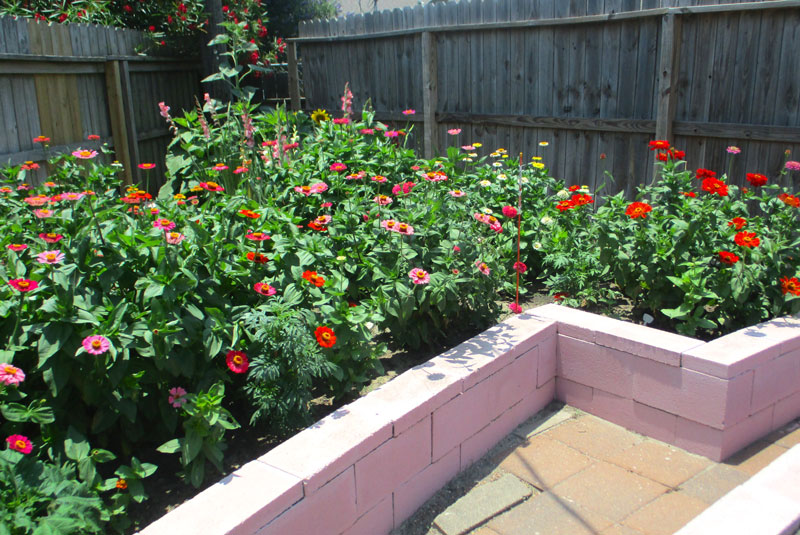
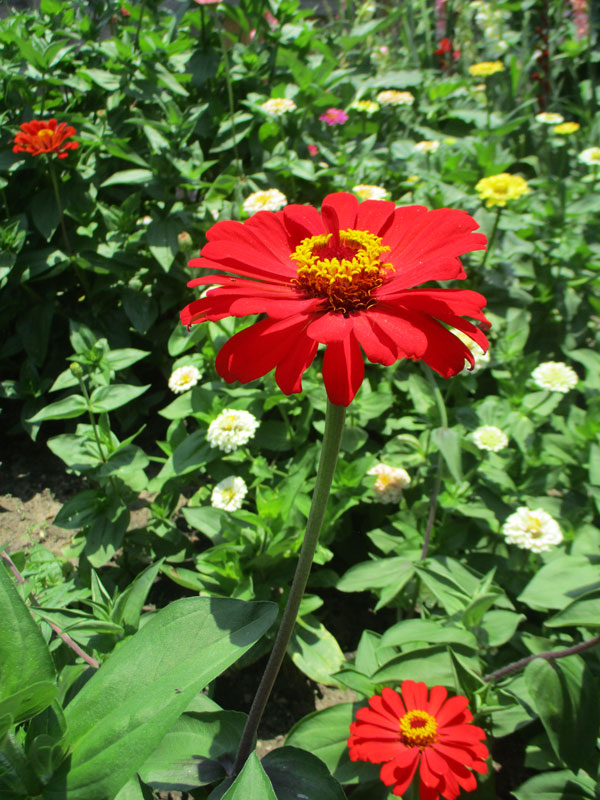
“Everybody likes getting a bouquet of flowers,” says John. “I grow marigolds and zinnias from seed. Mary likes cut flowers, and I enjoy growing them.”
Indeed. Beginning in late January each year, the dedicated gardener spends three hours a day in the garden — planting, watering, weeding, picking, dead heading, and doing whatever else may be required to maintain the numerous theme gardens that wrap around the couple’s Galveston home.
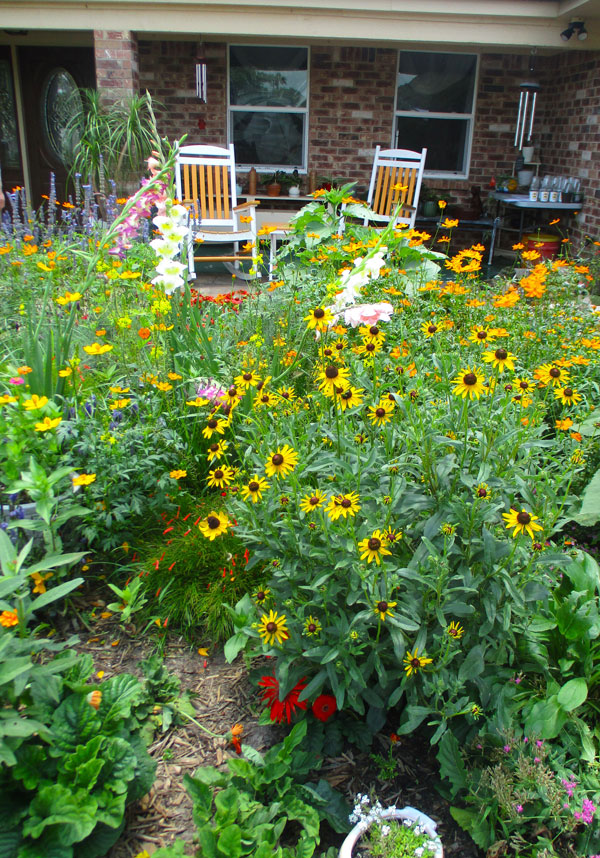
A sun-splashed cottage garden dominates the front yard … a genuine traffic–stopper and pollinator paradise filled with annual and perennial plants including gladiolus, Mexican petunia, Mexican heather, blanket flower, black-eyed Susan, blue sage and Gerbera daisy. Milkweed attracts monarch butterflies.
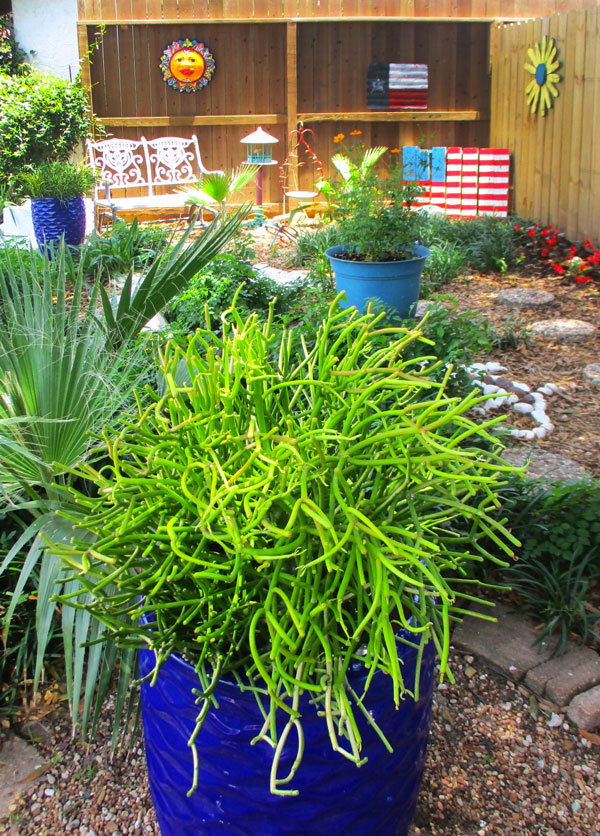
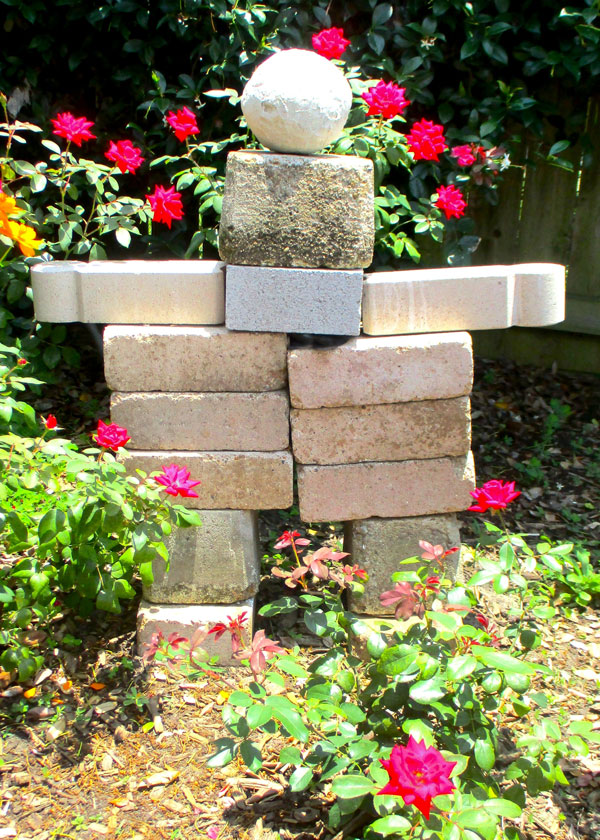
Nearby, begonia, agapanthus, pygmy palm, English ivy and other shade-tolerant varieties thrive under the far-reaching canopy of a live oak tree. “It’s a wildlife garden of sorts,” jokes John, referring to the turtles, geckos, birds and other garden-art creatures – a dozen or so different creatures, in all– that reside there. John handcrafted many of the figures from Quikrete during Covid, his “nothing-to-do period”. He constructed the U.S. flag out of a pallet; he made the daisy on the fence out of pickets.
Fifty rose bushes, representing 12 varieties, fringe the walkway that winds beside the house.
“Every year or so I toss in wildflower seeds to see what comes up,” he says. “I have coreopsis in the rose garden. Last year’s seeds produced black-eyed Susan. I usually get three or four different types of flowers.”
Once past the red gate and adjoining jasmine-covered arbor, the serendipitous practice of seed tossing gets put aside. Here, in the back garden raised beds, not much is left to chance.
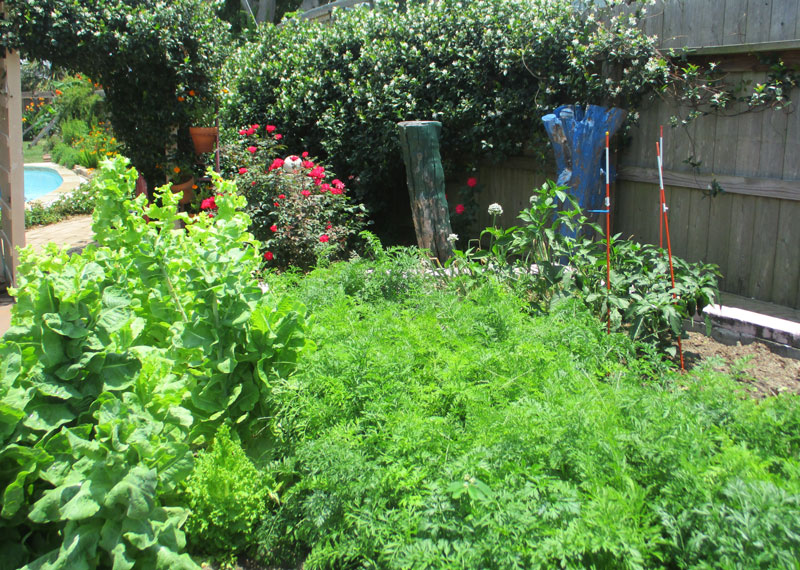
John starts English peas, beets, spinach, radishes and beans in early January and February. The early-season favorites are followed by basil, carrots, leaf lettuce, kale, white onions, red onions and four varieties of peppers. When veggies play out, flowers take their place. Later, in fall, John plants more veggies to replace the flowers.
“The first step to successful gardening is good dirt,” he explains. “My secret is compost.
“It’s difficult to plant in the ground in Galveston. There’s about six inches of soil, then you’re in sand. You’ve got to create raised beds or grow in containers. I supplement and build up the beds with my own home-grown compost.”
John makes his compost in a large plastic bin. He tosses in flowers, veggies, peelings and scraps from the garden. He doesn’t use grass clippings.
In addition, John avoids using pesticides and chemicals. “I pull the weeds by hand,” he says. “I use organic fertilizer.”
His advice to beginning gardeners is threefold: (1) Don’t plant what doesn’t belong in Texas. (2) Use the best dirt possible. (3) Meet plants’ needs for sun and shade. “You can’t expect a sun-lover to grow in shade or a shade-lover to thrive in sun,” he says.
To the delight of neighbors and passersby, John practices what he preaches. Each season veggies and flowers adorn his garden as well as the small table at the end of the driveway.