
Evergreen wisteria – a plant to know
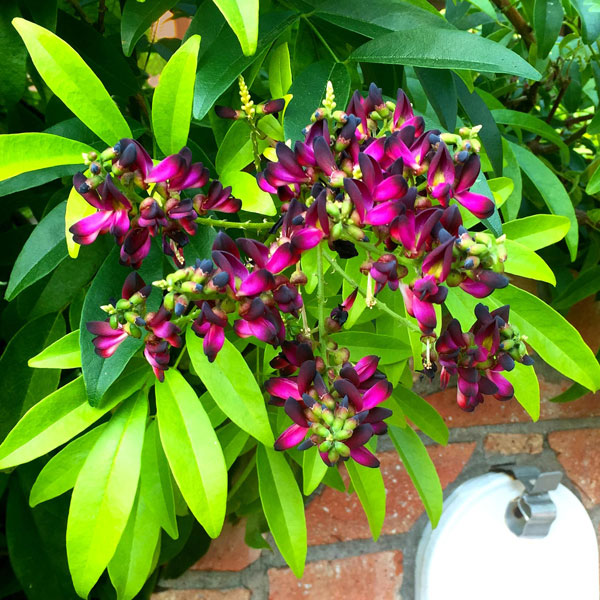
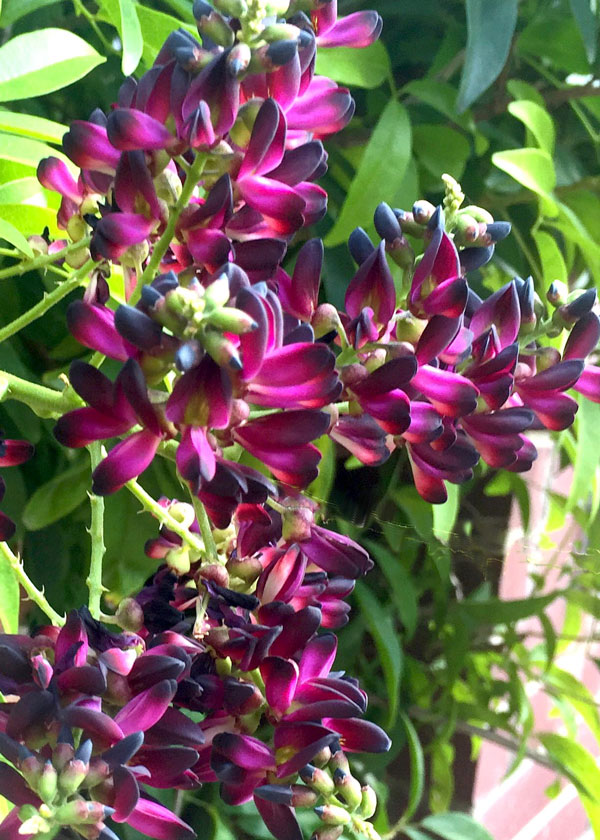
You don’t come across this handsome vine very often, but when you do, you’ll probably remember it. It somewhat resembles spring-flowering wisteria, but its flowers are a rich, royal burgundy color, and they appear in late summer into early fall (now). And two other differences have to do with its foliage and stem growth. The plant is evergreen, and they aren’t as aggressive.
That said, let’s outline some of the important things.
Facts you’ll want to know…
• Common name: Evergreen wisteria (but not a true wisteria)
• Scientific name: Millettia reticulata, named for the 19th Century plant collector Charles Millet who worked for the East India Company in Canton and Macao. He sent numerous plant specimens to Glasgow’s botanical garden. The species name “reticulata” refers to the net-like veins in the leaves.
• Plant Family: Fabaceae, or the legume family.
• Native home: China, Northeast Vietnam, and Taiwan.
• Mature size: 15-20 ft. tall and 4-10 ft. wide. Space plants 6 ft. apart.
• Soil needs: Highly organic loam soil with pH of 6.0-8.0.
• Preferred exposure: Full to part sun. If shade, afternoon shade is best.
• Winter-hardy in U.S.: USDA Zones 8-11 (May suffer some damage as far north as DFW in extreme cold.)
• Great pollinator plant.
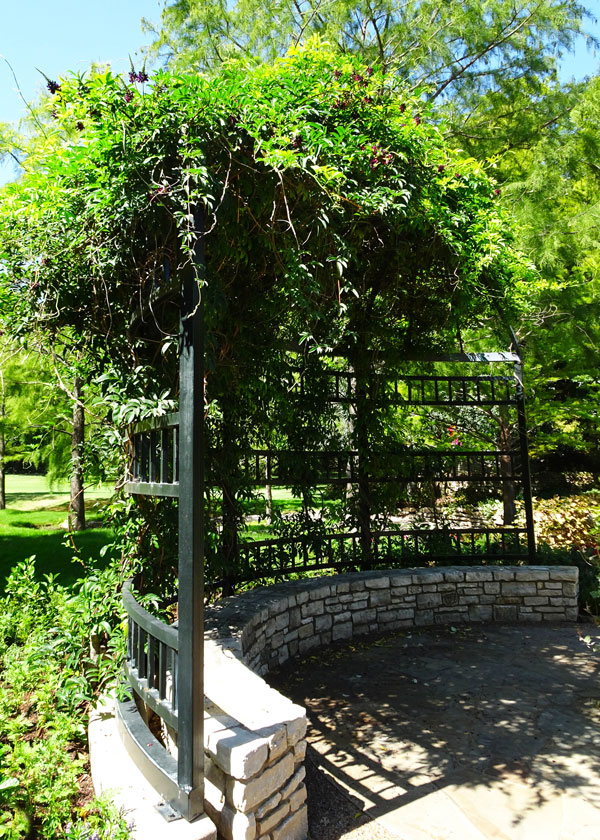
• Best landscape uses: Vertical spaces on trellises, overhead arbors and pergolas, or trained on wall or other vertical structure. Vines become heavy with age, so supports should be substantial.
Note: This plant may be scarce in the retail nursery trade. You’re most likely to find it in full-service independent retail garden centers where you can talk to the actual buyer. If all else fails, it roots easily from cuttings taken in late spring.