
Carts and wagons roll into fall – by Diane Morey Sitton
This time of year it’s hard to resist the urge to fill carts and wagons with pumpkins, mums and other fall favorites. Goat carts, aged wheelbarrows, vintage utility garden carts, antique wagons, little red wagons, even old fertilizer spreaders have always invited fall displays.

Fact is, though, with their quaint wheels, weathered finishes, varied sizes and captivating shapes, carts and wagons make useful and eye-catching garden centerpieces all year long.
Shop for them at flea markets, antique malls, resell shops, yard sales, and estate sales. You might even find an old discarded garden dump cart or kid’s wagon at the curb on trash day. Regardless of how you plan to use your new cart or wagon, clean it and check it for rust. If necessary, apply a weather-resistant sealant to protect its patina.

It’s not too late to create your own fall display using a cart or wagon as a foundation. Spread loose hay in the bed beneath a pile of pumpkins, gourds and winter squash. Include corn shucks and dried sunflower seed heads. If you prefer, create a monotone display using orange pumpkins and orange blooming mums. Accompany the vignette with a scarecrow.

When harvest season gives way to the holiday season, replace the pumpkins, hay and other items with pine branches, cedar boughs, pinecones and poinsettias. Add to the charm with a handmade sign bearing a holiday greeting.
Besides using a cart or wagon to celebrate the season, you can transform it into a mini-garden dedicated to flowers, ferns, salad fixins’, herbs or succulents. You can either place potted plants directly in the bed or fill the bed with potting mix and plant directly into the cart or wagon.
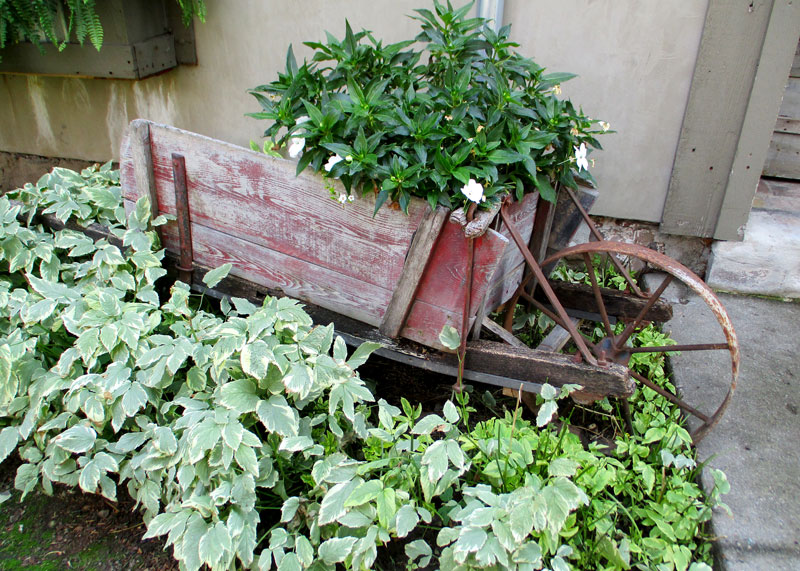
If you use potted plants, protect the bottom of the cart from moisture with a layer of plastic, set the pots in saucers, or remove the pots when it’s time to water. In most cases, if you plant directly into a cart or wagon, you’ll have to line it with landscape fabric to hold the soil.
Planted with flowers and placed at entrances, mini-gardens say “welcome.” Planted with herbs and salad greens, mini-kitchen gardens say “let’s eat.” Position them outside the kitchen door where you can conveniently harvest thyme, chives, mint, lettuce, carrots, and other salad fixins’.
Old wooden wagons with solid, flat beds and low sides (or no sides) are ideal for showcasing collections of watering cans, primitive tools and other garden collectibles.
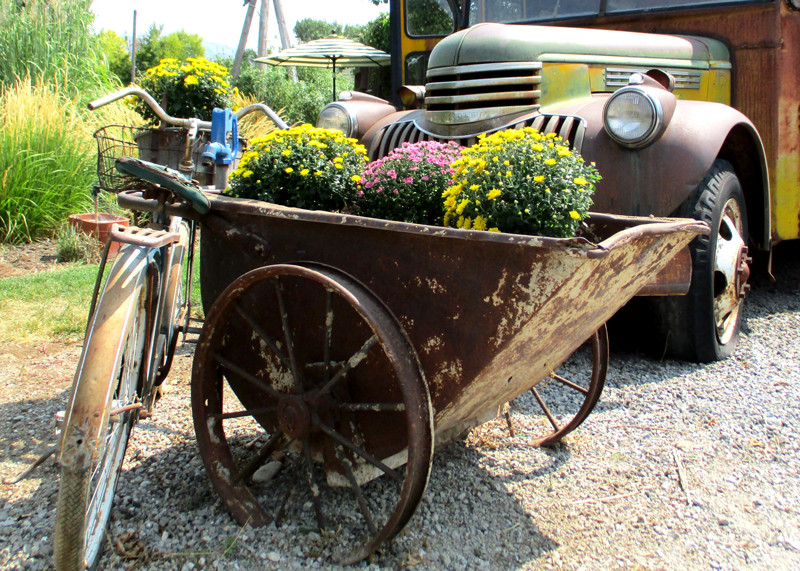
Just as gardeners vary from one another in the “cargo” they place in carts and wagons, some gardeners prefer to restore their cart or wagon. Others, relishing the peeling paint, rust-crusted metal, and fading logos, display it “as is.” Still others paint carts and wagons with folksy designs.
But whether you dress them up or dress them down, or whether you use them for seasonal displays or mini-gardens, carts and wagons are a garden asset all year long.