
Lindheimer’s Muhly – by Steve Huddleston

Complementing the usual woodiness and stiffness of shrubs, ornamental grasses offer a softer, graceful look in the landscape. They create movement in the garden as their upright or fountain-like blades and decorative inflorescences twirl and dance in the wind currents.

Lindheimer’s muhly is a native Texas grass that offers all these qualities and more. It has fine foliage growing in a fountain-like form. It’s tall, to 5 ft., and wide, to 4 ft., and it maintains its striking habit through the winter even though most of its foliage will be dormant.

This is a grass that looks great with other native plants, but it’s equally at home with plants introduced from other parts of the world. Use it as an accent plant or as a backdrop to a perennial border. Plant it where birds will be able to access it as they’re building their nests. Everybody, you see, is going to like this lovely ornamental grass.
Here’s what you’ll want to know…
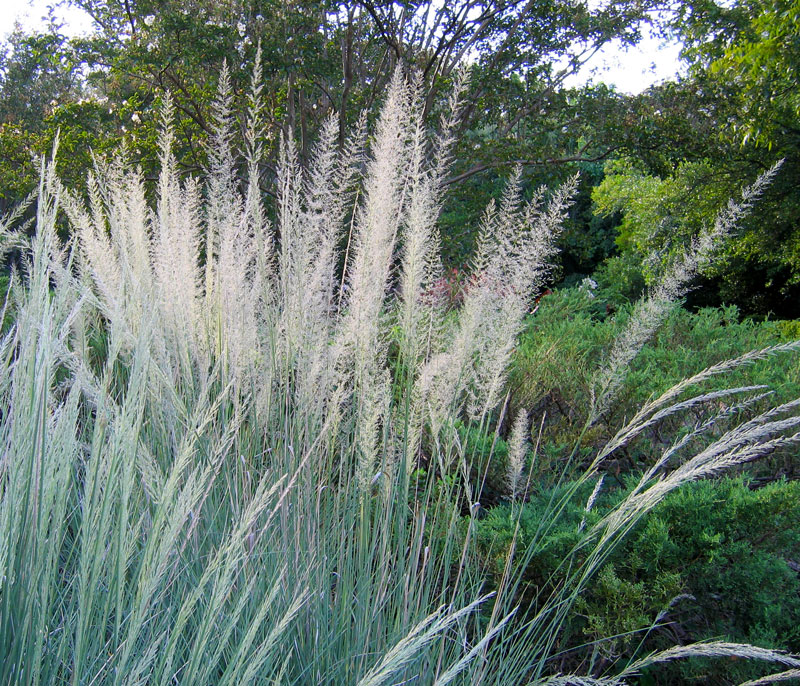
• Common name: Lindheimer’s muhly
• Scientific name: Muhlenbergia lindheimeri
• Name Attributions: The genus is named for Gotthilf Heinrich Ernst Muhlenberg (1753-1815), a German-educated Lutheran minister but also an accomplished botanist, chemist and mineralogist. The species is named after Ferdinand Jacob Lindheimer (1801-1879), who is often called the Father of Texas Botany because of his work as the first permanent resident plant collector in Texas. He discovered several hundred plant species, and his name is used to designate 48 species and subspecies of plants.
• Plant Family: Poaceae, the Grass Family.
• Native range: Edwards Plateau of Central Texas south to northern Mexico.
• Hardiness Zones: USDA Zones 6a-9b. That includes most of Texas.
• Sun requirements: Full sun. Light afternoon shade for a couple of hours in summer could be tolerated (but not desired!).
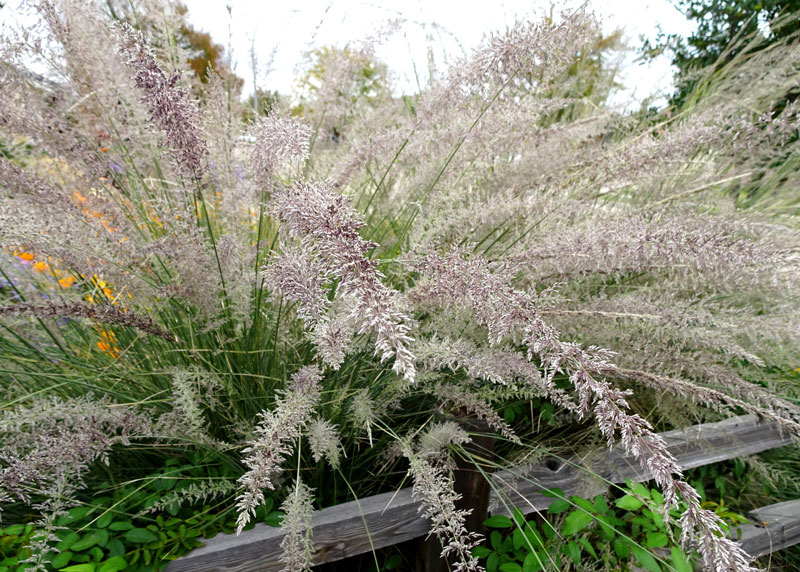
• Soil preferences: Not particular as long as it has good drainage. Grows natively in rocky, alkaline outcroppings, so very forgiving of challenging sites. Grows more uniformly and dependably if given modest bed preparation and uniform soil moisture.
• Propagated by: Division.
• Pest problems: Few, if any. Resistant to deer, drought, heat, and cold.
• A Texas Superstar® Plant as tested and named by Texas A&M. More information about all the 90 plants in that category can be found at this website.