
What about watering this winter?
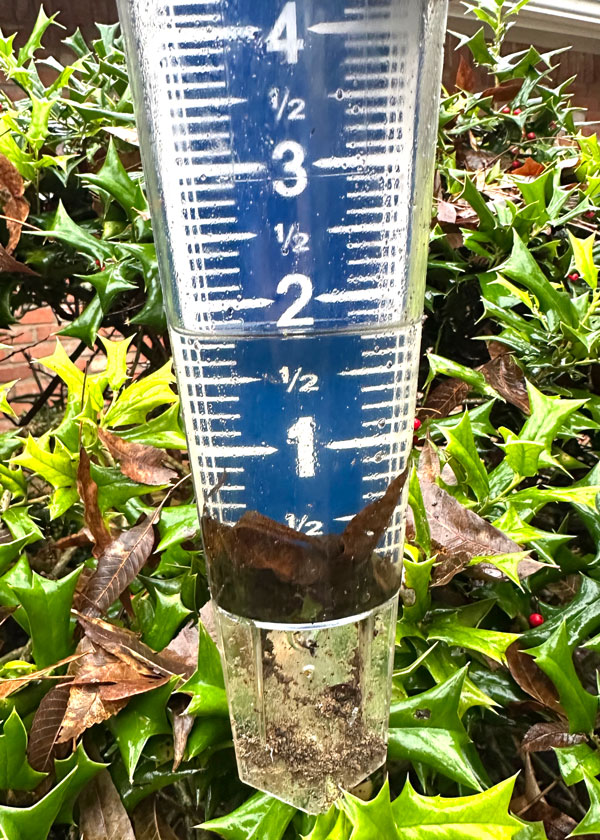
Remember back in the spring when rains were abundant? We all knew it was too good to last. Little by little that came to be true, and by mid-fall much of Texas was in the “Seriously Dry” stage. Big parts still are, in spite of this morning’s rain front that made its way across much of the state.

I thought this might be a good time to lay out my own personal plans for how I will be getting through the next several months relative to watering.
Point 1: Plants need water in winter.
Their roots remain active. Many types of plants continue to grow in cooler weather. Unless we are under active water restrictions, it’s important that we water when the soil begins to dry. It’s critical to our foundations, drives, walks, and patios as well.
Point 2: Amounts and frequency will vary.
There are so many variables involved that you must not put winter watering on any kind of timer. Much of Texas has been 20-25 degrees warmer than normal both night and day for the past month. Winds impact frequency. So will recent rainfall (if you had any). And types of plants that you’re growing and their exposure to sun or shade.
Point 3: You need to learn to “read” your soil.
Dry soil turns a paler shade. You can observe it while standing upright. You can also see small cracks starting to form where the soil meets the foundation or driveway. Stick your finger into the soil. If the top inch is wet, no need to water. If the top 1-2 inches are dry, it’s time to irrigate. Soil probes might help, but you’ll rarely see landscape contractors hauling them around. Just use your eyes and your fingers.
Point 4: Water deeply when you water, then wait until the soil is dry before watering again.
By letting the top of the soil get a bit dry you’ll be encouraging the plants’ roots to grow deeply into the ground. That’s a good thing.
Point 5: Plants that go into extreme cold in the winter in a dry state are more likely to be hurt by the cold.
Plants will always have their best chance of surviving winter cold if they’re kept well hydrated and fully turgid. Soak the soil deeply before any “blue norther.”
Point 6: Mulches help.
Mulches serve many good functions. They moderate the rate of temperature changes. When we have frostbite, we’re told to thaw out our tissues slowly by running cool water over them. Mulches keep the soil from freezing and thawing too fast. Mulches also conserve moisture by reducing weed populations. They reduce soil-to-air contact to slow drying.
Point 7: All that adds up to putting the sprinkler system in the “Manual” mode so that you can determine when it needs to be run.
“Smart” controllers can do a fair job of estimating the right times to water, but there’s no substitute for human intervention.
Point 8: Whenever possible, choose water-conserving plants.
That doesn’t necessarily mean “native” Texas plants. Types from wet areas may need more water than folks in dry areas want to provide. Let your Texas Certified Nursery Professional guide you to the best “adapted” plant types for your area.
Point 9: Water conservation is our responsibility.
Water is one of the most coveted commodities in Texas. We must all do everything possible to conserve every drop. You never know if the next major drought might be beginning as the current rainfall is ending. Water when needed, but water responsibly.