
Leatherleaf mahonia shines in the spring
It’s not always easy to find a plant that will grow well in heavy shade. One that will thrive in shallow, alkaline soil, and that’s drought-tolerant to boot. But this one is all that and more.
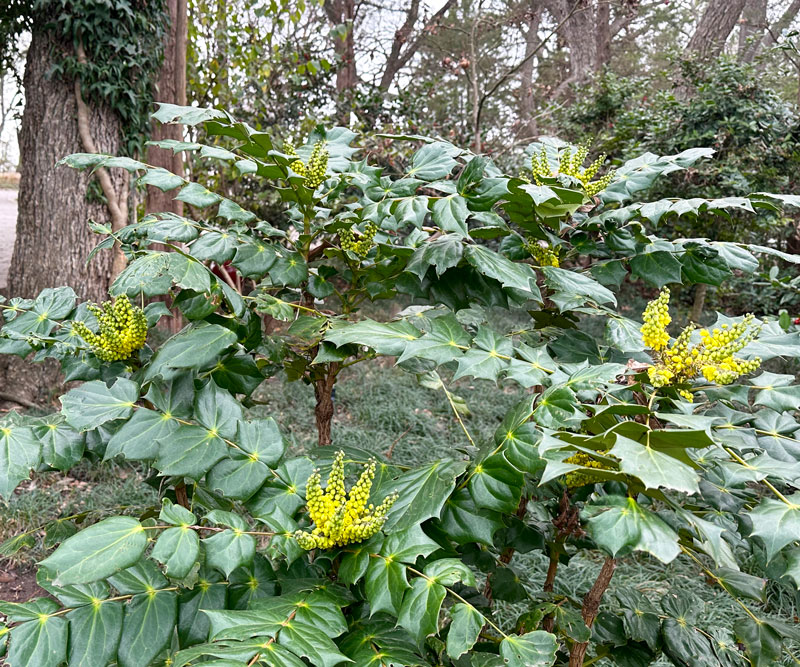
It blooms in the winter, and it loads up with big clusters of bluish gray fruit in the spring.
Its leaves are bluish green, tending to more gray green in brighter spots, and they’re borne on upright stalks that give it drama in dark corners of your gardens.
Hey! I believe we have a rock star in the making. If only more people would plant it.
What are its downsides? It’s a bit hard to find, and it’s slightly pricey when you do find it.
Oh, and its leaves are like razor wire. Nobody walks through it twice. But that’s ok, because you’re not really supposed to be walking through your shrub beds anyway.
Here are its specifics…
• Common name: Leatherleaf mahonia
• Scientific name: Mahonia bealei
• Plant Family: Berberidaceae
• Other familiar members of that family: Barberry, Nandina, Agarita (native to West and Southwest Texas)
• Native home: Central and Southern China (not Japan as you’ll sometimes see)
• Introduced to Western gardeners by Robert Fortune, Scottish plant hunter in the name of the Royal Horticulture Society.
• Approximate date of introduction to England: 1844, then to the rest of Europe. Commonly planted in U.S. by late 1800s.
• Namesake: Capt. Edward Beale, American naval officer and explorer
• Mature size: 4-6 ft. tall and wide
• Hardiness Zone: 7-9
• Lighting preference in Texas: Shade or morning sun and afternoon shade
• Soil preference in Texas: Adapts well to all soils, even shallow, alkaline soils, but grows best in moist, highly organic soils.
• Leaves: Compound with numerous leaflets. 10-14 in. long borne along upright stems. Evergreen. Bluish green. New growth is pliable for several weeks before becoming spiny as it matures by late spring.
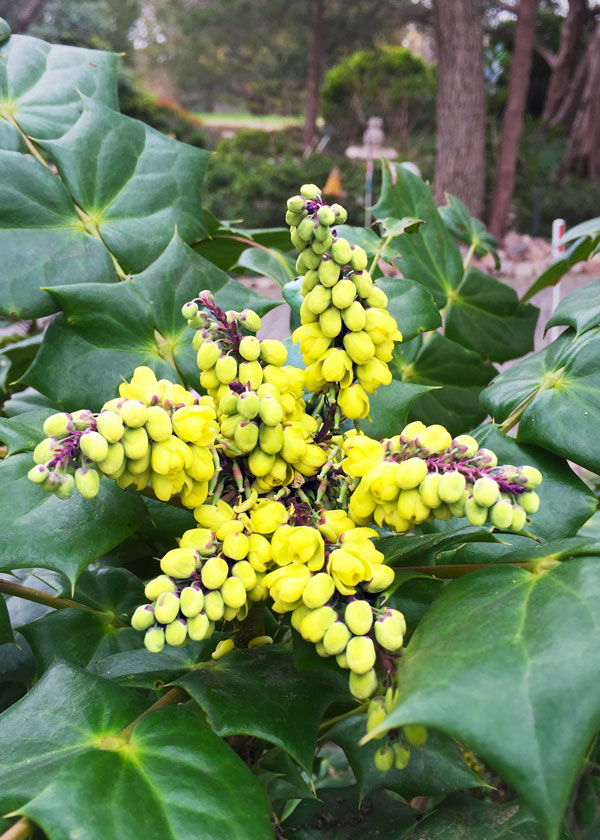
• Flowers: Borne in clusters at tips of stems in January. Vivid golden yellow. Favorite of bees, which makes it useful in a pollinator garden when few other plants are blooming.
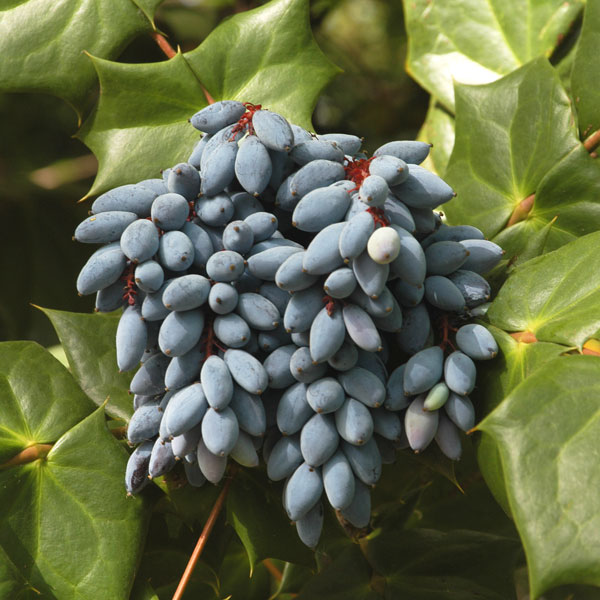
• Fruit: Also borne in full terminal clusters. Steel blue gray. Oval, slightly larger than BBs. Loved by birds, so commonly stripped as soon as they ripen.
• Special Care Tip: Prune leatherleaf mahonia as you would prune its cousins the upright nandinas. Rather than cutting its canes back by some percentage, trim them off flush with a remaining branch or stalk. I commonly remove errant stems entirely, but I also may go several years without trimming anything off any of my mahonias. There is no “regular pruning” guideline for them.
Note: This species appears on “Invasive species” lists in some southeastern states because birds eat the fruit and plant the seeds in wild spaces. In Texas that is not as common, particularly when you get outside the Piney Woods. I’ve had 20 plants for 40 years and I’ve had one seedling in my landscape in that time.