
A Clematis that has it made in the shade
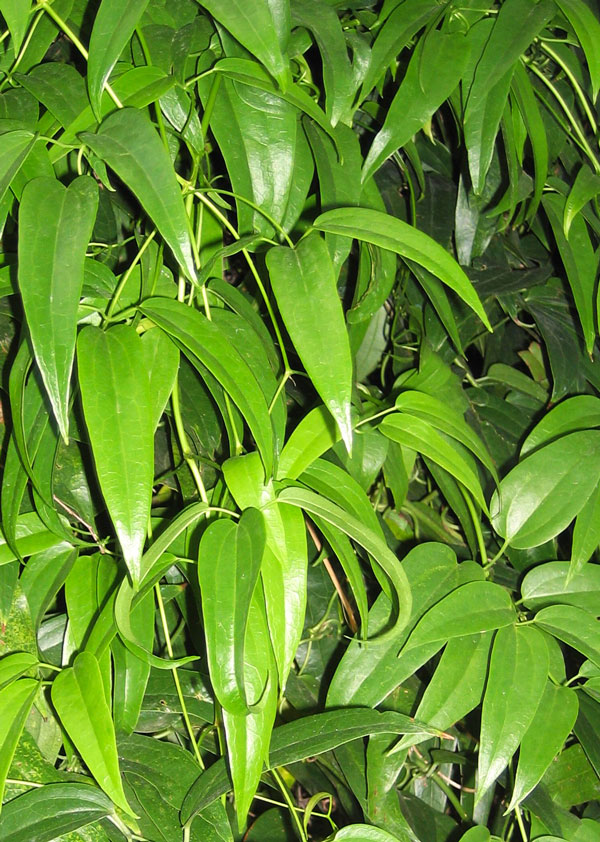
You may never have seen this wonderful vine. It needs to be used far more often in Texas’ shade gardens. Its glossy green leaves have prominent veins and a thick, leathery texture that provides the perfect backdrop to the beautiful white flowers borne at the ends of the branches.
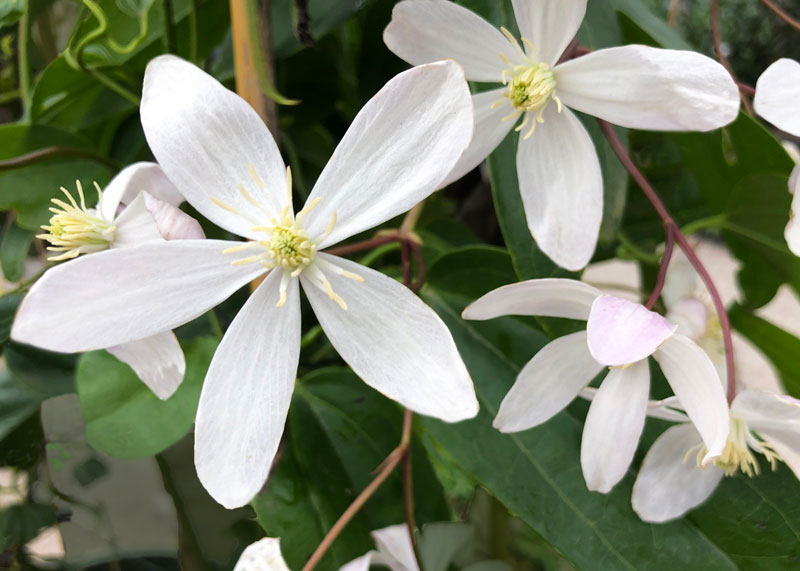
The 2-in. blooms have five petals and prominent stamens in the centers of the flowers. They boast a vanilla-like fragrance. What’s not to love!
The plants bloom from late February through mid-spring and sporadically in the summer.
Once flowering ends, the fruit, called “achenes” develop in June and July. They’re showy in their own rights, looking something like brown papery stars in the center with white, silky strands attached to them.
More facts you should know…
Common name: Evergreen clematis
Scientific name: Clematis armandii (Named for Jesuit Father Armand David, a 19th Century missionary and plant collector to China.)
Plant Family: Ranunculaceae, or the Buttercup family. Family also includes anemones, columbines, hellebores, and ranunculus.
Native home: China and northern Myanmar (Burma).
USDA Hardiness Zones: Zones 7b-10 (roughly the southern two-thirds of Texas).
Mature size without pruning: 15-20 ft. tall and 10-15 ft. wide. Should be trimmed right after blooming, however, to keep it from becoming stubbly.
Exposure: Morning sun with afternoon shade, or dappled sun all day.
Soil preference: Highly organic and constantly moist. Never soggy but never dry for prolonged periods. Does well when roots are protected by low-growing perennials and groundcovers and by 2 in. of mulch.
Pruning: Can develop thick layer of old leaves if not thinned and pruned immediately after blooming. Such grooming will keep the plant tidy and attractive.
Important: Plants bloom on old wood from prior season, so pruning later in the season such as fall or winter will remove potential flowering wood.
Propagation: Stem cuttings would be best. Can sometimes be divided.
Pollinator? Attracts bees, butterflies, and hummingbirds.
Pests? Resistant to deer and rabbits. Rarely is bothered by insects or diseases. Biggest threat would be from record low temperatures. Protect with frost cloth when lows in the teens are expected.