
Blooms That Last for a Day
Note: Normally you’d be seeing my answers to your gardening questions here, but while Gretchen has been recuperating from shoulder surgery we had that function shut off. Here’s hoping she’ll be up to pulling your questions for me to answer next week, so here’s your opportunity. We’ve opened it up now until we have all I can handle. Thanks for your patience!
HOW TO SUBMIT YOUR QUESTION…
• Click here to post your question. (Please post your question only one time.)
• Please use this link only for posting questions – not for standard e-mails.
• High-resolution photos (1-2MB – not thumbnails) attached with your question help Neil give you the best possible answer. Please check your photo for clarity and exposure. If you do not see “All images clickable for larger views,” your images’ resolution was not sufficient for enlargement. That might also have made it difficult for Neil to give you an accurate answer.
• Neil chooses questions of greatest reader interest. Plant IDs rarely fit that description.
• Neil requires your first name or initials, also your city or county for an accurate answer. (Texas is a very large state.)
• One question per reader per week, please.
• Watch for Neil’s reply in the next issue of e-gardens.
Note: If you have submitted your question and did not see the pop-up window for attaching your photo, please click here.
And now to our story…
Most of us were surprised the first time that we discovered plants whose blooms open and close in the same day. But then we came to realize that they produce dozens of flowers to pick up the slack day after day. Here are some of my favorites.
Some of the best day-bloomers…
Each of these plants will keep growing and blooming for several weeks, some even longer. The fact that the look in your landscape changes daily only makes it all the more exciting.

Daylilies
• Blooms stand atop stems (“scapes”) that are 12 to 48 inches tall.
• Newer types rebloom a second time later in the summer.
• There are thousands of varieties in all colors except blue.
• Flowers range from 2 to 12 inches in diameter. Most have a single row of petals, but many double-flowering forms are also grown.
• Best way to find unusual types is through specialty growers and private gardens when they sell off their surplus. Local clubs usually have sales in the fall.
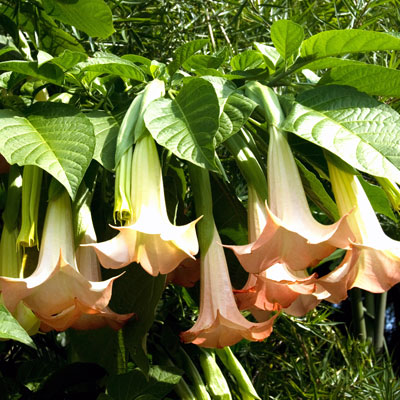
Daturas and Brugmansias
• Datura flowers generally are displayed upward, while Brugmansias usually hang straight down.
• Most flowers are single, elongated trumpets, although a few double-flowering forms are available.
• Most types open in the evening and remain open through the next morning.
• All parts of these plants are poisonous (although so are many of our common landscaping plants such as hollies, oaks, daffodils, tulips and azaleas).
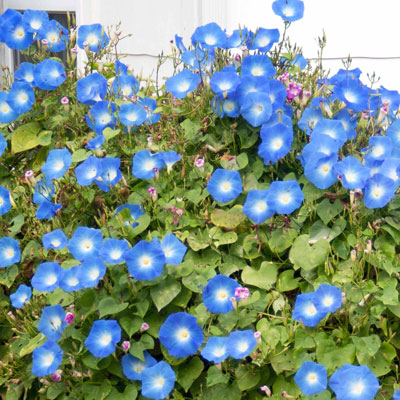
Morning glories
• Strong-growing vines that bloom from late summer until frost.
• Flowers are trumpet-shaped, in shades of sky blue, rose-red, pink and white.
• Easily grown from seed, they are annual vines you will need to replant each year.
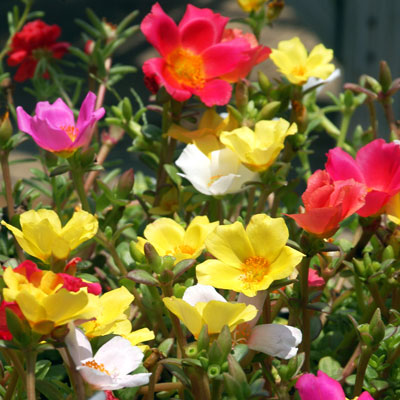
Purslane and moss rose
• Annual flowers in cheerful sherbet-like colors.
• Tolerant of hottest, sunniest settings.
• Grow to 8-9 inches tall and 10-12 inches wide.
• Great in flowerbeds, pots and hanging baskets.

Mallows and tropical hibiscus
• Huge flowers ranging from 5 to 10 inches in diameter.
• Colors include red, orange, yellow, pink and white.
• The winter-hardy types (mallows) die to the ground. They have dull, matte-look leaves.
• Tropical hibiscus must be protected from frosts and freezes. Their leaves are lustrous, dark green.
There are other day-bloomers, but these are the ones that came to my mind first. Perhaps you have your own list as well.