
Tire planters – on the roll in gardens – by Diane Morey Sitton
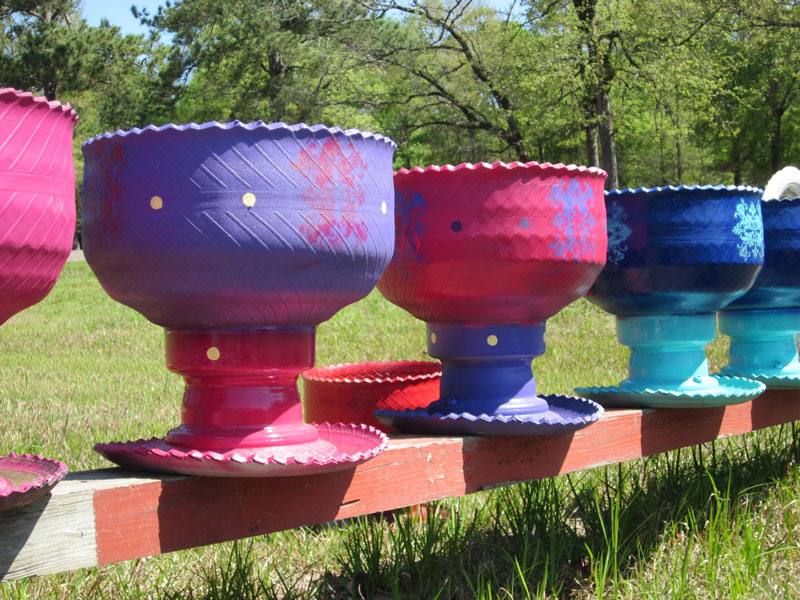
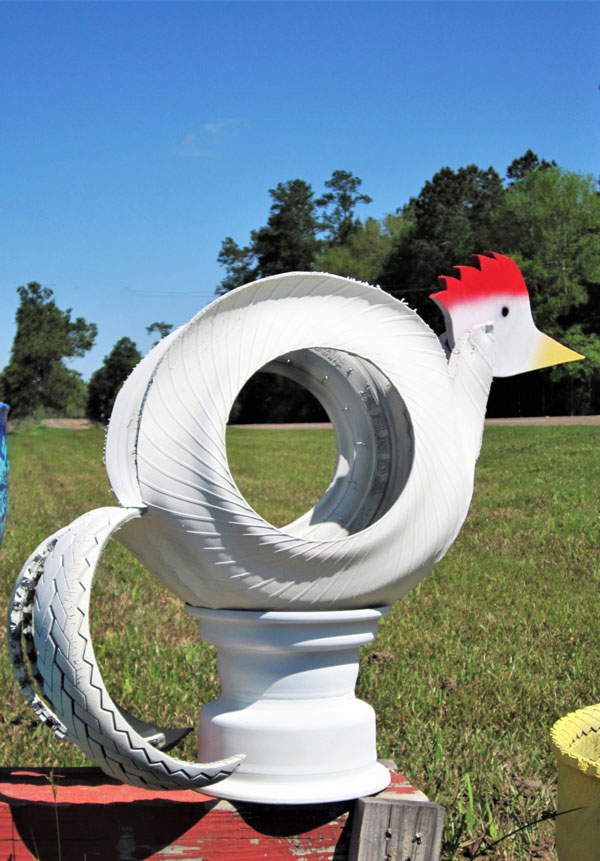
For the tire entrepreneurs of the late 1800s, it would have been hard to imagine that one day folks would cut, reshape and otherwise manipulate used tires into garden planters. But whether laid on their sides and vibrantly painted, stacked atop one another tower-style, positioned on the ground to resemble gigantic (and kid-friendly) earthworms, turned inside out to make urn-shaped pots, or cut apart and refashioned into various bird and animal shapes, tire planters occupy backyard gardens, community gardens, roadside gardens and other sites where someone with a green thumb and the talent for recycling decided to grow herbs, flowers, vegetables, ornamental grasses and/or succulents.
The trend is not new. Presumably, it took hold in the lean years of WWII, when rural housewives used discarded tires to create small kitchen gardens. Discarded tires became more plentiful following America’s great road trip boom of the 1950s and 1960s. By the 1970s, perhaps wanting to up-cycle and up-class worn out tires, folks took to carving zigzags in the sidewalls before turning the tires inside out. To some, the zigzag pattern resembled a king’s crown, hence the lofty-sounding name “crown tires.”
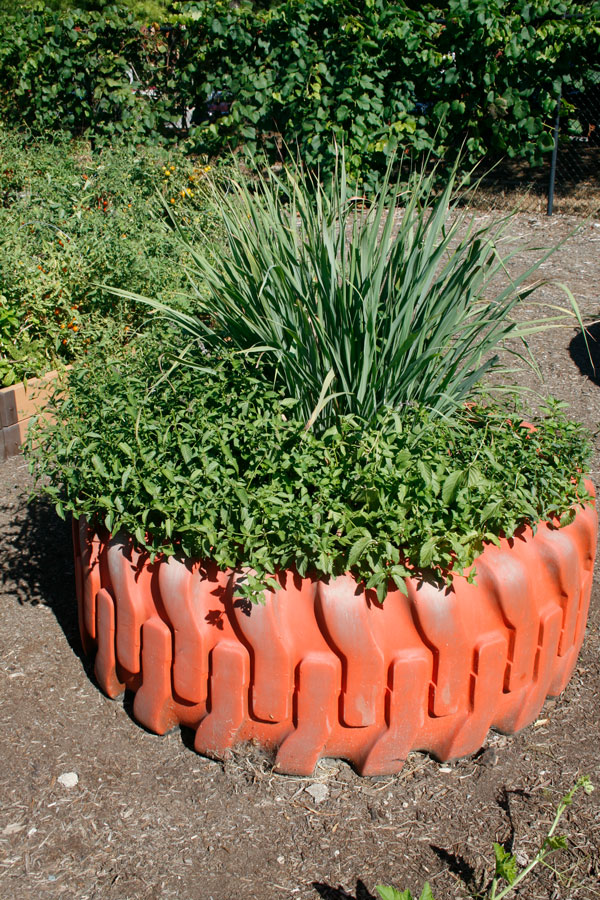
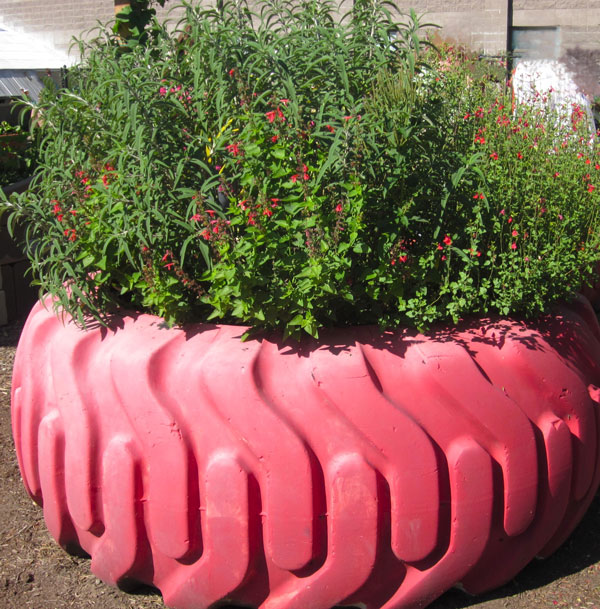
Today, despite being somewhat cumbersome to create, tire planters are a common DIY project. Some folks include tire planters in their gardens because they like the old-fashioned country vide of a tire laid on its side, painted, and used as a planter. Other folks include tire planters as a way of keeping the old tires out of landfills. No matter how you justify their presence, tire planters are durable and weather-resistant, and the tires are free.
Here’s how you do it
Begin your simple DIY tire planter project by obtaining a tire or tires: Go big with a tractor tire, or go small with several off-road vehicle tires. Scrub the tire inside and out to remove dirt and road grime. Use a household degreaser and a brush. Allow the tire to dry before drilling a few drainage holes on the tire’s “down” side. Next, paint the tire using spray paint specified for plastic or rubber. Add decorative patterns or designs, if desired. Allow the paint to dry, and then move the tire into its permanent position. If necessary, line it with heavy-duty landscaping fabric to keep soil from spilling out. Add soil, then plant and water in. (If you’re worried about chemicals leaching from the rubber, plant only flowers.) See online videos for tips on creating “crown tires” and other inverted tire planters, bird-and animal-shaped tire planters, and ways to incorporate several tires into tire towers.