
Heliotrope ‘Azure Skies’ – by Steve Huddleston
Many gardeners have heard of the cherry pie, or garden, heliotrope, an annual prized for its dense clusters of fragrant purple flowers. Native to Peru, this heliotrope unfortunately does not do well in Texas.
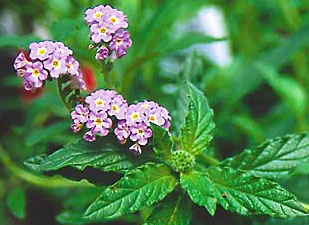
Good news for us, however, its cousin, clasping heliotrope, does. In particular, the cultivar ‘Azure Skies’ performed admirably in the Dallas Arboretum Plant Trials many years ago and is very well suited to growing conditions in Texas.
At first glance ‘Azure Skies’ resembles some type of verbena. It’s a fast-growing, spreading, herbaceous perennial that grows about 10-12 in. tall and 3 ft. wide. The plants’ light green, lance-shaped leaves are soft, about an inch long and covered in sticky, aromatic hairs.
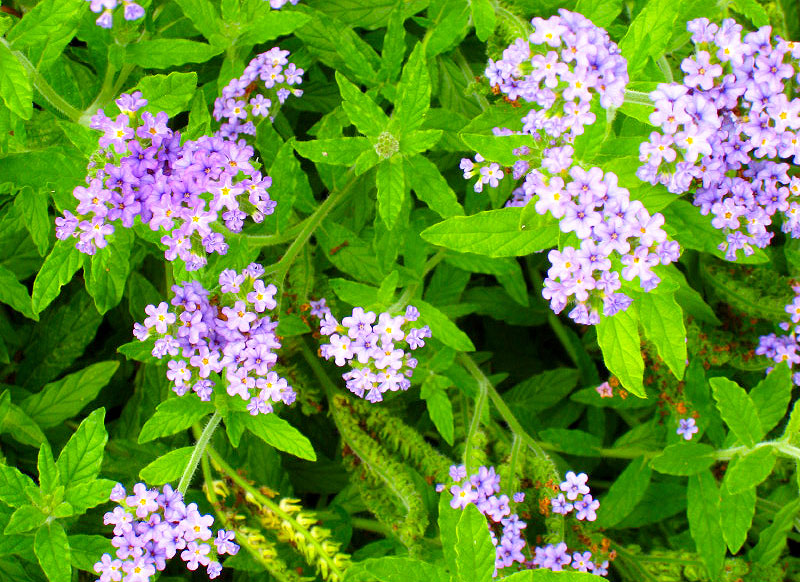
Riding atop the foliage are dainty clusters of tubular, pale lavender-blue flowers with yellow centers. The flowers appear from early spring until frost. Unlike its garden heliotrope relative, the flowers of ‘Azure Skies’ have no fragrance. However, they do attract bees and butterflies, making this an ideal plant for a pollinator garden.
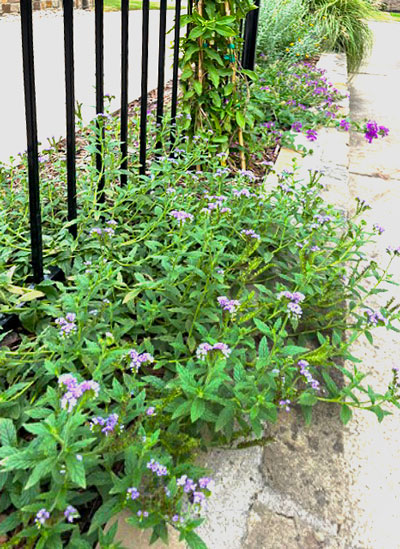
Plant ‘Azure Skies’ in full sun in a good garden soil that is well drained. It thrives in the heat, even reflected heat from driveways and sidewalks. The small pastel flowers of ‘Azure Skies’ need to be viewed up close, so it’s best to plant this cultivar along the edge of a border where viewers will pass by it.
‘Azure Skies’ establishes quickly and develops deep taproots which enable the plant to survive Texas’ hot, dry summers. It requires little ongoing maintenance other than regular watering during dry periods and occasional shearing if it should cascade too far over a retaining wall. This plant always looks tidy and requires no deadheading.
This little gem is particularly beautiful softening the edges of boulders and retaining walls and cascading over them. Use ‘Azure Skies’ in combination with other perennials and toward the front of a mixed border.
The mounding perennial zexmenia with its golden-yellow, daisy-like flowers makes a particularly good companion plant for ‘Azure Skies.’ Other suitable companion plants include autumn sage, ‘Homestead Purple’ verbena, ‘Goldsturm’ Rudbeckia, and Mexican mint marigold. The yellow flowers of the last two create a “color echo” of the yellow centers of ‘Azure Skies.’
A few facts to remember…
• Botanical name Heliotropium amplexicaule ‘Azure Skies’
• Belongs to the Boraginaceae, or borage or forget-me-not family
• Native to Bolivia, Brazil, and northern Argentina
• Grows in USDA Hardiness Zones 7a-9b, which covers most of Texas.
• Its flowers attract pollinators
• Few insect or disease problems. Unlike verbena, highly resistant to mildew.
• All parts of the plant contain the active toxic constituent pyrrolizidine alkaloid, which can cause digestive upset and liver damage. Don’t let children, pets or livestock ingest.