
License to thrill – by Diane Morey Sitton
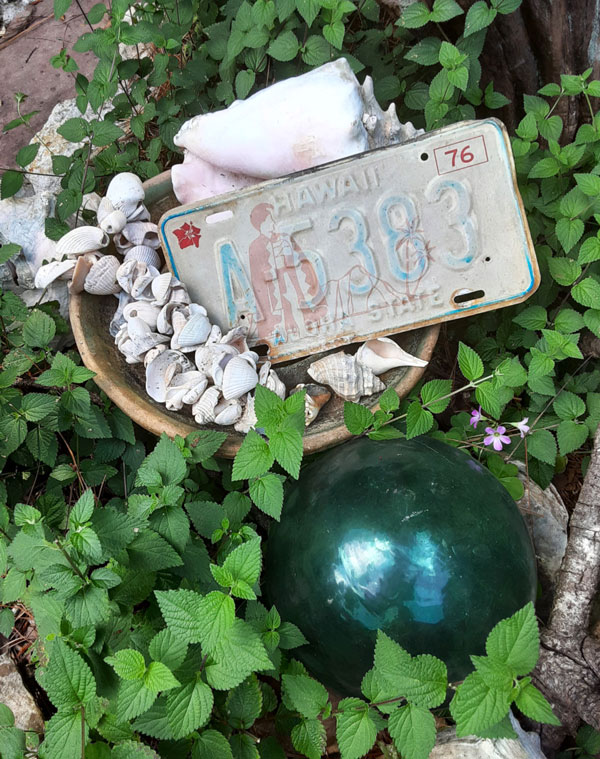
It’s probably nothing more than a far-reaching coincidence, but as America’s storied Route 66 celebrates its 100th anniversary this year it seems that more and more license plates are turning up as garden décor.

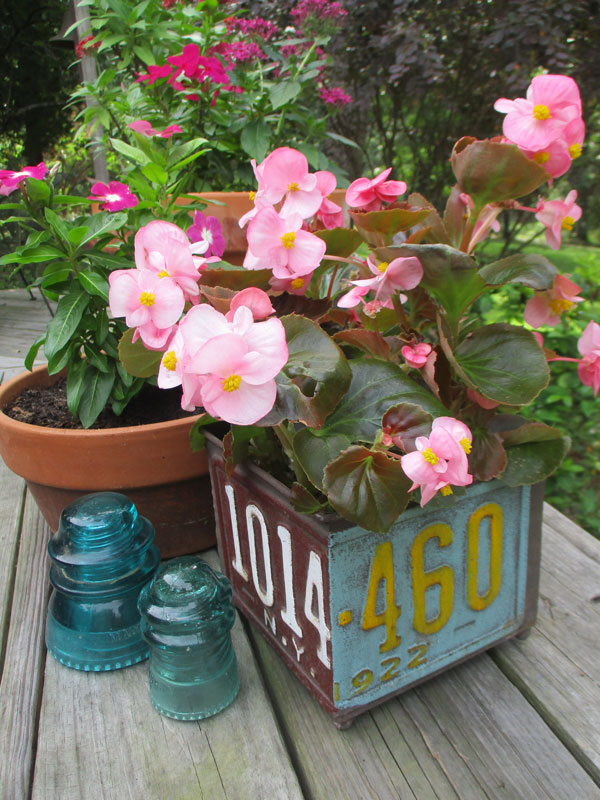
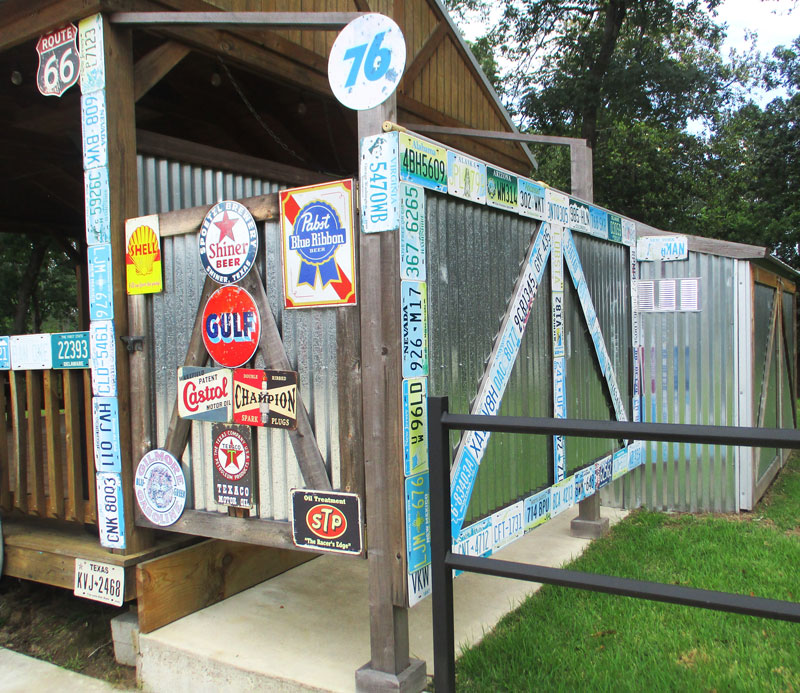
Texas, Louisiana, Florida, Hawaii … there they are, emblazoned with space shuttles, oranges, roseate spoonbills and other colorful state symbols, attached to fences, potting sheds and porch posts; bent, twisted and re-shaped into birdhouse roofs, square and round containers, flower petal art, and the wings of dragonfly whirligigs.
But that’s not all.
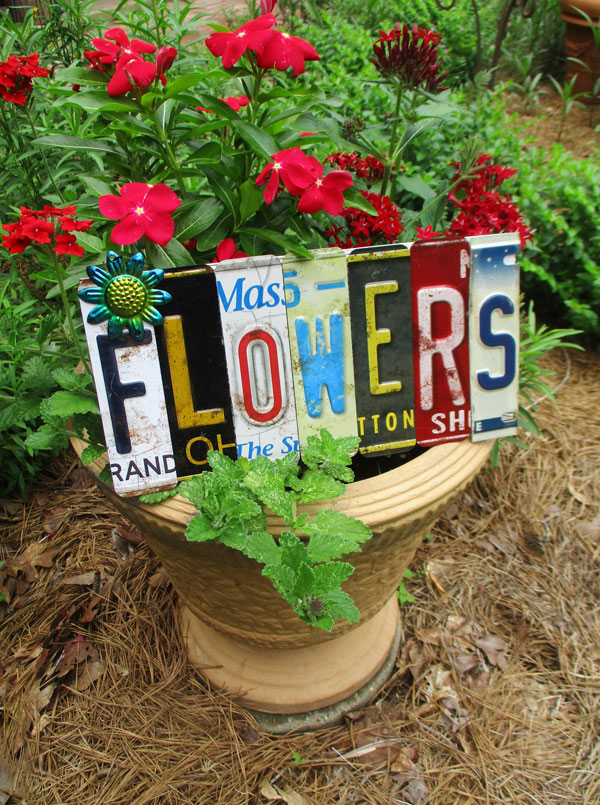
Signs — made with letters and numbers cut from license plates (no easy task) and cobbled together by recyclers who see the potential of precast letters and weatherproof materials — spell out names, immortalize addresses, identify plants ID’s, and inspire with garden-related words such as relax, grow and sunshine — all the while decorating porches, patios and pathways.
It’s hard to pinpoint the appeal of the old plates – folks certainly are reluctant to throw them away, instead stashing them in barns, tucking them away in boxes and hanging them on nails in workshops and storage sheds. Maybe the plates remind them of a state where they once lived; perhaps the old tags are sentimental tokens of cars they once drove or road trips from a time gone by. Yet again, to some folks, license plates are collectibles, their nostalgic appeal equal to vintage advertising signs, baseball paraphernalia and other Americana.
In case you want to join the trend as Route 66 celebrates its historic birthday, but you don’t have old license plates of your own to craft with, ask a neighbor or friend to share, shop a flea market, visit a junkyard, browse an antique mall, or place an order from an online site.
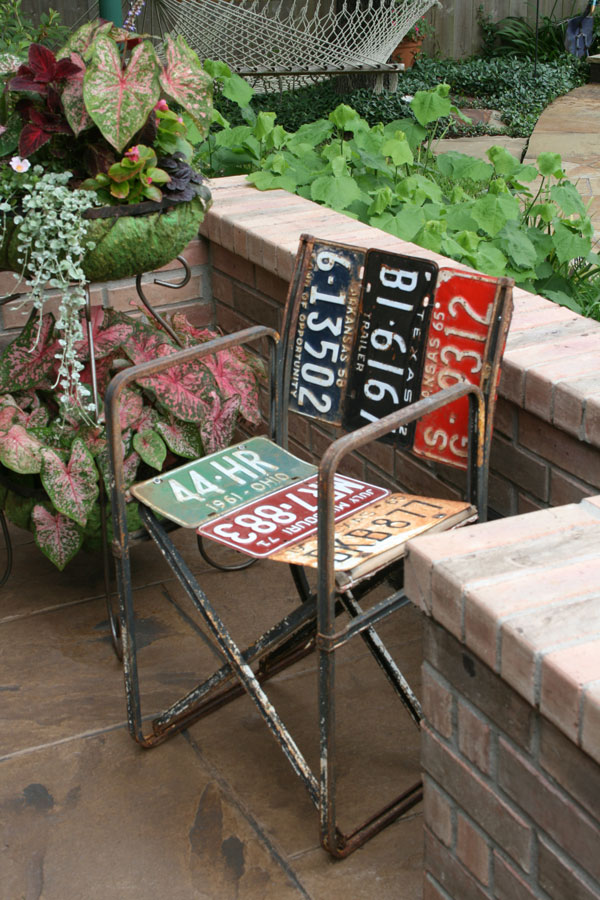
Who knows what memories the old plates will stir up as you weed, water and watch your plants grow.
Tips for crafting with license plates
Cleaning. Clean off dirt and road grime. Remove adhesive stickers.
Cutting. Use tin snips for simple cuts. Use a jigsaw with a metal-cutting blade for custom cuts. Use a drill to make holes.
Shaping. Make clean, 90-degree bends for planter boxes by utilizing clamps, the edge of a work table and a rubber mallet.
Safety. Wear gloves and safety glasses. Use a metal file to smooth sharp edges and corners.