
Myths and mystique of bois d’arcs
Farmers, ranchers, and mere mortal home gardeners all have their own chosen names for this common Texas native tree. Some are descriptive. Some are censorable.
Whether you like it or not, bois d’arc, the most common name in most of Texas, is one of the most durable native trees of Texas. However, it’s also one of the least-grown-and-sold. Most gardeners don’t want one. Those of us who inherited one when we bought our rural properties are happy to have them. Let’s look at the facts.
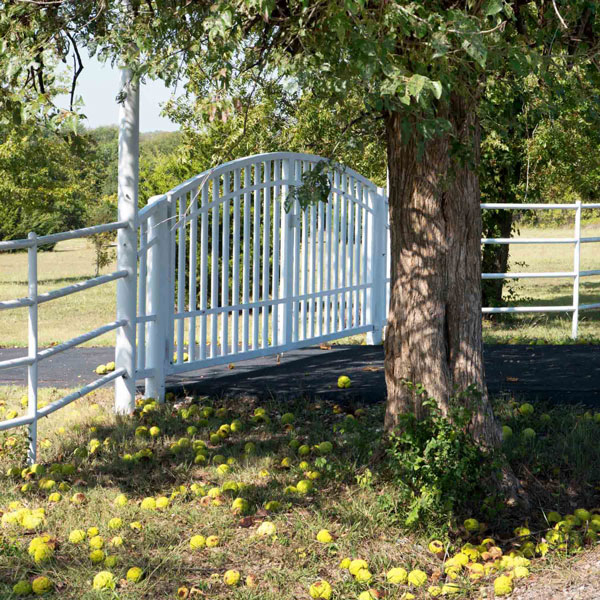
Facts that tell this tree’s story…
Common name: Bois d’arc (meaning “bow wood” because Osage Indians and other Native peoples used its strong, flexible wood for bows, axe handles, and other tools and weapons. Also commonly known as Osage orange, hedge apple, hedge, and horse apple.
Scientific name: Maclura pomifera.
Plant Family: Mulberry. (Fruit is not an apple, nor is it an orange. Each fruit is really a cluster of many little fruit.)
Native home: River bottoms in Arkansas, Oklahoma, Texas, Louisiana. It has been planted far and wide as a rural hedgerow over the decades.
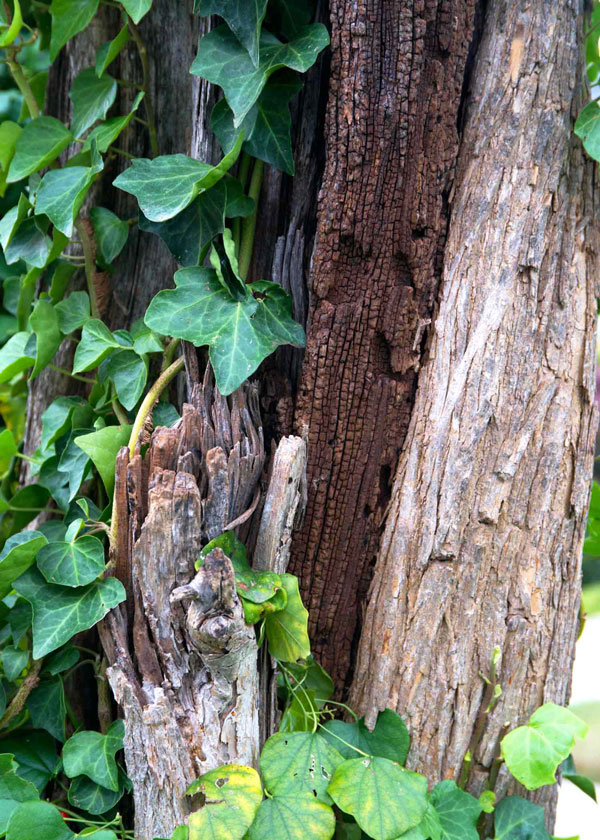
Fruit: Large and heavy, resembling an orange. Borne only on female trees. Contain many seeds. Male trees will be fruitless.
Foliage: Large, dark green, deciduous. Turns yellow in fall.
Mature Size: Grows to 30-50 ft. tall and 25-50 ft. wide.
Hardiness Zones: 4-9 (almost all of Texas and beyond).
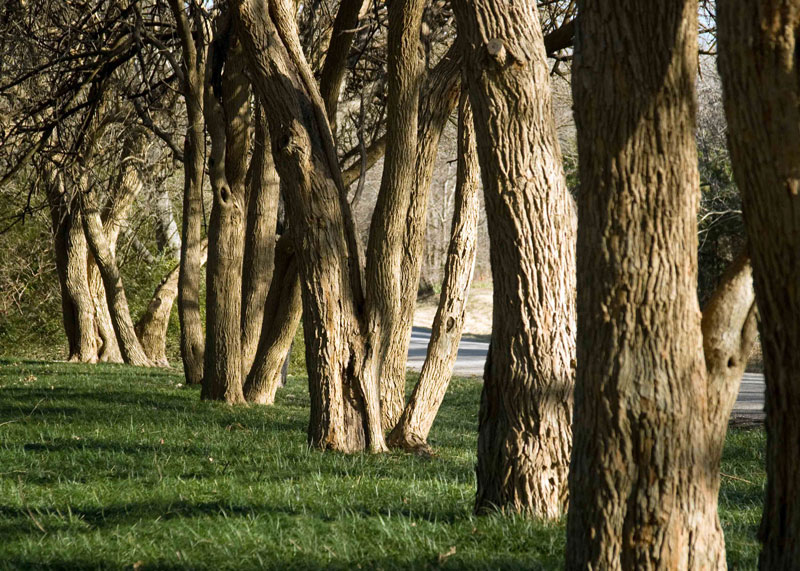
Trunks: Thick, thorny, and gnarly. May have considerable dieback within an old tree as dead branches do not decay and fall. Thorns are a problem if people walk beneath the trees. Thorny hedges were planted to contain livestock in years prior to the development of barbed wire.
Wood/Lumber: Very decay-resistant. Was used for a long time as leveling blocks beneath pier-and-beam houses, also for fence posts. Wood has a bright yellow color when freshly cut, but color shifts to brown as wood is exposed to air.
Use of fruit as insect, spider repellent: Vastly over-stated, according to the Nebraska Cooperative Extension Service.
Note: Thornless, fruitless selections are available in limited numbers in the nursery industry. You’ll probably have better luck finding them online than you will from your local retail garden center.
The question you didn’t ask me…
“Would you keep a bois d’arc on your property if you had one when you bought it?”
Yes, I have. In fact, we have several. They have been here (40-50 years) since we moved in. They’re rugged and they’re handsome. Sure, I have to pick up the fruit, but it’s a small price to pay for trees that never cause me one moment’s problem. I’d far rather have them than a silver maple, fruitless mulberry, cottonwood, or hackberry.