
Most of us call it “elaeagnus”
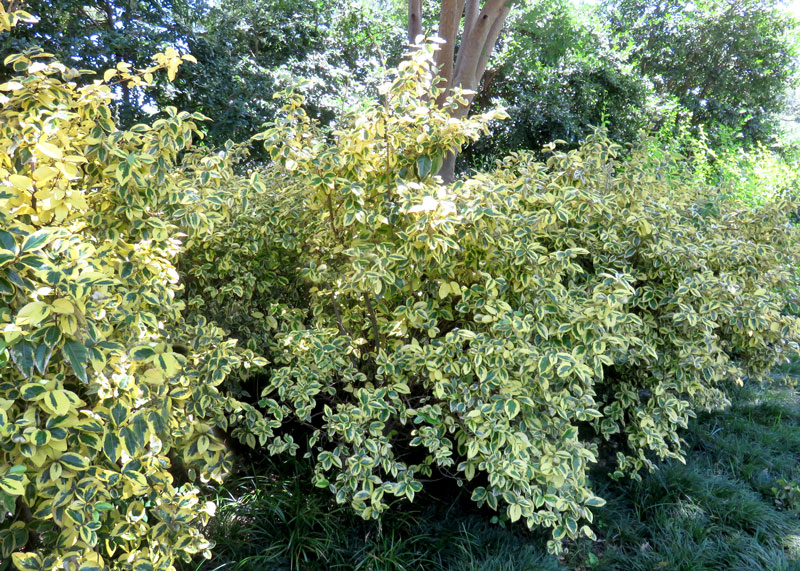
Granted the plants have shoots that look very much like thorns for a while. And granted the obvious – most types have beautiful silvery foliage. Either way, this plant we call “elaeagnus” is a superior landscaping shrub that’s adapted to big parts of Texas.
Elaeagnus adapts well to hot, dry locations, and it’s suited to almost any type of Texas soil. Its expectations are few and its rewards are plenty. Yet too few Texas gardeners use it. That’s precisely why we feature it here today.
What you need to know about elaeagnus…
Common name: Silverthorn, thorny elaeagnus, elaeagnus, fruitland silverberry.
Scientific name: Elaeagnus pungens.
Plant Family: Elaeagnaceae
Native home: China, Korea, Japan
Plant Hardiness Zones: 7a-10b (most of Texas)
Mature height and width: 6-7 ft. tall and 6-8 ft. wide. Shearing into formal shapes may encourage erratic growth. It is best left in natural form, trimming only to remove errant branches.
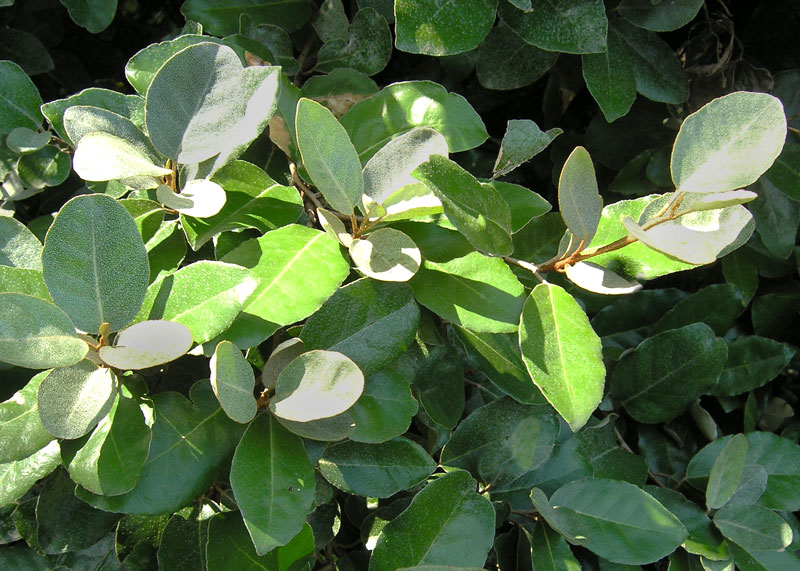
Leaves: Grayish green on top, light tan on bottoms. Silvery flecking on tops. Brown spots scattered across their bottom surfaces are completely normal – no cause for concern.
‘Fruitlandii’ is a common type with its striking silvery leaf tops and pale tan bottoms.
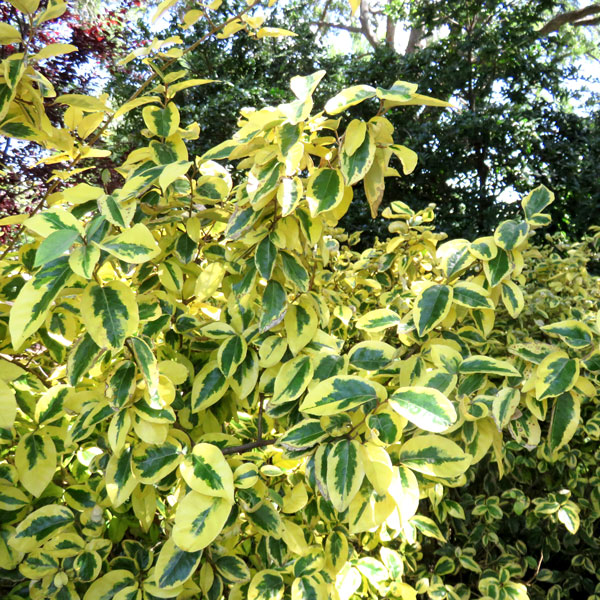
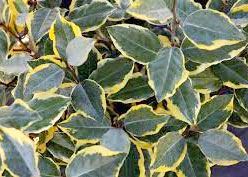
Several variegated cultivars are in the market. ‘Maculata’ sports leaves with bright yellow centers with green margins. ‘Olive Martini’ has green leaves edged in gold.
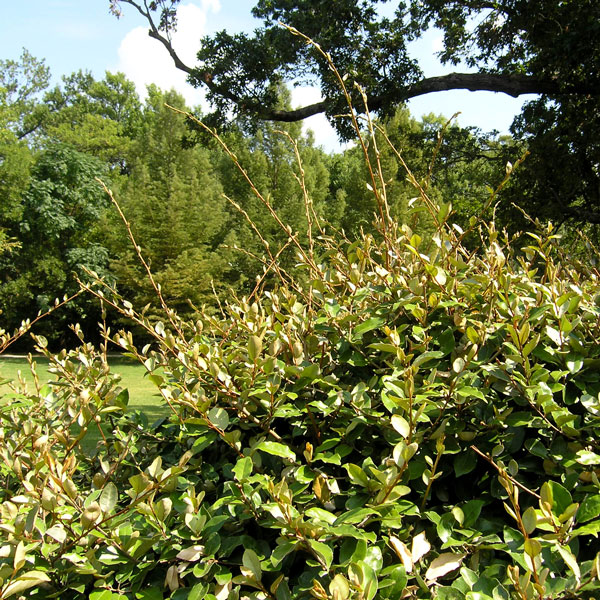
Explanation of “thorns”: New shoots appear as “thorns” that are relatively harmless. The shoots are extremely vigorous, and if left in place, they will eventually sprout leaves and develop normally.
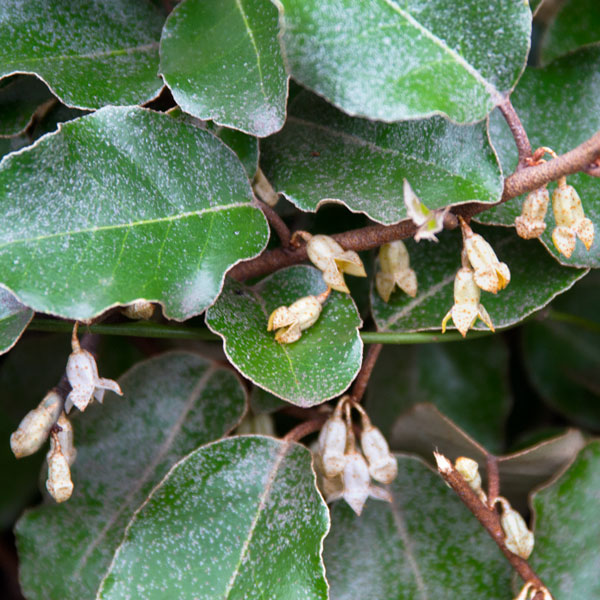
Flowers: You may never see them. They are ½-in long, bell-shaped, light brown, and within the canopy of the foliage. Sensationally fragrant. Clove-like aroma will fill an entire landscape in late October or November.
Fruit: Fleshy, single-seeded. A favorite of birds and other wildlife. Birds also like the plants’ dense branches for nesting.
Sun/Shade: Sun or some shade, but leaf color is best in full sun.
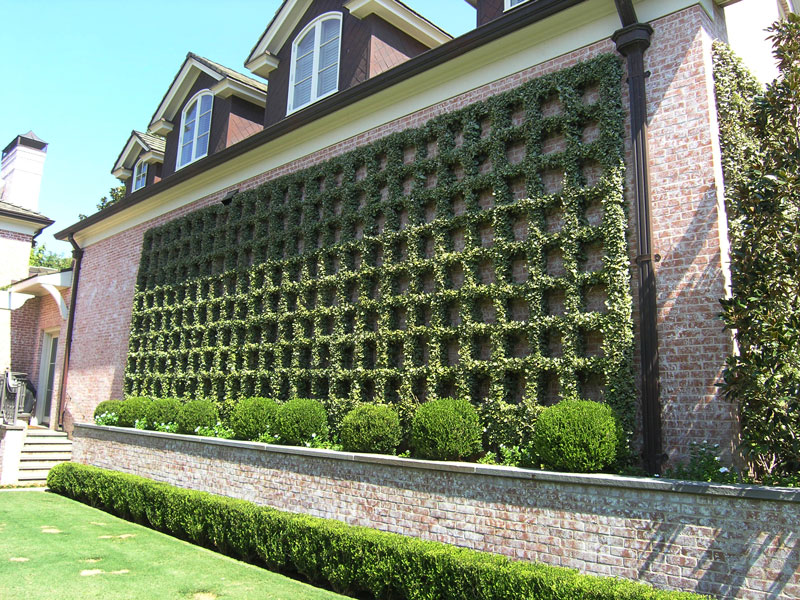
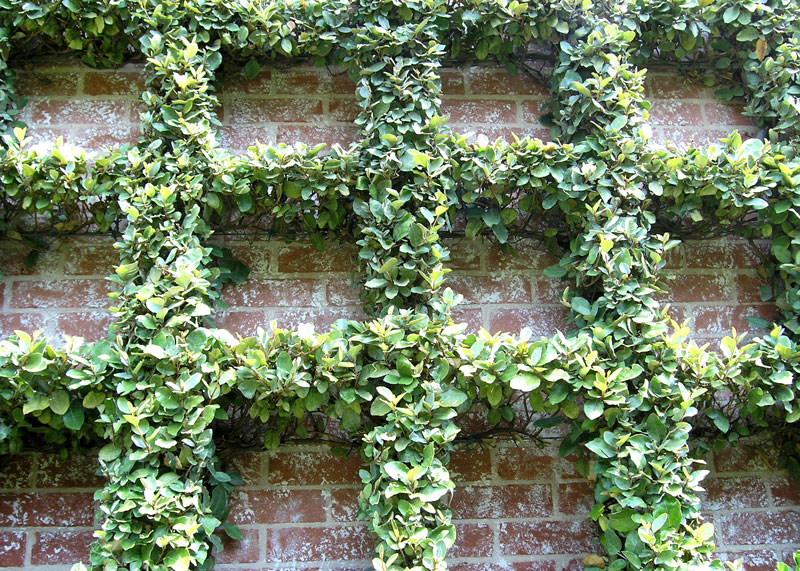
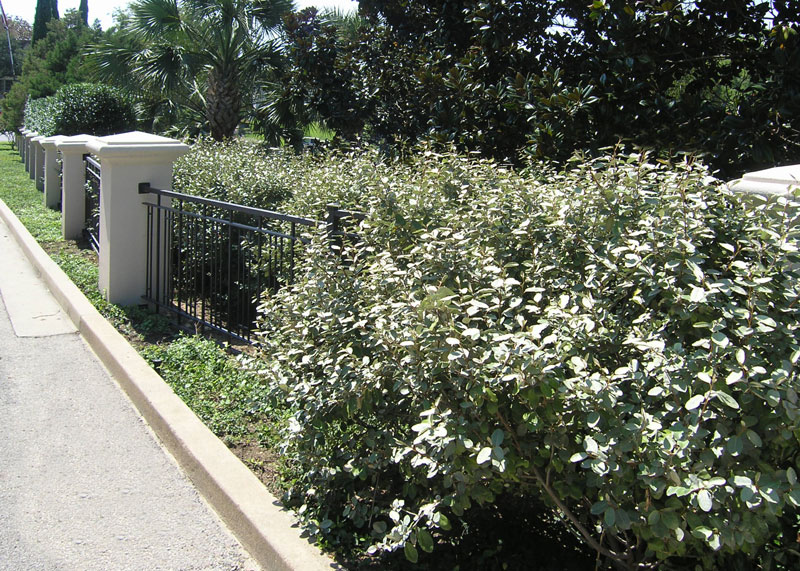
Best landscape uses: As groupings or screen. Shows best when planted against a dark background such as tall Nellie R. Stevens hollies or Little Gem southern magnolias.
Pest problems: Lace bugs may cause bleaching of foliage in summer. Leaves will become pale tan and waxy black specks will be sprinkled around on the backs of the leaves. They can be controlled with organic or inorganic insecticides or systemic products.