
Gorgeous grass of a different color
Our list is going to be woefully short, and pink Muhly is going to be at its top. That’s where we’ll spend our space here today.
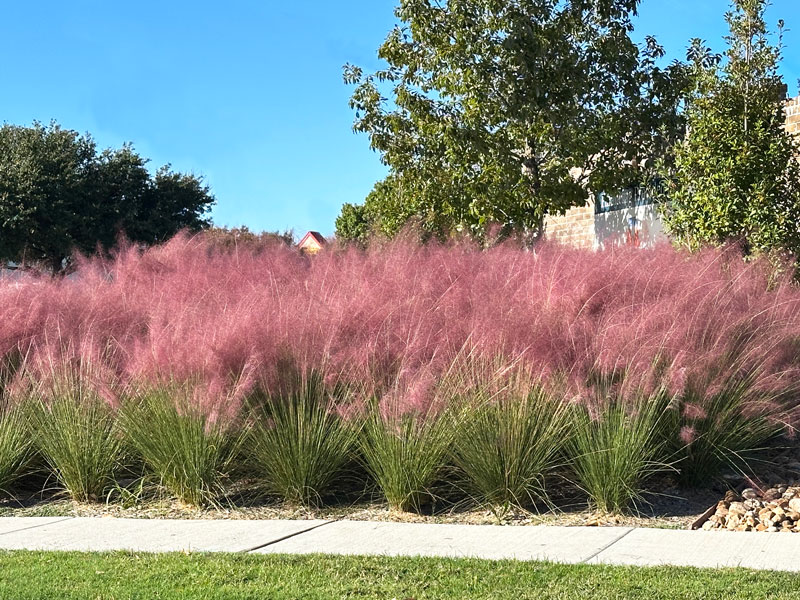
This is a native grass of Texas prairies, sandy soils in openings in East Texas pine forests, and rocky outcroppings in limestone soils farther west. It’s found across the southern states, hence another of its common names, Gulf Muhly.
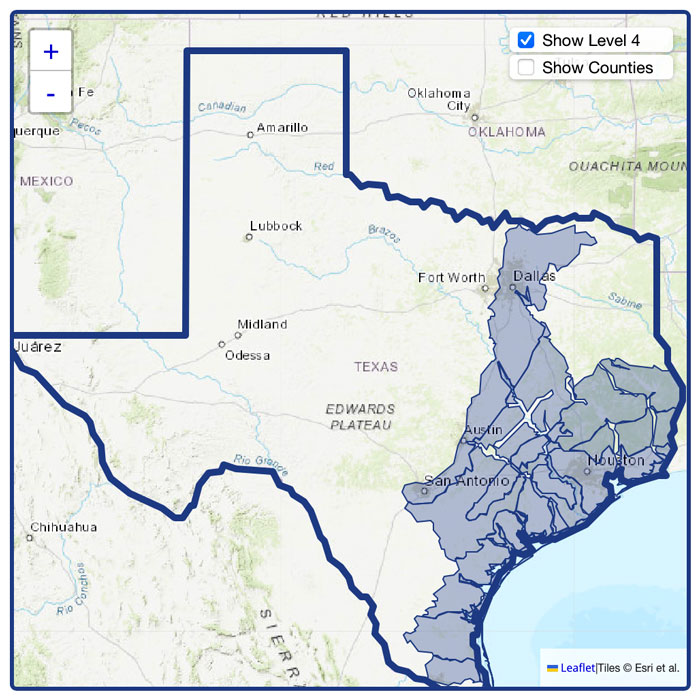
Several things, however, set pink Muhly apart from other grasses. Beyond the striking pink flowers, it also blooms in the fall. Most grasses bloom much earlier.
Pink Muhly is also less aggressive. Where Mexican feathergrass (Nassella tenuissima) reseeds itself freely throughout its bed and beyond, pink Muhly is much more mannerly.
Pink Muhly also establishes itself into perennial clumps, so its plantings are more likely to “perennialize.” Mexican feathergrass plantings tend to thin and die out after the first couple of years.
Things to know about pink Muhly…
Common name: Pink Muhly, Gulf Muhly, Muhlygrass.
Scientific name: Muhlenbergia capillaris
Plant Family: Poaceae (Grass Family)
Mature height: 18-36 in.
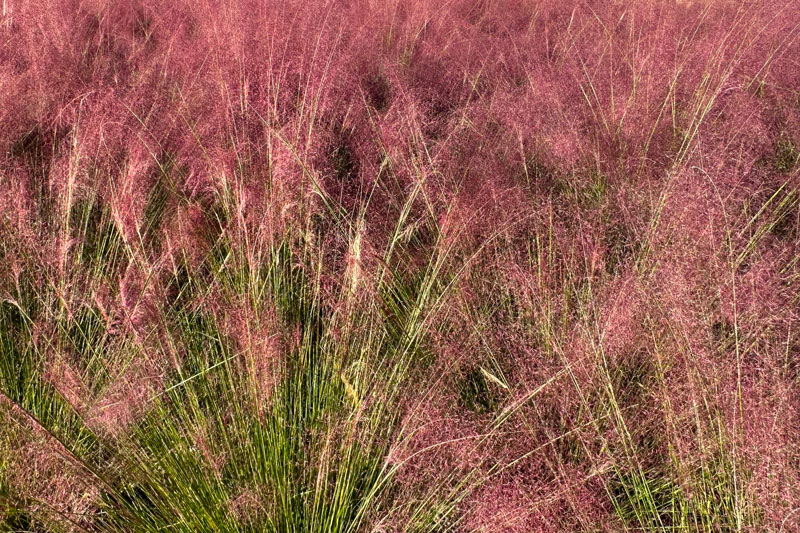
Leaf and flower textures: Very fine
Native Range: North America – Central and Eastern U.S. to Guatemala and the Caribbean
Hardiness Zones: 5-9 (all of Texas)
Soil Preferences: Any, as long as it drains well.
Moisture preferences: Does best with consistent moisture, but intolerant of waterlogged soils.
Sun/Shade: Sun or mostly sun
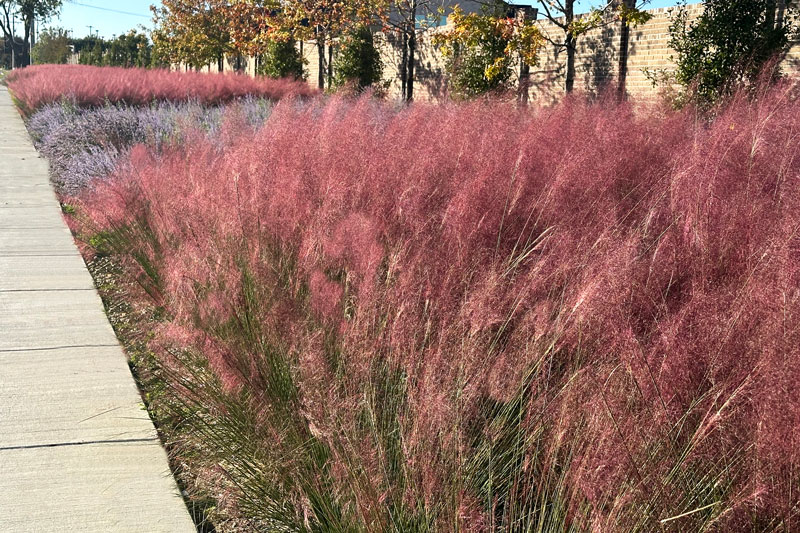
Best landscape uses: Massed plantings
Pest problems: None
Propagation: Sun or division