
Little plant is big on color
I was maybe 14 years old. I slid open the doors to a greenhouse and there was a bench filled with this plant in full, glorious bloom. Its flowers reminded me of a cone of orange sherbet from the Texas A&M dairy store.
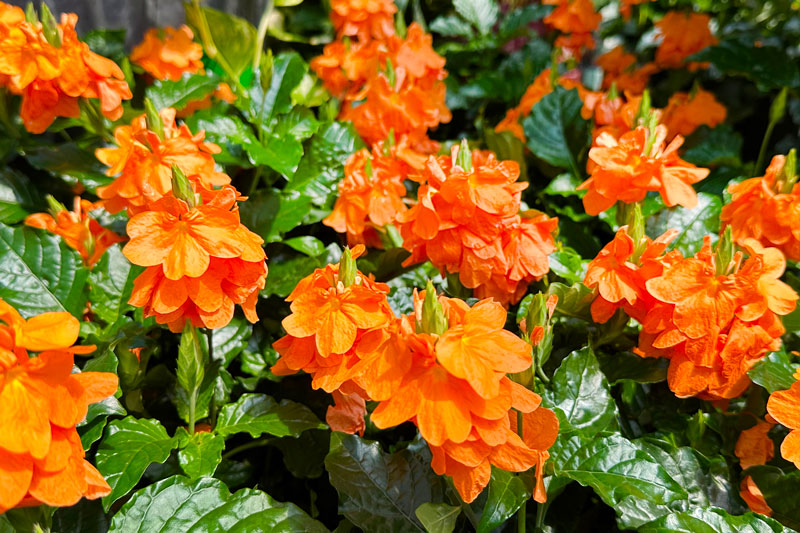
Stop the story! That’s what made this whole picture so unexpected. I was in the Texas A&M Floriculture Department greenhouses – as in Aggieland where everything bleeds maroon. How did they end up with this plant? But I looked past that and saw the real beauty in its rich color against its glossiest green foliage.
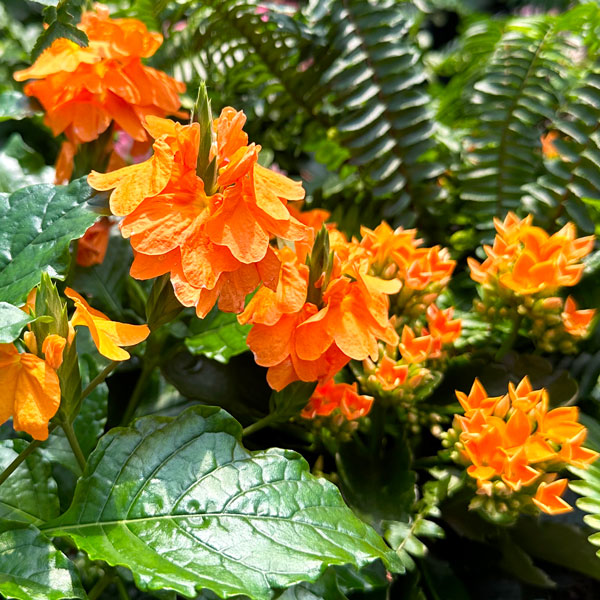
I found a nursery that was selling crossandras in Houston. Now I had my own plant, and I’ve been in love with them ever since. But they’ve never made the big time. Frankly, they need some new positive press, and that’s why I’m here.
What you need to know…
Common name: Most of us just call it “crossandra,” but you can use its scientific name. As Mary Poppins promised about a similar word, “If you say it loud enough, you’ll always sound precocious.”
Scientific name: Crossandra infundibuliformis
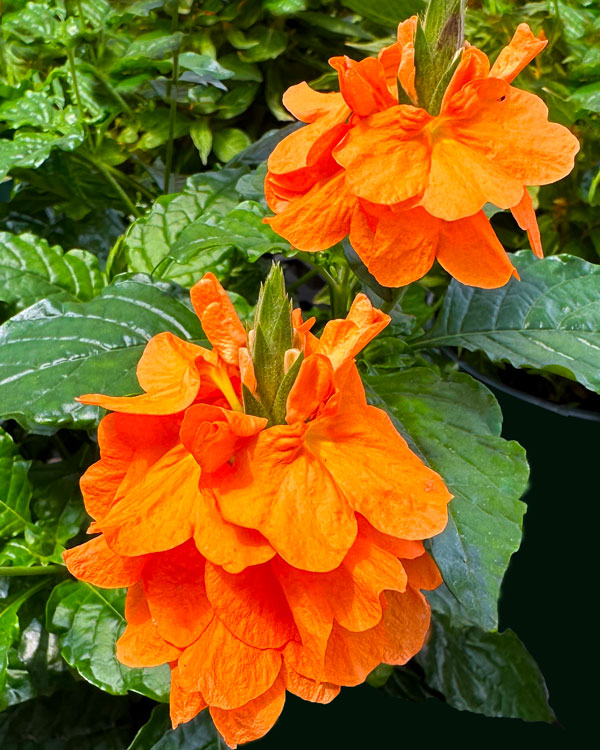
Plant Family: Acanthaceae
Native range: India, Sri Lanka, Bangladesh, Ethiopia, central and eastern tropical Africa.
Hardiness Zones: Will not withstand freezing temperatures, so it is a warm-season annual or greenhouse or sunroom tropical only.
Preferred temperatures: 60-90F.
Mature size: Compact “shrubby” growth to 6-10 in. tall and 10-12 in. wide, larger with age.
Sun/Shade: Full sun early fall through late spring, afternoon shade in the summer.
Soil preferences: Loose, highly organic, and well-draining.
Nutritional needs: Complete-and-balanced, water-soluble food monthly while growing actively. Less while growth slows in winter.
Propagation: 4-in. terminal tip cuttings, seed, or (commercial growers) tissue culture. Note: Plants grown from seed may vary in flower color.
Breeding work: Hybridizers in India have sought tetraploids and sterile triploids, also compact growth habits, and unusual colors, larger flowers, and more abundant blooms.