
Stowaways love America
Note: Try as I did to get photos from our front porch, our geckos were high up in the corners and too small to shoot with the equipment and legs that I have. I have borrowed outstanding photos taken by Gary Nafis for the website CaliforniaHerps.com. Full credit for those images and for the two maps go to them on these pages.
You get a glimpse of them scurrying up the wall beneath the porch light. You see them camped out on the ceiling of the overhang where the night-flyers congregate. They’re very small, so you figure they must be dining on mosquitoes and other small insects. And you’re right.
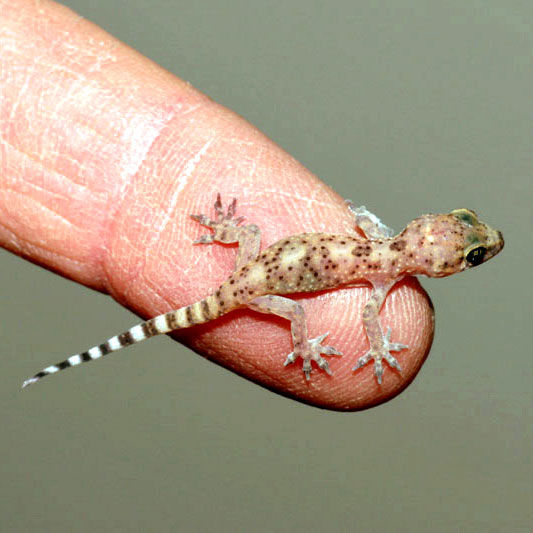
But who are these little lizards with almost clear bodies? Where did they come from. Those of us who grew up here in Texas don’t recall seeing them as kids.
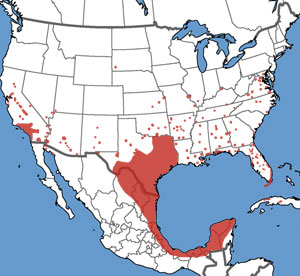

Show distribution of Mediterranean house geckos currently in the United States, also in the world.
They’re called Mediterranean house geckos (Hemidactylus turcicus), and somehow they made their way into America back in the 1910-1920 era, probably in a southern port city such as Key West, Florida, or Galveston, Texas. As their name suggests, they came from Mediterranean countries like Spain, Turkey, and Cyprus. They may have been brought in as tiny pets, but it’s also plausible that they hitched a ride in with nursery stock or other agricultural goods.
However they got here, they liked it here, and their numbers spread across the South and East Coasts. They like it warm, and they like it humid. Sounds like home, doesn’t it!
Their bodies are pale tan, almost translucent in color. If you shine a light on them, you may be able to see their hearts beating. You may even be able to see eggs developing.
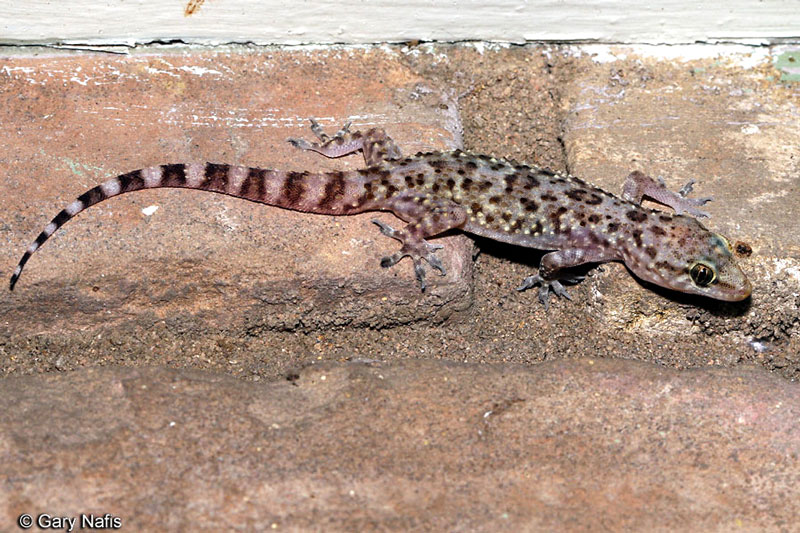
Most of the geckos I see around our house are less than 3 inches long, but scientific reports say they can grow to be 5 inches in length. They occasionally scoot into our house when we open a door, and I must admit that the little ones aren’t any concern, but I’d prefer not to have a 5-inch one run across the floor in front of me first thing in the morning.
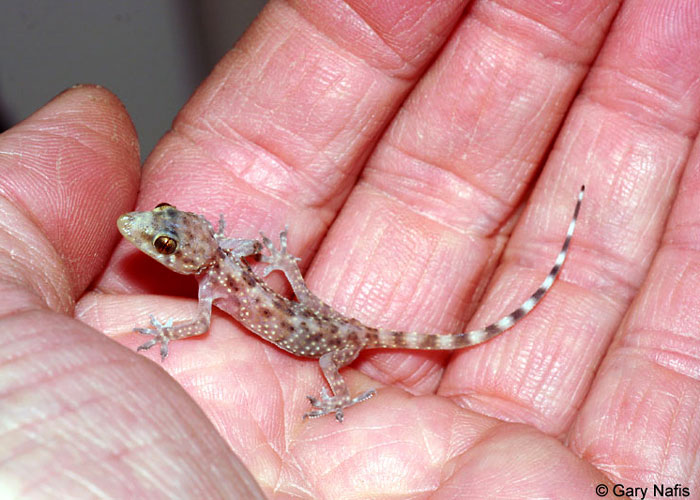
Their feet have fingers ending in sticky pads that enable them to climb slick vertical surfaces with ease. Their eyes have no lids.
These geckos do no harm to humans or pets. They feed on insects exclusively, so for that they are considered beneficial. They are gentle in nature, and they prefer to stay out of sight.
If you want to get one to move back outdoors, simply use a clear plastic cup set down over it, then slide a sheet of paper beneath it to capture the gecko. Flip the cup over and carry him out. (If I sound like the voice of experience, it’s because I’ve transported dozens of them exactly that way. I use the 5×8 junk mail cards for that purpose.)
So, now you’ve met more of your neighbors. They’re good folks. Treat them well and they’ll be a help around the house.