
Oxblood lilies blooming again
It was 40 or more years ago, a day in late May. I was visiting the daylily gardens of renowned grower Tom Hughes along US 287 in little old Mansfield (Oh, how it’s changed!).
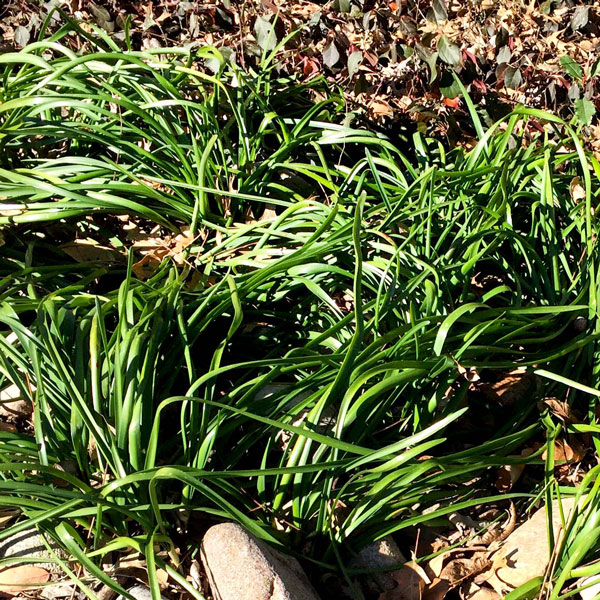
I’d already bought a boatload of daylilies from Tom when we came across a row of dense foliage. “What’s that?” I asked him unknowingly. “Here. I’ll give you some,” he said as he dug up several large clumps. “Plant them when you get home and you’ll find out come fall.”
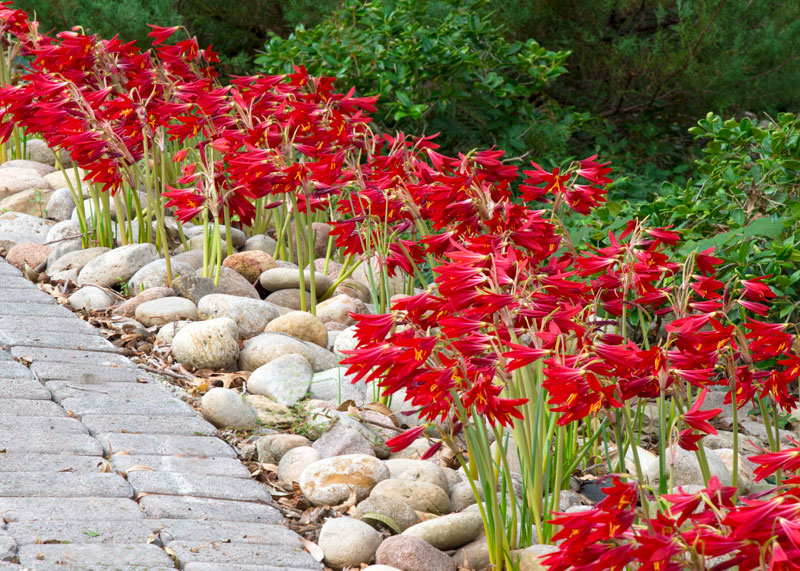
Four months later I met oxblood lilies when all those bulbs came into full bloom. That foliage they had that day in May was about to die down for the summer and it was the perfect time to dig them. My original bulbs are still growing where I planted them back in the early 1980s, and they’ve gotten better and better.
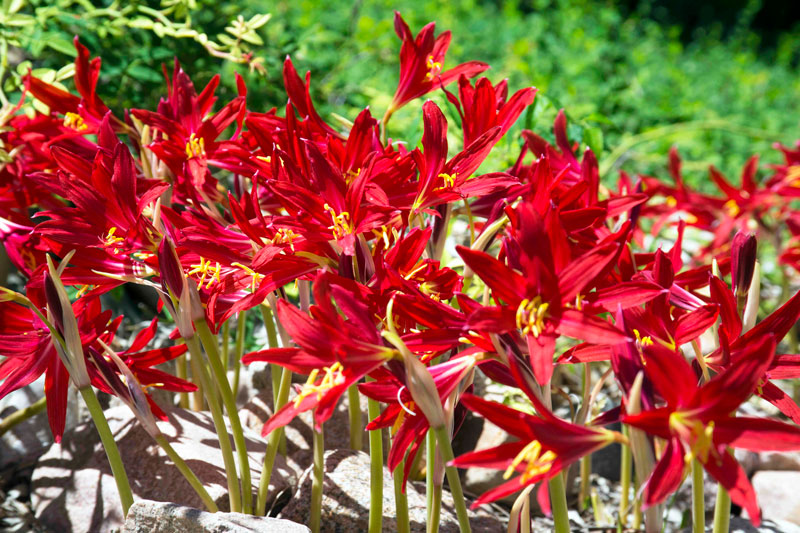
Since that time I’ve added 100 more bulbs that I found on eBay along our driveway, and they’ve been blooming for the past three weeks. They just finished Round 2 of blooms, and I’d suspect that one more round will be popping up into bloom within the next week. That’s the way they behave in our garden.
Note: Beware of buying bulbs off eBay. The first batch I bought were just fine, but the second bunch were much smaller. It took them several years to get large enough to produce flowers.
Enough of the narrative. Let me give you the facts in a quicker format.
What you need to know about oxblood lilies…
• Common name: Oxblood lilies, schoolhouse lilies, hurricane lilies (last two names because of season in which they flower).
• Scientific name: Rhodophiala bifida
• Native home: Argentina, Uruguay.
• Imported information: Brought into Texas by German plantsman and Central Texas settler Heinrich Oberwetter in the 1850s. They became very popular in the areas settled by German immigrants and many still exist around old homesites decades later.
• Annuals/perennials: Perennial, from bulbs.
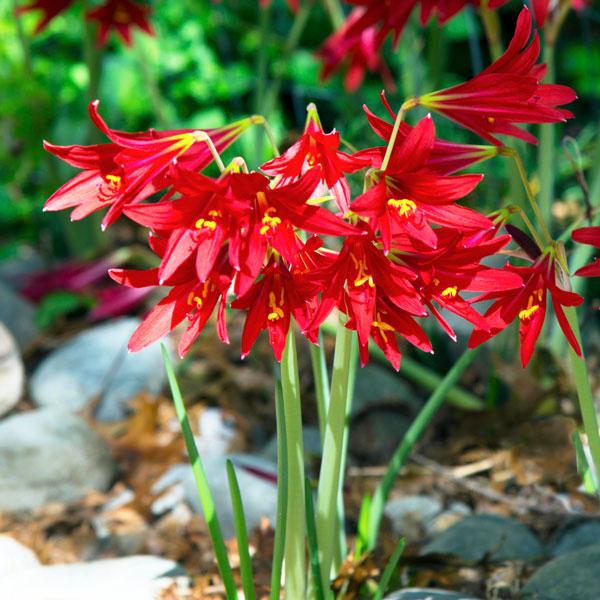
• Height while blooming: 12-16 in.
• Flowers: Crimson red, trumpet-shaped. Specialty bulb growers occasionally offer hybrids and selections with slight variations in color.
• Sun/shade: Sun or part shade.
• Soil preference: Tolerant of most soils as long as they drain well. Heavy foliage in spring requires moist soils.
• Hardiness Zones: 7-11. May be slightly tender toward north end of Zone 7 in extreme winters.
• Propagation: Division of bulbs after foliage dies to ground in late spring. This can be done every few years if plants are vigorous, or plants can be left to form dense clumps.
• Pest problems: Nothing common.
Notice of important bulb sale…
• Smith County Master Gardeners’ annual “From Bulbs to Blooms” Conference and Sale. The 2025 online sale October 13-22 with pickup at Pollard United Methodist Church in Tyler following the lecture, Dr. Greg Grant featured speaker. Details are at https://txmgsc.org/event/from-bulbs-to-blooms-conference-and-bulb-sale/ or follow Smith County Master Gardeners on Facebook.
Note from Neil: This is a chance to pick up rare bulb selections you may never see from any other sources.