
Webworms shrouding our trees
Some years are worse about webworms than others. It’s too early to know how serious they’ll be this fall, but they’re already popping up across Texas, so it’s time to cover them. I’ll address it in 8 quick factoids that should give you enough information to get through their season.
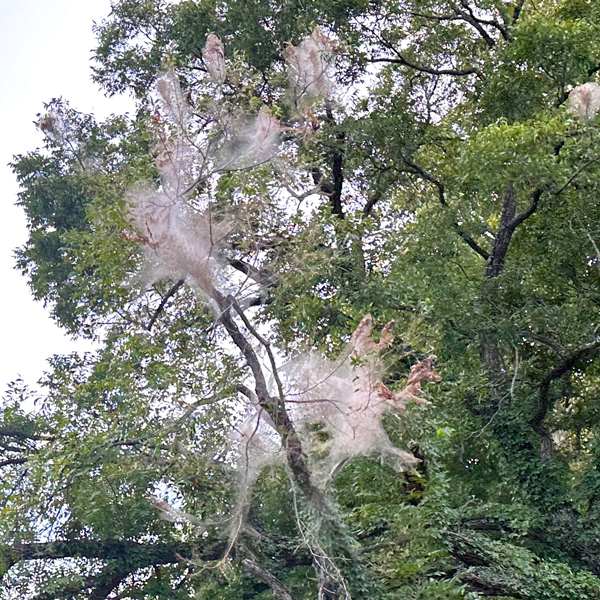
What you’ll need to know…
Here are the simple facts about fall webworms.
• When do they attack? Late August through early October, although they’ll occasionally show up in spring.
• What plants are affected? Many species of trees (hardwoods, not conifers), most notably pecans, hickories, walnuts, oaks, sweetgums.
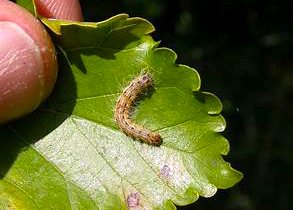
• How do they get started? After over-wintering as pupae on the ground or on bark on trunks, adult moths emerge, mate, and deposit their egg masses on undersides of leaves of host plants.
• How do the caterpillars develop? Each mass can contain up to 600 eggs. As the caterpillars hatch and begin feeding, the larvae build their silk webs for protection. All larvae within a web are the offspring of one female’s egg mass.
• How much damage can they do as they feed? If left unchecked, webworms can strip all the foliage within their webs. Those webs can become quite large (several feet in diameter). However, since the loss of leaves is usually toward the end of the growing season, damage is usually insignificant.

• Can they be eliminated? The webs are unsightly. They will gradually fall from the tree as leaves come down in late fall and over the winter. If you want to get rid of them before that, however, you can use a pole saw, a garden rake, or a piece of PVC pipe with a wire hook securely taped at the end to break the webs open. Once exposed to the elements and predatory birds, the larvae will be gone fairly quickly.
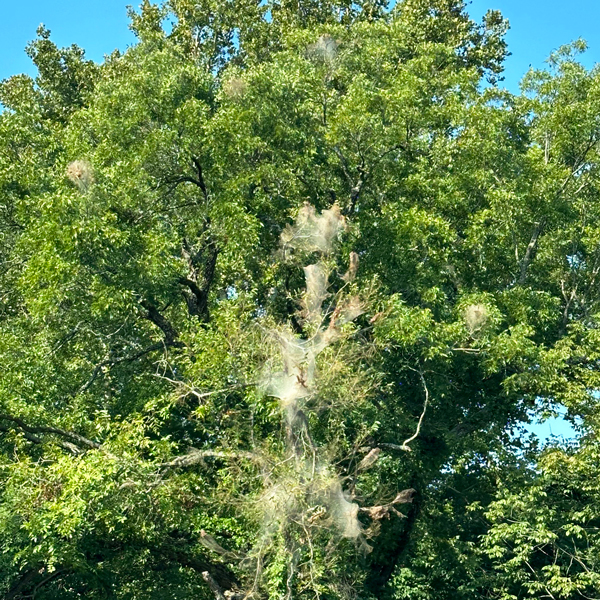
• Can they be sprayed? Yes. Bacillus thuringiensis biological worm spray or Spinosad can be used to kill the caterpillars without harming beneficial insects. However, you will need a powerful sprayer to penetrate the webs.
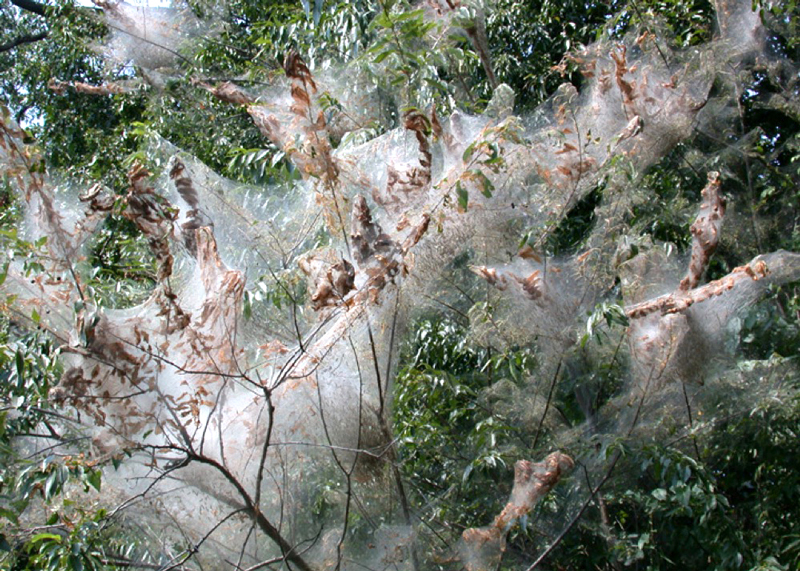
• Are they a risk to our trees? On a scale of 1 to 10, with 10 being the worst, how much of a threat are fall webworms to our pecans and other trees? It’s just my own personal observation (I’m a horticulturist, not a trained entomologist), I’d rate these as a 1 or a 2 depending on the tree species, whether they attack in the spring or the fall, and if you take any steps to stop them before they get out of hand.