
Fatsias bring exotic good looks
If you’re looking for a way to add excitement to a shaded corner or textural interest to a landscape that’s filled with less prominent plants, fatsias might just be your solution.
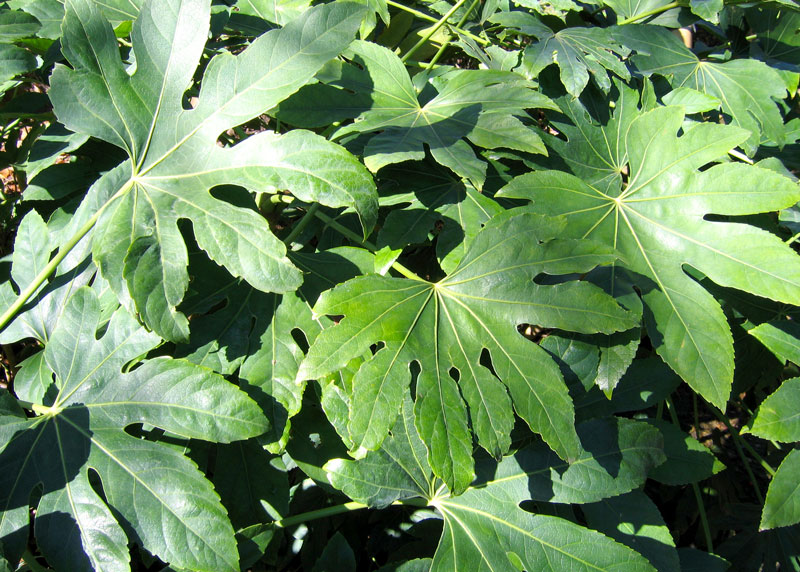
Here are its qualifications…
• Evergreen shrub with strong upright stems.
• Grows to 5 ft. tall and wide.
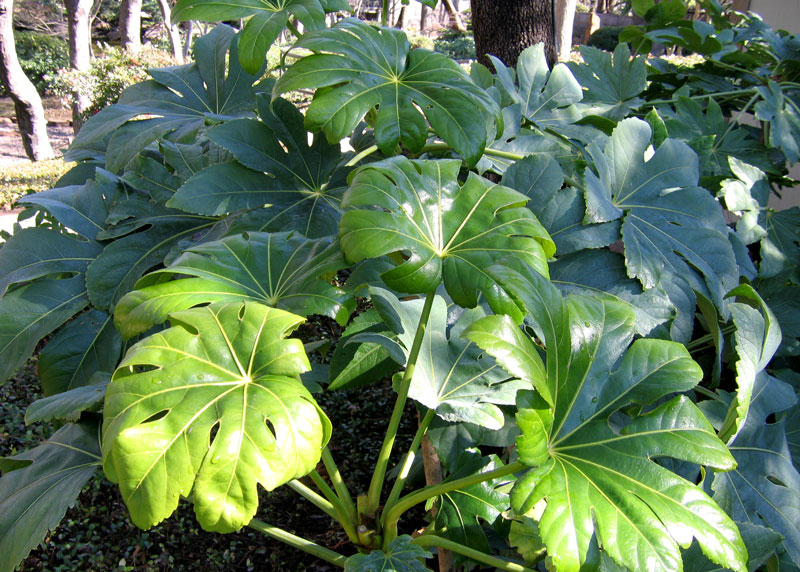
• Medium-green, star-shaped leaves can reach the size of an adult’s hand or even larger.
• Leaves are deeply lobed (7-11 lobes) with slightly serrated margins. They are leathery and glossy, making them very attractive in the landscape.
• Especially dramatic when given night lighting onto its foliage.
• Excellent choice for patio pots but will require extra winter protection with those uses.
• Fits perfectly into an Asian or sensory garden where its unique foliage will draw special attention.
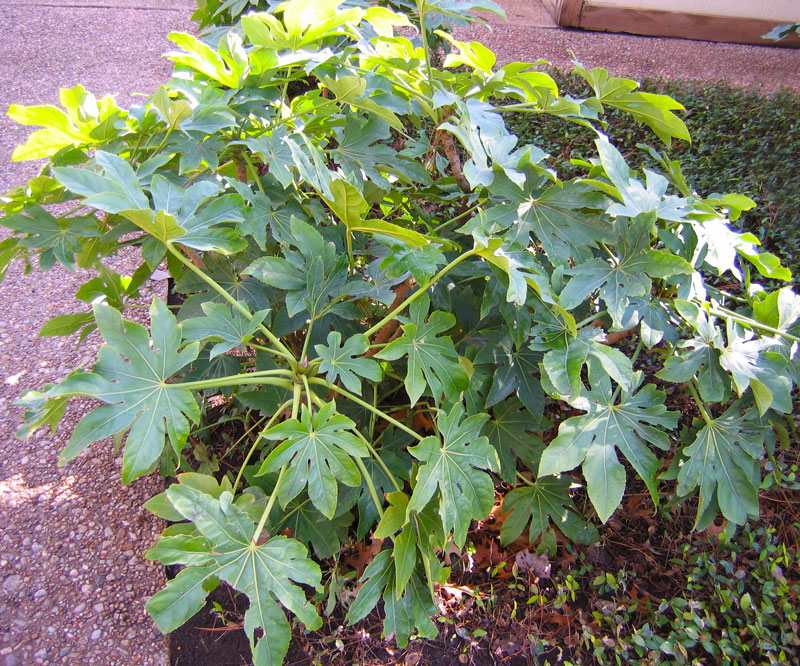
• Good companion plant for elephant ears, caladiums, cast iron plants (aspidistra), palms such as Sabal minor, leopard plant, holly ferns, and nandinas.
What you’ll want to know about Fatsias…
These are the background facts you’ll want to have when you start talking to friends about your new plant.
Scientific name: Fatsia japonica
Plant Family: Araliaceae
Native home: Korea and Japan
U.S.D.A. Plant Hardiness Zones: 7b – 10b (warmest two-thirds of the state)
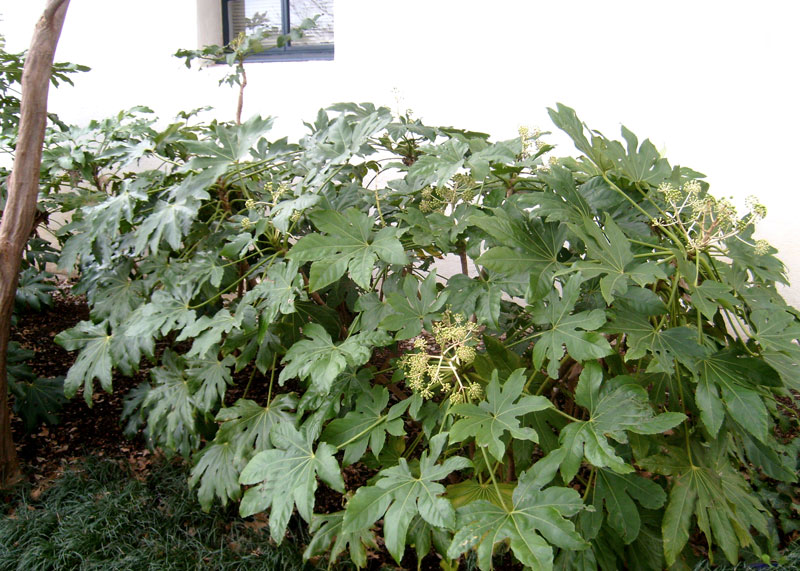
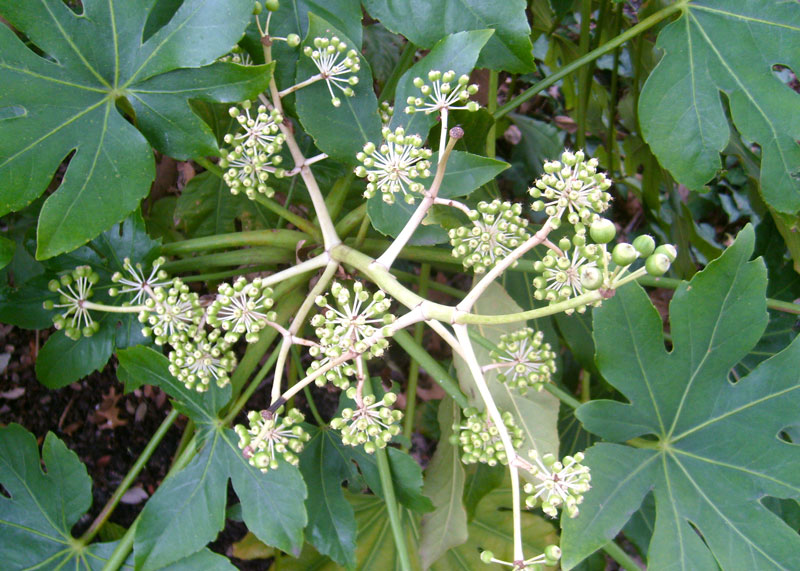
Flowers: Winter, white blooms borne in umbels resembling the lit ball atop Reunion Tower in Downtown Dallas. Flowers October through December and serving as late fall pollinators.
Fruit: Where they don’t freeze, showy clusters of black drupes appear. They are non-toxic to cats and dogs and are popular with birds. Should not be consumed by humans.
Note of interest: Fatsia japonica is one of the two parents of Fatshedera lizei, a leaning vining sort of plant that goes by the name of “botanical wonder.” Its other parent is Hedera helix, English ivy. That makes it a rare intergeneric hybrid.
Here’s how to care for your fatsia…
These are low-maintenance shrubs if you follow a few guidelines.
• Shade or morning sun. This is a plant that just can’t handle afternoon sun in the summer here in the Southwest.
• Suited to a variety of soils, but prefers acidic, highly organic soils. Good drainage is essential to prevent root issues.
• Feed it with a high-nitrogen or all-nitrogen lawn-type fertilizer in early spring as new growth is emerging.
• Keep its soil moist at all times. Remember to water it ahead of severe cold spells. Water it thoroughly by hand for its first year as it establishes deep roots in its new home.
• If extreme cold is expected, cover your plant to the ground with lightweight frost cloth.
• Little pruning is needed except to remove old leaves that have lost their rich color.