
Winter Damage to our Trees
Steve Houser*
Arborilogical Services
Winters can do serious harm to our Texas trees. We are still seeing damage from the extremely cold temperatures of February 2021. Last week’s weather has been tough on trees and other plants across Texas.
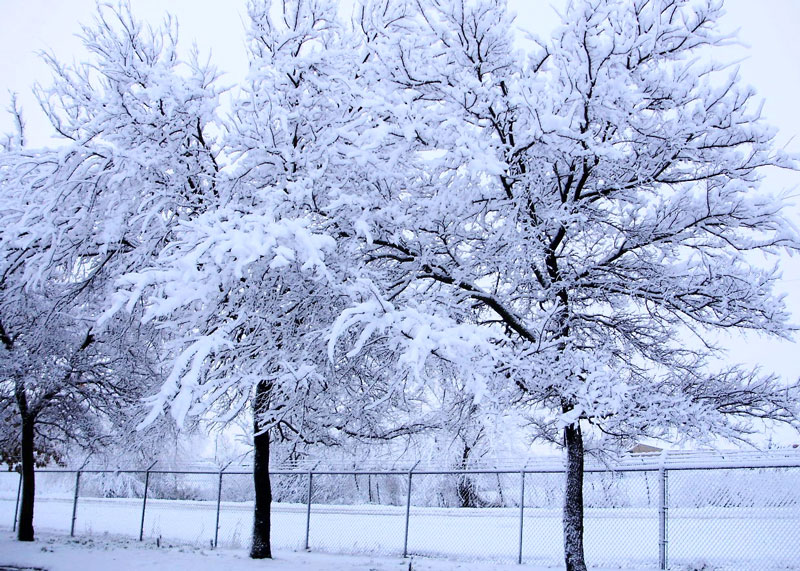
However, there is hope. Proper care can help reduce potential damage to trees caused by accumulations of ice, sleet, and snow. As the old saying advises, “An ounce of prevention is worth a pound of cure.”
The primary cause of broken limbs and trunks comes from the weight of the ice, sleet, and snow. That’s especially true if the tree has any structural issues such as weak limb attachments, internal cracks, or areas of decay. These increase the potential for structural failure. Some trees have weaker wood, so species like silver maples and cottonwoods are more likely to sustain damage in winter storms.
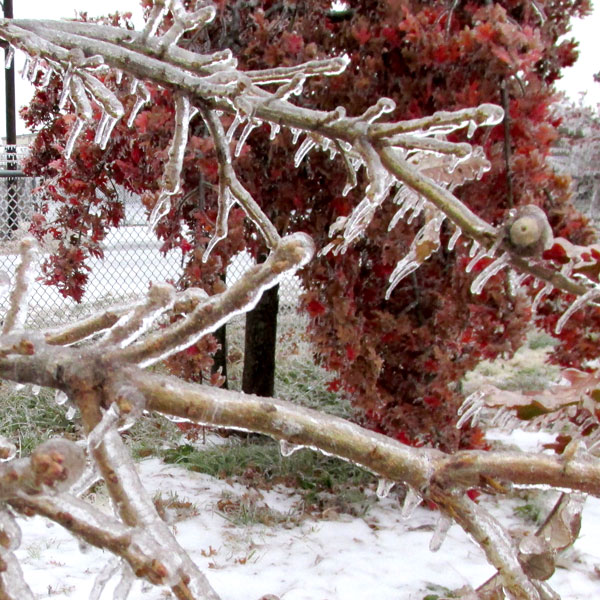
Ice formation is primarily due to rain drops freezing as they touch surfaces that are colder than 32F.
High humidity can also cause ice to form. Areas of Texas experienced freezing fog in the recent cold spell. Moisture in the air gathered on all freezing surfaces, leaves and branches included.
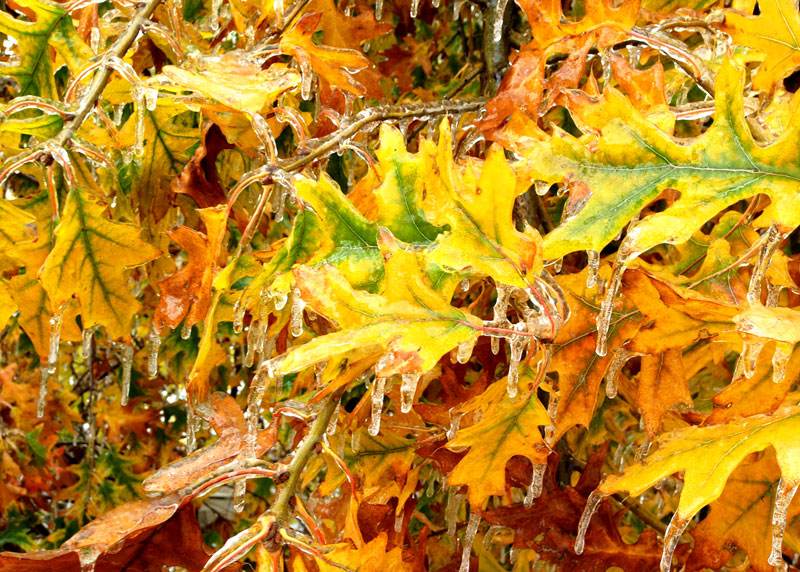
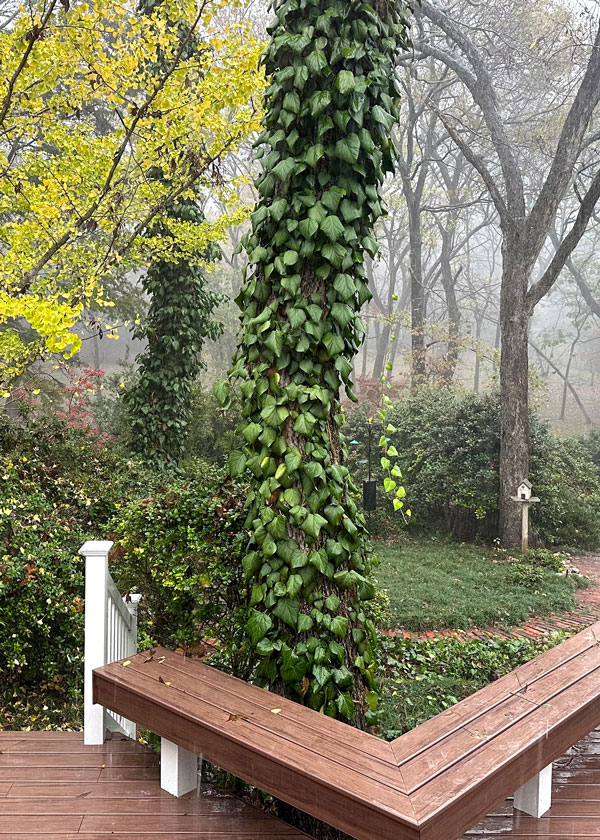
Trees that hold their foliage in the winter (conifers, live oaks, southern magnolias, hollies, etc.) have greatly increased surface areas on which ice can form. Some species hold their leaves late into the fall and early winter. Red oaks are notorious for doing that. Snow can also accumulate on those surfaces, adding its weight in the process. People who allow the evergreen English ivy to grow out on trees’ branches add to the risks.
Each gallon of ice adds more than 9 pounds of weight to a tree’s branch structure. Freezing rain accumulates the ice fastest, sometimes up to three times the normal weight of the branch itself. When that exceeds the branch’s capacity to support itself, the limb breaks.
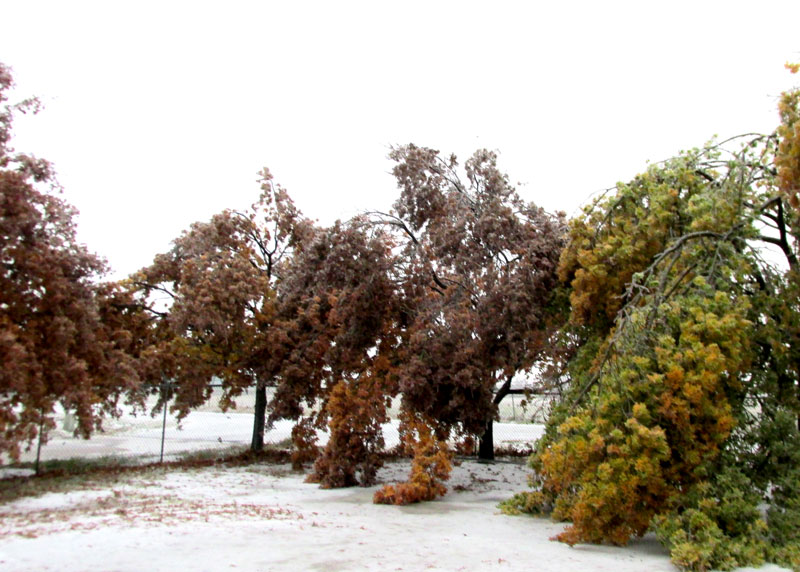
Bent limbs will return to their normal shape unless internal cracks have developed. It is not necessary to knock ice off limbs. That can be dangerous to both the gardener and to the branch itself.
Preventive measures include a thorough assessment and recommendations from a qualified consulting arborist. An arborist may also have a specific level of qualification known as “Tree Risk Assessment Qualified.”
There are different levels of tree assessment with the first being a visual inspection. In some cases, there is a need for a more detailed analysis to determine the level of risk or the potential for structural failure.
Arborists look for many things including weak branch unions, areas of decay, or cracks in trunks, limbs, or root structures. Decayed areas are analyzed using several methods and trees of concern may require a tool that measures decay called a resistograph. Weak areas may require the installation of bracing rods or cables to provide support and help reduce the potential for structural failure.
Reducing the risk also requires proper pruning according to industry standards. A tree should look natural after pruning and low limbs should not be raised too high. Avoid removing too much foliage as it decreases health and increases the potential for structural failure. Also, longer limbs should have foliage removed on the ends to help reduce the accumulating weight of ice, sleet, and snow.
A good rule of thumb: if your tree is damaged and the canopy loss is more than 50 percent, the health of your tree may continue to decline over time. If the canopy loss is more than 70 percent, removal of the tree is most often recommended.
Proper tree care and ongoing maintenance from a reputable company with certified arborists will help your trees live long and healthy lives.
*Steve Houser is co-founder and owner of Arborilogical Services, Inc. He has been a leading advocate of trees all his life. Among his many honors, Steve was recognized as Arborist of the Year for the State of Texas more than 20 years ago, and he’s still out there helping people and their trees to this day. We are proud to have had Arborilogical Services as a supporter of e-gardens since day one.