
Love you some Aglaonemas
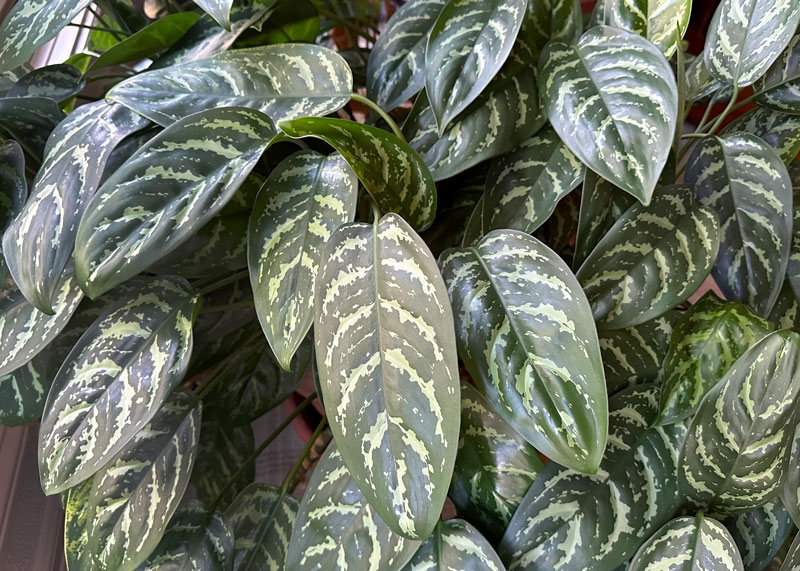
I took my first foliage plant courses at A&M back in the ‘60s. Aglaonemas consisted of a handful of green and silver variegated varieties of plants from Southeast Asia. They were easily grown and pleasant to look at, but there wasn’t much variety.
At that time Apopka, Florida, a little town of just a few thousand was on its way to becoming the center of tropical plants for America. Tissue culture labs were springing up all over the place.
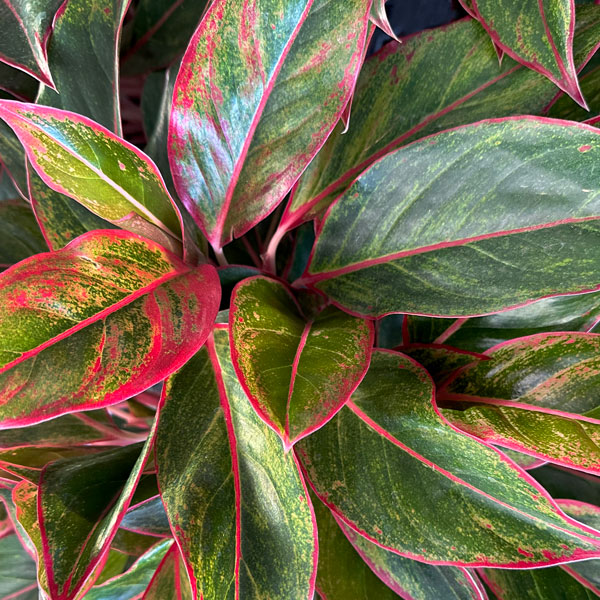
Dr. Richard Henny of the University of Florida had a keen interest in Aglaonemas, and he saw an opportunity to cross silver/green cultivars with species with red veins to introduce color to his seedlings while still maintaining the compact nature of the silvery types.
Plant breeders in Thailand, Indonesia, Taiwan, and the Philippines entered the picture. They wanted to bring red or pink pigments onto the leaf blades, also narrower, more compact leaf forms from the offspring.
Plant hybridizers have established techniques for crossing different species, then backcrossing their seedlings to emphasize their desired traits as they work to select those clones that best exhibit their goals. That’s true in all types of hybridizing, and it was the secret in developing these exciting new clones of Aglaonemas.
Tissue culture allows all this to proceed at breakneck pace, as desirable seedlings could be increased for breeding work, then for propagation of the final products into the market.
That’s just what we’ve witnessed as all this has evolved. Here’s the short form of the timeline:
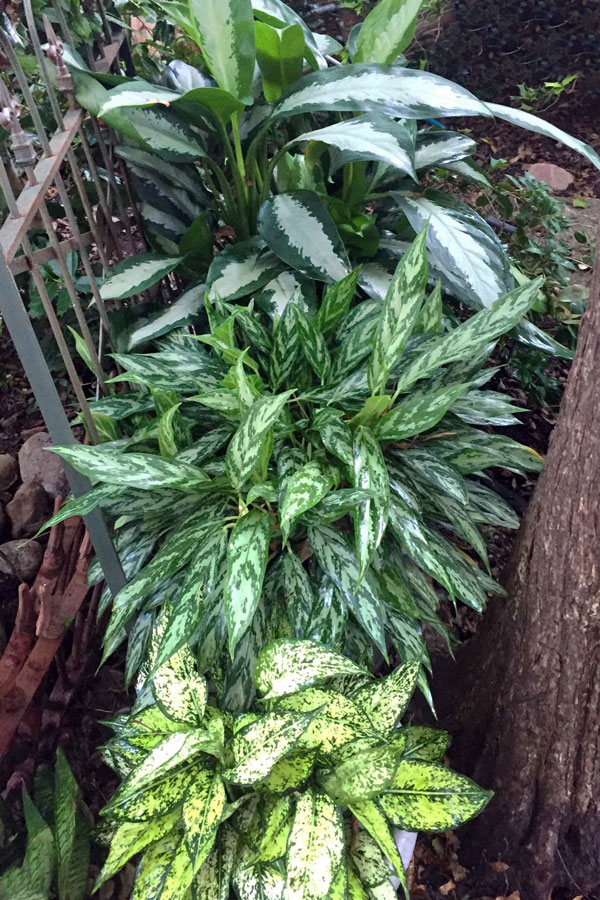
Pre-1960: Silver/green species only
1970s: Florida hybridization with Dr. Richard Henny began
1980s: First red-veined cultivars developed
1990s: Asian breeding program took root
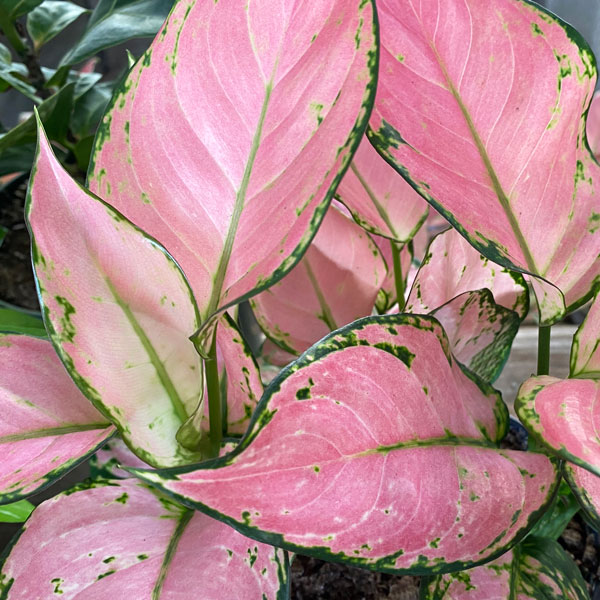
2000s: Pink-bladed cultivars hit big time
2010s and beyond: Speckled and tricolor refinement
Caring for Aglaonemas indoors…
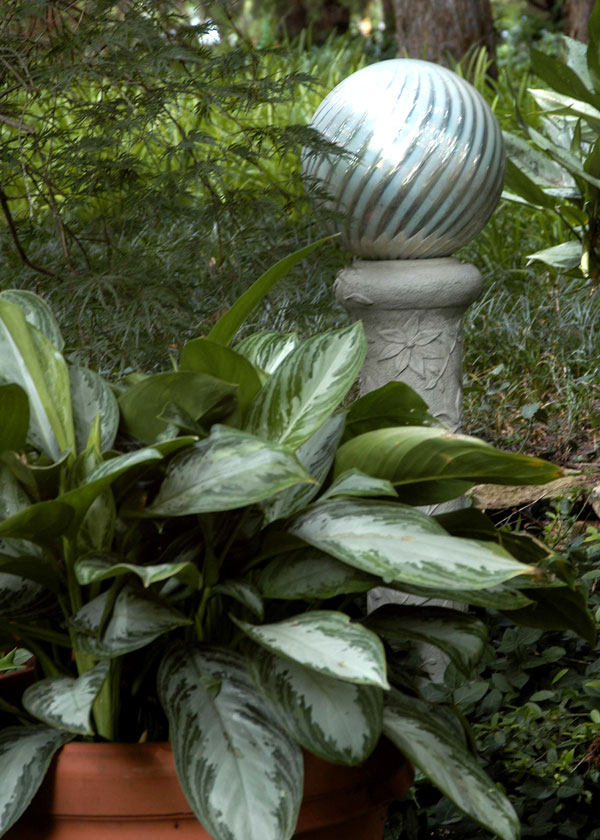
• Among our best indoor plants for medium light, even moderately low light conditions.
• Avoid direct sunlight, especially during the summer.
• Do best in “people” temperatures of 65-80F. Do not expose to temperatures near or below freezing.
• Grow in loose, highly organic potting soil. If you grow in 12- to 14-in. containers you may not need to repot more than once every few years.
• Keep soil moist at all times, never allowing plants to wilt, but never keeping them soggy.
• Trim off dead leaves and “Jack-in-the-pulpit” type flowers with shears.
• Fertilize with high-nitrogen, water-soluble plant food every couple of months. Aglaonemas do not need high levels of nutrition. Cut back in darker days of winter.
• Few pests bother Aglaonemas. Mealy bugs will be most common. If you find them, wipe them off with a cotton swab dipped in rubbing alcohol.
Note: I’ve had less experience with pink-leafed types in our home, but they seem to have a more narrow margin of error than their green counterparts. They have less chlorophyll, so that’s to be expected. They’re also more sensitive to sun, wind, and drought if you grow them outdoors in the shade in the summer.
Fun Note: Want to see the impact of a couple of men on the foliage plant industry? Look at this page from the University of Florida. It links you to the critical works of Drs. Richard Henny and Jianjun Chen. This is really fun reading!