
Chinese fringe tree is rare, but adapted – by Steve Huddleston
Chinese fringe trees are small ornamental trees that make graceful additions to spring landscapes in Texas. Unless they’re trained into single-trunked specimens, they slowly form multi-trunked little trees to 20 ft. tall and wide. But they develop slowly, growing only 6 to 10 in. per year.
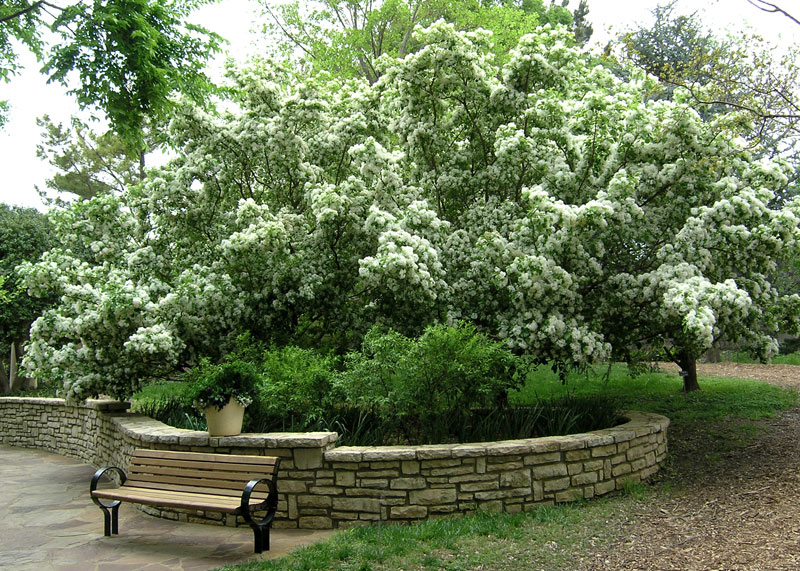
Some things you’ll want to know…
• Common name: Chinese fringe tree.
• Scientific name: Chionanthus retusus.
• Plant family: Oleaceae, or olive family.
• Native home: China, Korea, Japan.
• Adapted to USDA Hardiness Zones 5b-9b (most of Texas).
• Blooms are mildly fragrant and pure white. They appear after leaves have emerged and completely cover the plants for about two weeks.
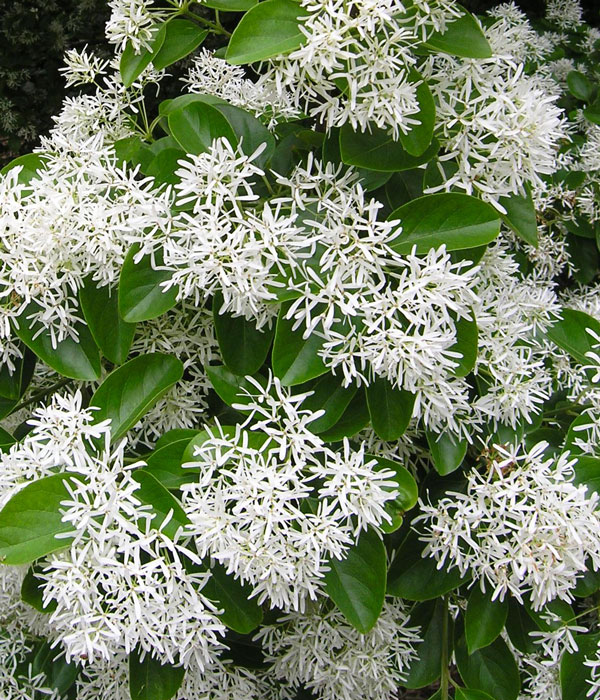
• Flowers are male or female (dioecious). Male flowers have longer petals and are, therefore, showier. However, both are attractive and you won’t be able to tell them apart at the nursery unless they are flowering when you’re shopping.
• Fruit: Bluish-black, olive-like about ½-in. long maturing in late summer and fall. Appealing to birds and other wildlife.
• Leaves: Bright green, leathery 4 in. long turning yellowish green in fall before dropping to expose grayish brown bark in winter.
• Soil preference: Moist, well-draining acidic soils, but adapted to other soil types as well.
• Sun preferences: Full morning sun, benefits from protection from hot afternoon sun. Flowering is best in full sun.
• Planting note: Transplants with difficulty, so buy in container and plant where it can grow permanently.
• Pruning: Looks best when lowest branches are allowed to remain, even touch the ground. In that respect it takes on appearance of a large shrub. Maintenance beneath the plant will be minimal.
• Pest problems: Few will be encountered. Scale can be controlled with horticultural oil sprays. Mites can be addressed with a labeled insecticide. Borers are more likely to attack trees already under stress from some other cause.
Note: Steve’s plants are sometimes in short supply in local nurseries. Call before you go in to see if this one can be ordered for you. It is available online, but mainly in small sizes as starter plants. The native American Fringetree, also known as Grancy greybeard, (Chionanthus virginicus) is more common, especially in native plant collections. It is similar in growth habit and appearance.