
Co-dominant stems may spell trouble
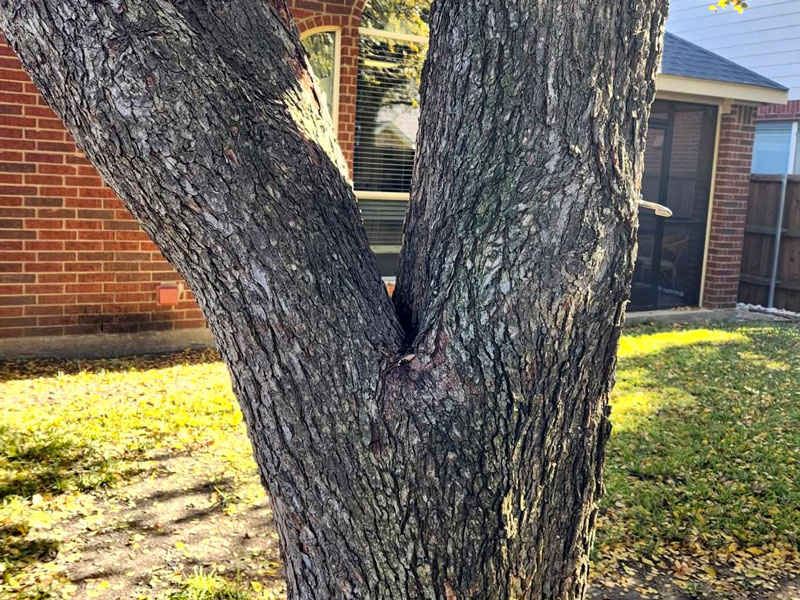
Most of us encounter this once or twice in our own landscapes. The pros at Arborilogical Services see it almost every day. I’m talking about trees with co-dominant trunks. I’ve adapted these notes from stories written by the certified arborists at Arborilogical Services of DFW.
Think of a wishbone – where the trunks play the starring roles. We all know what happens when the two sides of a wishbone are pulled apart, and that same thing can happen when forces like wind, snow, ice, or just weight act on co-dominant trunks of a tree.
Sometimes it’s easiest to see these co-dominant trunks while trees are bare in the winter, but usually they’re low enough in the trees’ canopies that they’ll be obvious when viewed from the ground. Look at your trees closely.
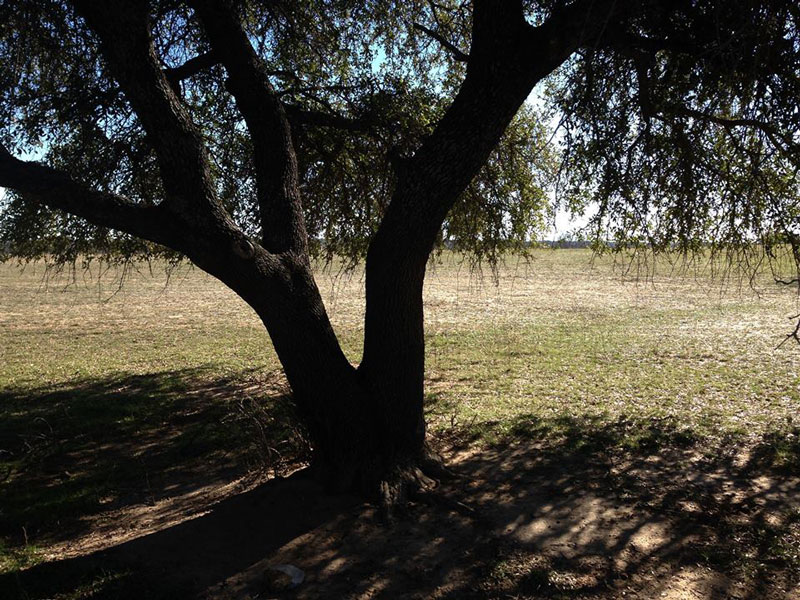
If you see the major trunks/branches coming out at equal angles from the center line, that tree may be vulnerable. It would probably be a good idea to ask your certified arborist if any corrective action might be needed the next time they’re out checking your trees.
What can be done for a tree with this type of branching? You usually can’t prune to remove one of the branches because that would cause the tree to be completely misshapen.
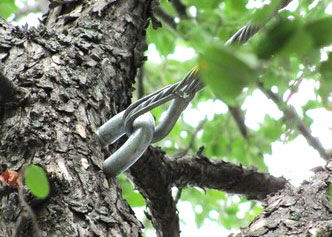
Certified arborists, however, will use cabling and bracing to reduce the risk of trunk splits. They’ll use sound arborilogical science to give your tree proactive care to increase its productive life span in your landscape by reducing movement, lessen stress at weak unions, and lower the risk of failure.
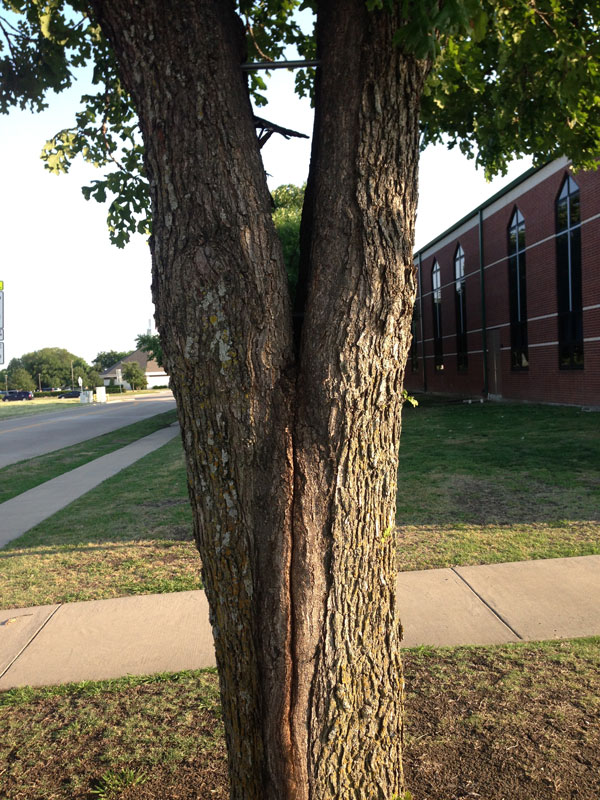
There are a great deal of physics and plant anatomy involved in where and how professionals install their cables. This kind of work needs to be done by experienced experts. Wherever you live and landscape, be sure you’re dealing with an ISA-certified arborist. Your trees deserve it.