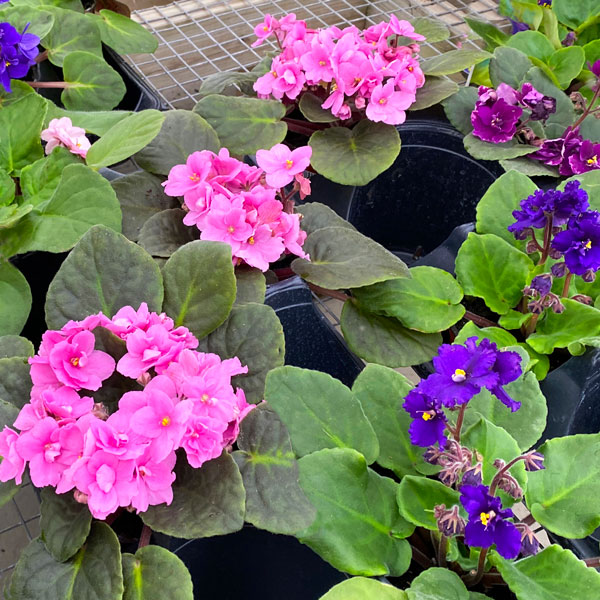
Inspired by their elegance
As a young horticulturist I thought these plants were strictly foo-foo. Something little old ladies grew on their windowsills.
Well, now that I’m a (not so little) man getting up in years myself, I’ve grown rather attached to them. They’re certainly not as demanding as some would have you believe, and their blooms are regal rising above the beautiful foliage. What’s not to love.
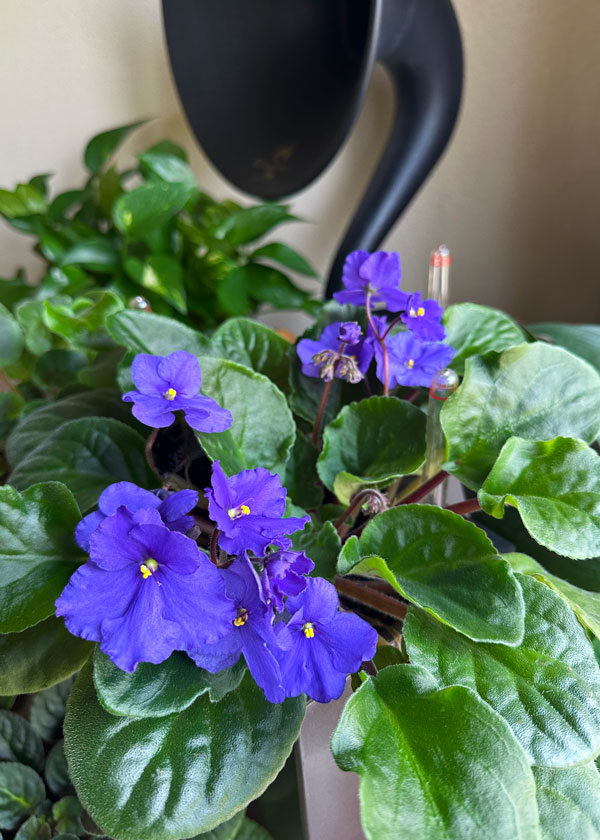
You’ll hear that they’re delicate – that you mustn’t breathe on them or their leaves will turn to mush. That’s not true. Here the real facts.
• You don’t want to slop water all over them. Their leaves will water spot like antique furniture with old varnish. But you’re more careful than that.
• Nor do you want to expose them to sunlight. A north or northeast window with bright light coming in would be ideal. Or, if you don’t mind something mechanical overhead, artificial lighting designed specifically for African violets and their relatives, the other Gesneriads works well.
• Their petioles (the “stems” of their leaves) are succulent and brittle, so you must be cautious in handling them. That’s not much to ask.
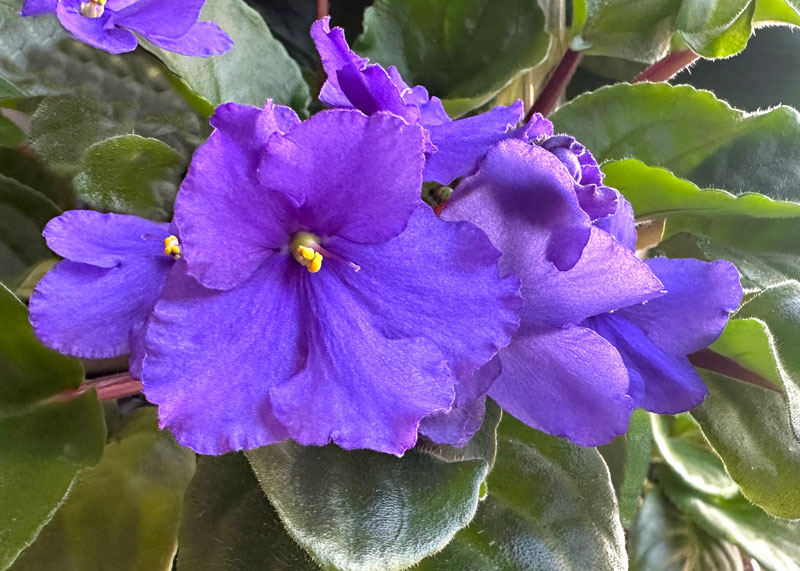
• And they need warm “people” temperatures (70sF) for their best growth. You’re going to have your house set there anyway, so that’s no imposition.
• Artificial soil mixes consisting of 70 percent sphagnum peat moss, 15 percent perlite, and 15 percent fine gravel or expanded shale is ideal.
• Fertilize your plants with a diluted, water-soluble specialty African violet food each time that you water them.
• “Show” violets are grown as single plants with the offshoots carefully plucked or cut off. Think of an old wooden wheel with spokes. The petioles play the parts of the spokes.
• If you want to propagate African violets you can allow some of the offsets to develop, then tap the mother plants out of their pots and separate them just as you would a clumping perennial.
• Commercial growers propagate their new plants from leaf cuttings. Each leaf, petiole still intact, will yield a new plant when rooted in potting soil or when suspended in a small jar of water with a piece of aluminum foil across its top. There are dozens of illustrative videos on YouTube.
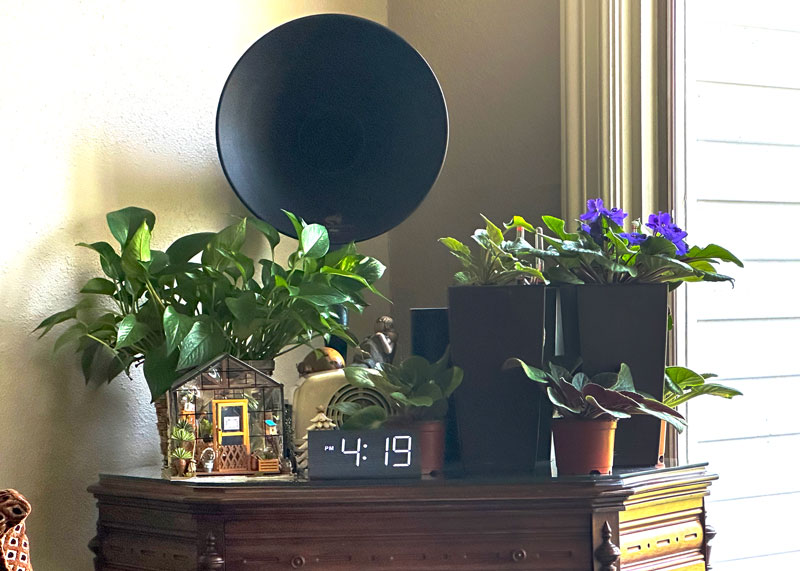
• I’ve been telling you about the Lechuza self-watering pots I’ve used for my African violets for 10-12 years. However, the style I like seems to be out of production now, and Lechuza pots have gone way up in price anyway, so I’ll just suggest you look at your favorite nursery or online for something that suits your tastes. More than any other plant that I’ve grown, the self-watering feature seems to help African violets.
That is my story on the Saintpaulias. I guess I’m now officially an old guy willing to recommend African violets for indoors and purple crape myrtles for outdoors. Whatever has happened to me!