
Parade of petunias
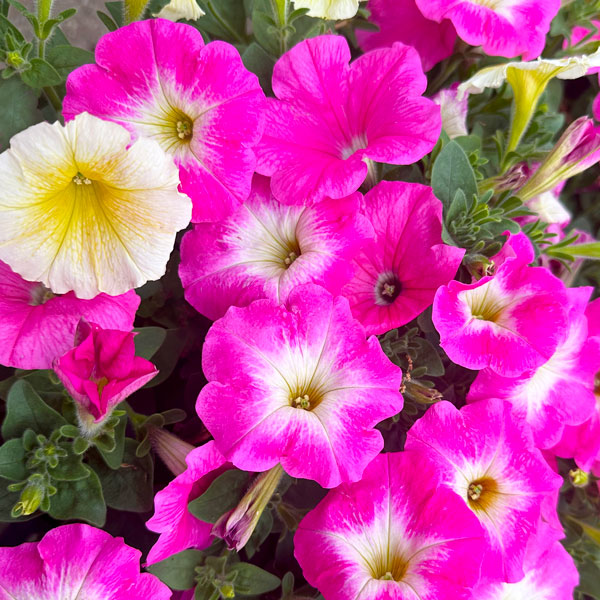
If you’ve ever lived in the Midwest, North, or Northeast, you know how beautiful petunias can be in the summertime garden.
Here in Texas, however, we must re-adjust our timing dramatically to get the best impact. Petunias are cool-season annuals, meaning they thrive in spring weather. We plant them 2-3 weeks before the average date of the last killing freeze, and then they look great until temperatures climb into the high 80s to stay. (This weekend’s abnormal heat is an exception that can be overlooked for now.)
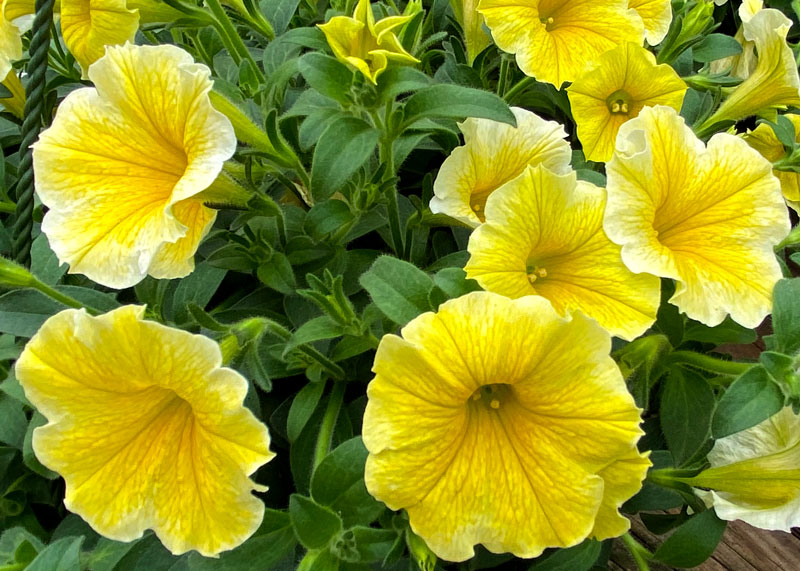
Note: Gardeners along the Texas Gulf Coast can even grow petunias as wintertime annuals with protection on those extremely rare times when temperatures drop well below freezing.
Good soil preparation is key to success. Rototill to 10-12 in. and incorporate 4-5 in. of a blend of different types of high-quality organic matter (sphagnum peat moss, well-decayed compost, well-rotted manure, finely ground bark mulch, along with 1 in. of expanded shale).
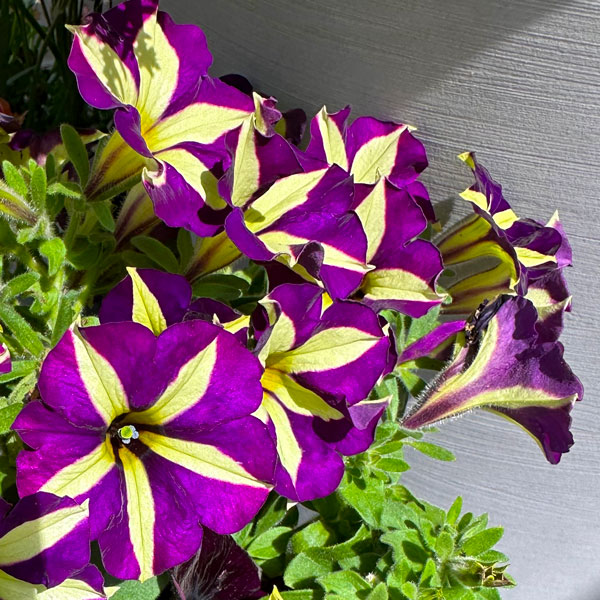
Blend all that together with one more pass with the rear-tine rototiller and rake the bed so it is rounded in the middle. That will ensure good drainage – an absolute must.
Petunias require full sun, and you want to select plants that are full and vigorous in 4-in. pots. Space them 8 in. apart so they will grow to fill quickly.
Commercial landscapers in many parts of Texas, especially the more northern areas where the cold damaged winter color beds of pansies, have been replacing them with petunias. From this point on, however, we’re on the brink of being too late for planting big masses of these lovely annuals.
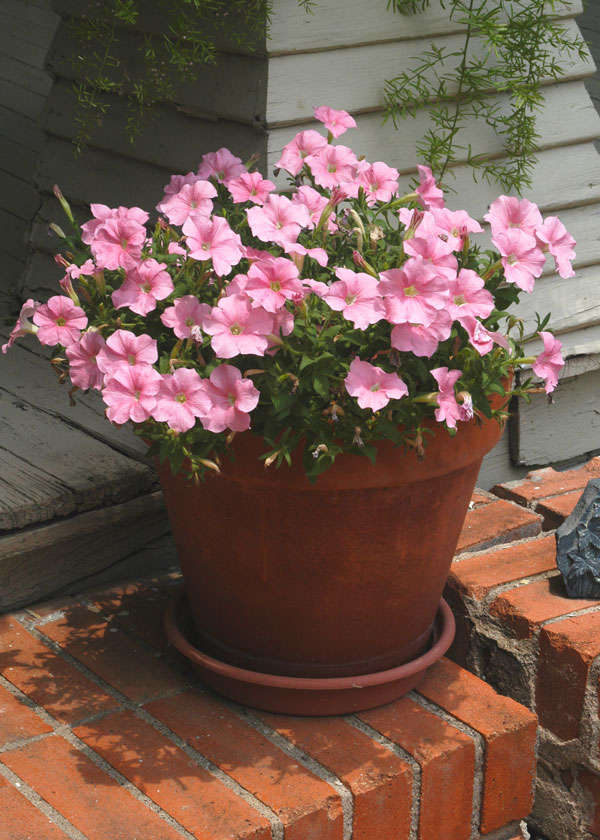
In my own landscape I’d switch over to large, decorative patio pots filled with the best potting soil I could buy or mix. Let the pots spill full of petunias. That way you can enjoy them for 8-10 or 12 weeks, then replace them with mid-summer color without having to redo an entire landscape bed in the process.
“Petunias” of a different flavor…
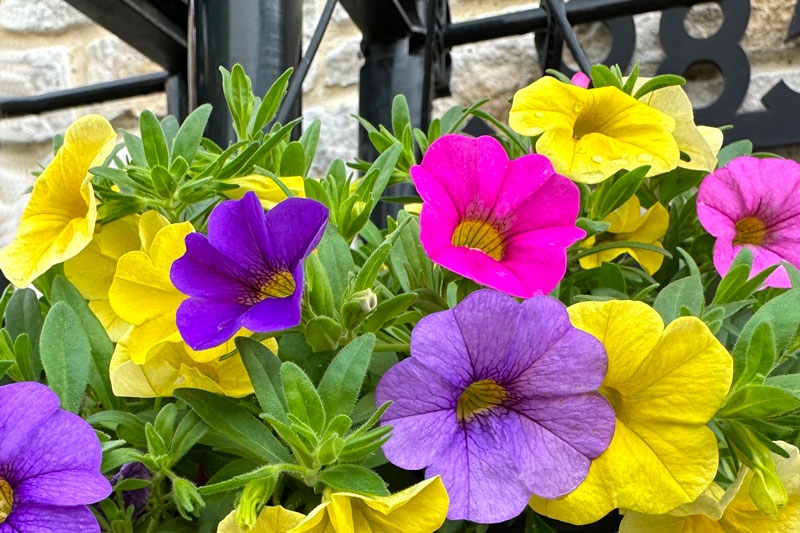
Some 30 years ago a new category of flowers came into the market. They looked like petunias and they grew like petunias – just better. But botanists, armed with chromosome numbers, put them into an entirely different genus: Calibrachoa.
Japanese breeders got busy right away and introduced the ‘Million Bells’ Calibrachoa series. That name stemmed from the apparent number of blooms each plant produced. Other growers followed suit and their variety lines flew onto the market.
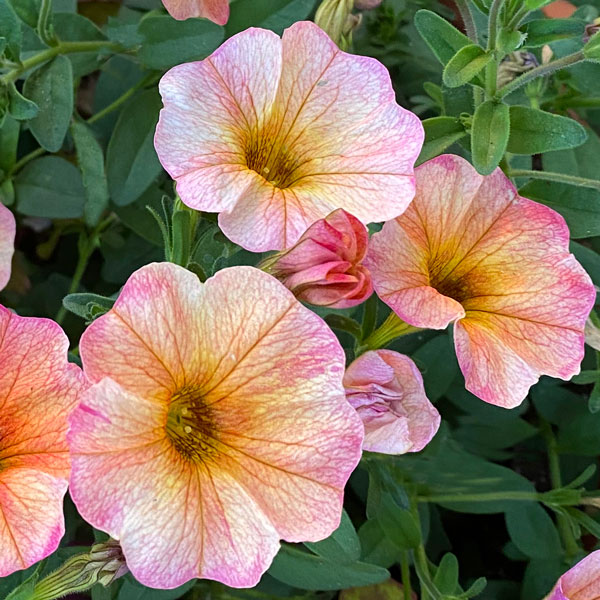
These “mini-petunias” were hits with gardeners world-wide for many good reasons:
• A single plant can display hundreds of blooms at one time.
• The plants are self-cleaning, meaning that the petals dry and fall to the ground when each flower is finished. They leave no mess behind.
• Their growth habit is perfect for hanging baskets and patio pots because of their naturally trailing habit.
• They hold up better in wind and rain that large-flowering petunias.
• Calibrachoas have a far broader color palette: copper, apricot, lime, bicolors, and star patterns in the petals.
• Better heat resistance, so plants stay in flower much farther into the summer. This is a huge improvement, and hybridizers are working to make them still better.
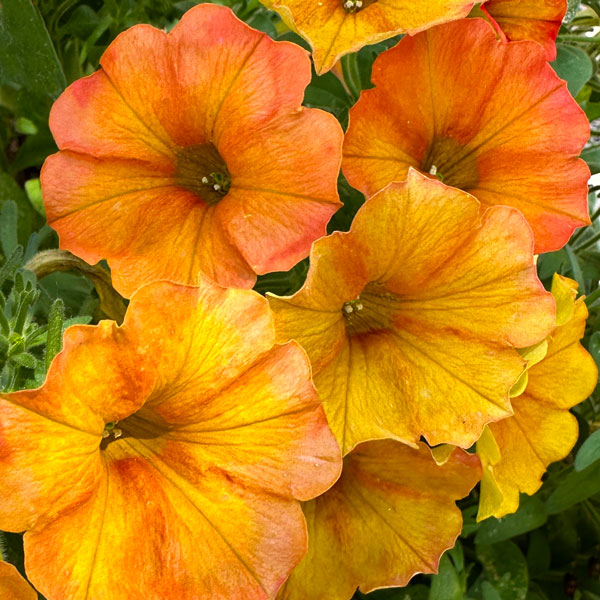
Superbells calibrachoa is one of the most widely sold series in Texas today, and its heat tolerance is a big reason. If you’ve never grown any of these little beauties before, this would be a great place to start. Look for selections such as Lemon Slice, Watermelon Punch, Coral Sun, and Grape Punch, among others.
Million Bells calibrachoa is still one of the most popular series, even though it’s been in the market for 35 years. It’s defined by its great range of colors: bright red, yellow, purple, magenta, orange, and white, among others. It’s recognized for its extraordinarily heavy flower production.
Much of Texas is dominated by alkaline soils and alkaline irrigation water. Growers and landscapers soon realized that petunias and especially the calibrachoas require slightly acidic soils and water. Therefore, adding a sulfur soil acidifier along with all that organic matter at the time of bed preparation is important. It’s also why many landscapers use them, especially the calibrachoas, almost exclusively in baskets and containers where they have the best control of their planting mixes.