
Subtle but deadly to cypresses and junipers
Veteran gardeners often think of spider mites as late spring and summertime pests that attack plants like beans, marigolds, violets, and tomatoes. Fact is, they’re the most universal “insect” we have.
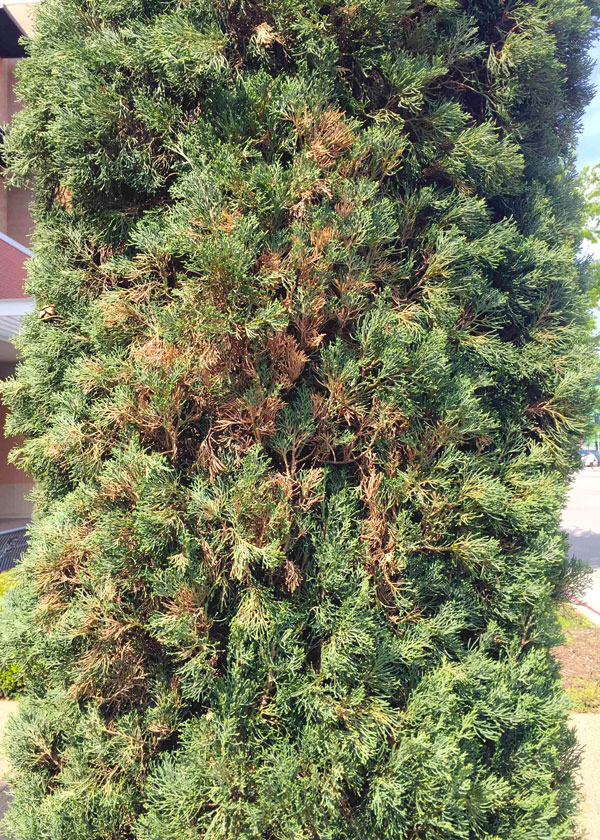
“Insect” goes in quotes because these are 8-legged varmints more closely related to spiders and ticks than they are to 6-legged fleas and grasshoppers. They’re ultra-tiny. You could put 30 or 40 shoulder-to-shoulder on the head of a pin.
If you want to see them without a hand lens, take a sheet of white paper and thump one of the drab green twigs firmly one time against it. Watch the paper closely. You’ll see some very tiny specks land on the paper. Some will be dust and will just sit there, while others will quickly show legs and start moving around.
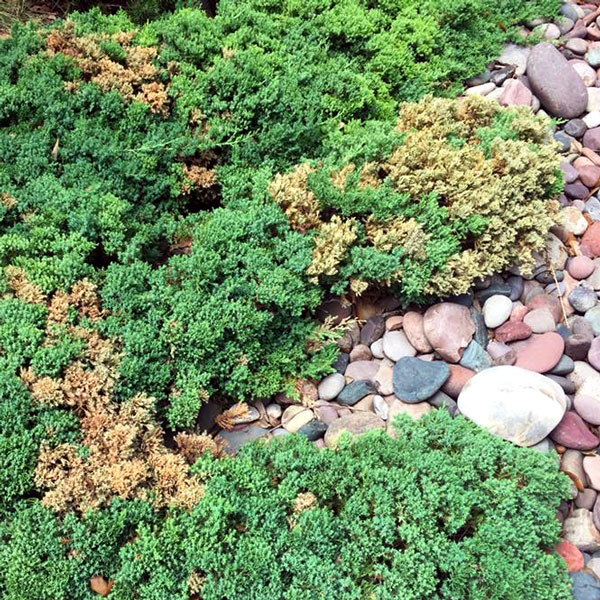
With the loss of Kelthane from the home gardening market 15 or 18 years ago, we lost the one really good miticide that would specifically go after these pests. Your best bet now is to find a general-purpose insecticide that is also labeled for control of spider mites. Your local independent retail garden center can show you the best ones and give you tips on applying it.
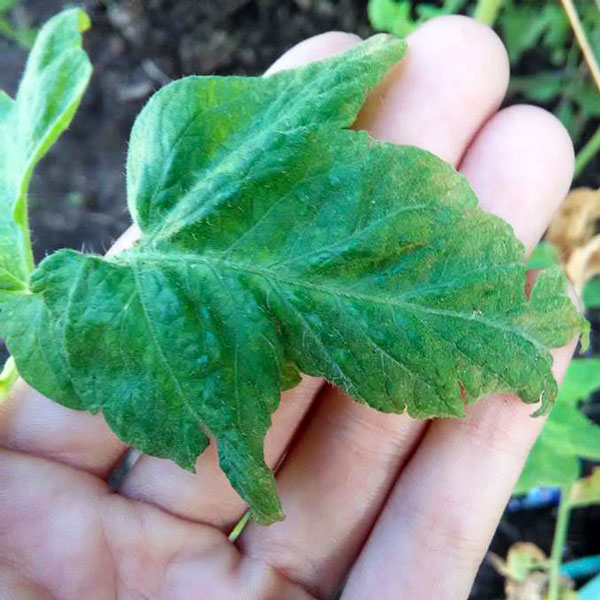
The one suggestion I can make in the meantime is that you spray both top and bottom leaf surfaces. Spider mites typically hang out on the backs of leaves. Their damage first appears as small tan mottlings on the tops of the leaves. They usually attack plants on their lower leaves and then move upward.
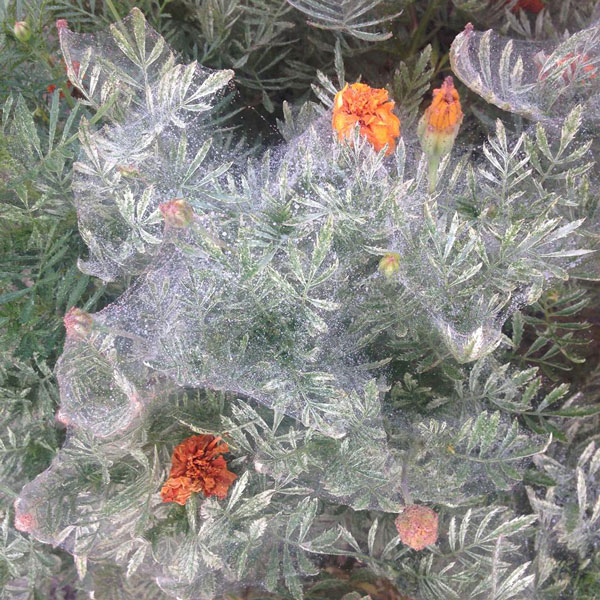
Eventually the leaves may become covered in very fine webbing, but by then it’s far too late to worry about spraying. Wise gardeners know that mites will be out there. They learn to watch for the symptoms, and they step up to their plants’ rescue at first signs of an outbreak.