
Q&A – Ask Neil: March 19, 2026
(Please read these instructions carefully.)
Before you post your question, please look at recent issues to see if someone else has already asked it. You might find your answer there.
HOW TO SUBMIT YOUR QUESTION…
• Click here to post your question. (Please post your question only one time.)
• Please use this link only for posting questions – not for standard e-mails.
• High-resolution photos (1-2MB – not thumbnails) attached with your question help Neil give you the best possible answer. Please check your photo for clarity and exposure. If you do not see “All images clickable for larger views,” your images’ resolution was not sufficient for enlargement. That might also have made it difficult for Neil to give you an accurate answer.
• Neil chooses questions of greatest reader interest. Plant IDs rarely fit that description.
• Neil requires your first name or initials, also your city or county for an accurate answer. (Texas is a very large state.)
• One question per reader per week, please.
• Watch for Neil’s reply in the next issue of e-gardens.
Note: If you have submitted your question and did not see the pop-up window for attaching your photo, please click here.
QUESTION 1
HOW DO I TRANSPLANT ASIAN JASMINE?
Question: I need to plant a lot of Asian jasmine. I have an existing bed that I’d like to use. How do I transplant it, and is this a good time to do so? Jim O., Arlington.
Answer: I would not try it.
You did not mention if the existing bed is going away. If so, I guess you could try digging the plants out and moving them. Asian jasmine rarely develops roots along its stems. You’ll be able to trace the original plants back to where they were planted simply by cutting all their sprawling stems back to just a few inches from where they emerge from the soil. Then you could dig the clumps with a sharpshooter spade and replant them.
Sounds like a good idea, right? Well, not so fast, gardener. In reality, it will be hard to pull off. The original clumps will be pretty well disintegrated by now. You’ll end up with bits and pieces and weak plants in your new planting.
If you intended to take pieces of the existing stems and replant them, that simply won’t work. It’s hard to get Asian jasmine to form roots in anything less than greenhouse-like conditions.
Either way, you will be several years ahead if you’ll simply buy vigorous new quart or 1-gal. plants and set them into well-prepared garden soil, then care for them regularly. Apply a water-soluble, high-nitrogen fertilizer every couple of weeks and water them with a hand-held water breaker a couple of times a week through the summer. You’ll have much better results.
QUESTION 2
WHAT IS THIS OLD TREE?
Question: This tree is on my late uncle’s property. He told me it was more than 100 years old (older than the house in the background). It still survives, but I can’t remember what he said it is. Can you please help? Lisa L., Winters, Runnels County.
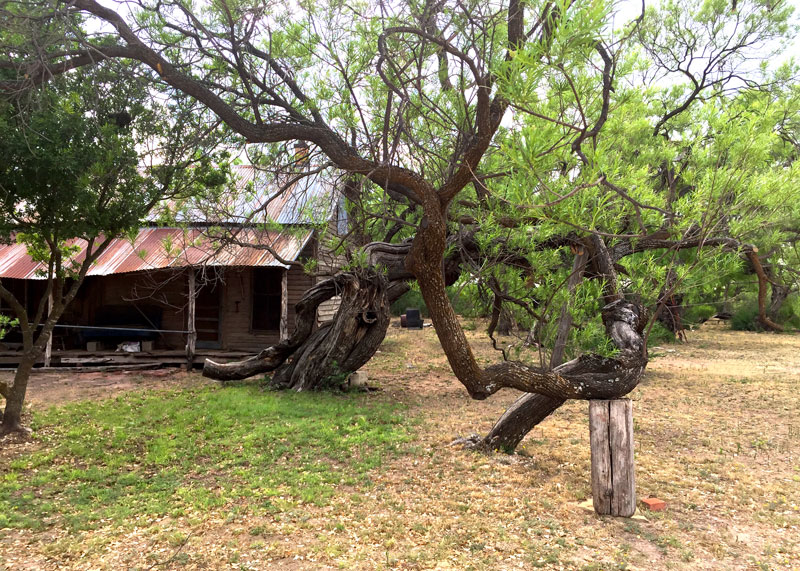
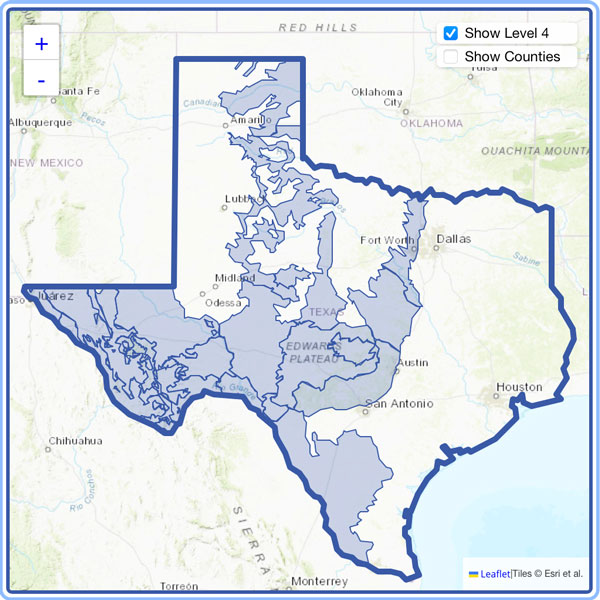
Answer: You have a magnificent, if gnarly, old specimen of desert willow (Chilopsis linearis) of the Bignoniaceae (trumpetcreeper) Family. Its native range includes your part of Texas.
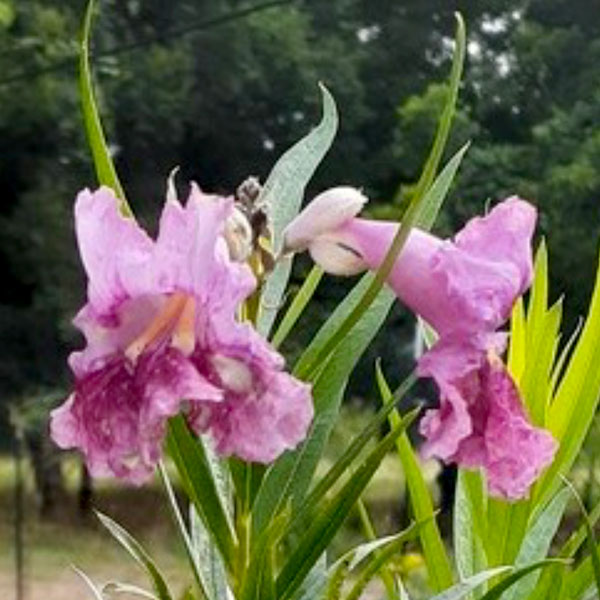
It’s closely related to catalpas. That may not show in its willow-like leaves, but it’s obvious when you compare this plant’s handsome flowers. Oh, and it’s not related to willows, either.
Your uncle’s tree may be so old that it has lost most of its vigor. It may not do much blooming now, but if it does, this is what the flowers would look like.
I’d suggest you tidy up its old, broken branches and look after it just a bit. It doesn’t call out for much, but a plant this old and wonderful deserves any TLC you can throw its way.
QUESTION 3
HOW CAN I TELL WHETHER I HAVE AN ANNA OR HONEYCRISP APPLE TREE?
Question: We have two apple trees in our yard. One is leafing out, but the other is not green when scratched. Unfortunately, the tags have been removed, and we don’t know which is which. Is there a way to determine which one survived? Janice N., Rice. Navarro County.
Answer: All you can do is wait for fruit. Your ideal solution would be to plant yet one more variety to ensure good cross-pollination. That way you won’t miss any time while you wait.
QUESTION 4
WHAT FERTILIZER DO YOU USE?
Question: What fertilizer do you use? You mention “30-40 percent all-nitrogen slow-release.” I’ve searched for 40 percent slow-release and I’m stumped. I’ve found one bunch of granules in Florida that comes close. Please help. Jeremy A., Collin County.
Answer: Please shop at an independent retail garden center where you will find a Texas Certified Nursery Professional. He or she will be happy to show you the exact details.
However, in the meantime, please let me try answering it differently. I’m going to break it down in steps.
• Your Collin County (Blackland clay gumbo soil), like much of Texas, is dominated by clay soils.
• Clay soils retain nutrients for long periods of time.
• The three numbers on a fertilizer bag stand for nitrogen N (leaf and stem growth); phosphorus P (roots, flowers, and fruit); and potassium K (summer and winter durability).
• Nitrogen can either be fast-release or, if coated or encapsulated, slow-release.
• Every product sold as a fertilizer must list its content as percentages of N-P-K.
• So, speaking of an “all-nitrogen fertilizer,” those percentages could be almost anything. It might be 20 percent N, or it could be 10 percent N. Or just about any other percentage.
• It would take twice as many total pounds of the 10 percent product to get the same amount of actual nitrogen as it would from the 20 percent product.
Now…
• Put that aside. Of those pounds of nitrogen, you want 30 to 40 percent of them to be in slow-release form.
• Let’s get specific. Assume you have a 40 pound bag of 20-0-0. Multiplying 40 pounds times 20 percent, you have 8 pounds of actual nitrogen. Of those, you want the bag to say it has 30 to 40 percent of those pounds to be in slow-release nitrogen. But that number of pounds does not appear in the fertilizer analysis in any way.
I’ve re-read that three times. It makes sense to me. I hope it does to you, too, but I know it’s confusing.
Again, ask a Texas Certified Nursery Professional to point to bags that they sell and show you the ones that comply. Every nursery should have a couple of qualifying types.
QUESTION 5
WHAT SMALL TO MID-SIZED TREE AND GROUNDCOVER WOULD BE BEST?
Question: We removed 3 large firebrush bushes and want to replace them with a small to mid-sized tree and groundcover. Your suggestions? Deer are an issue. Mark A., Bexar County.
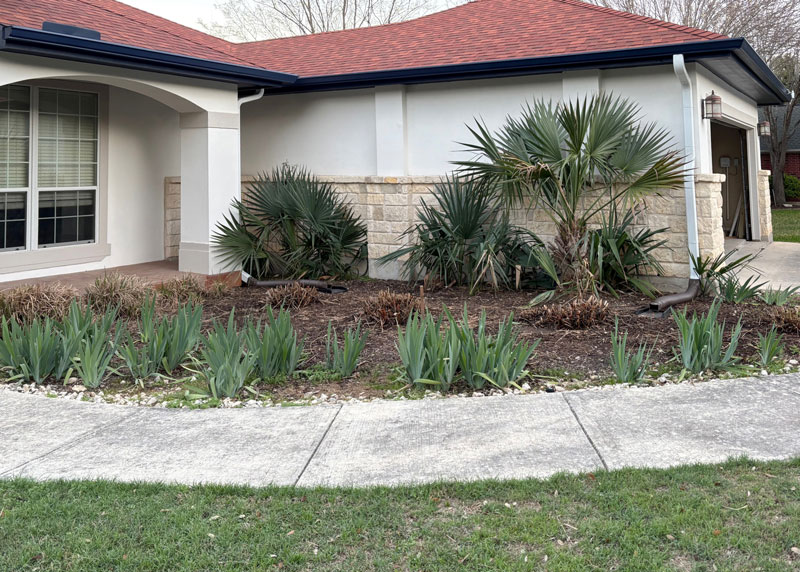
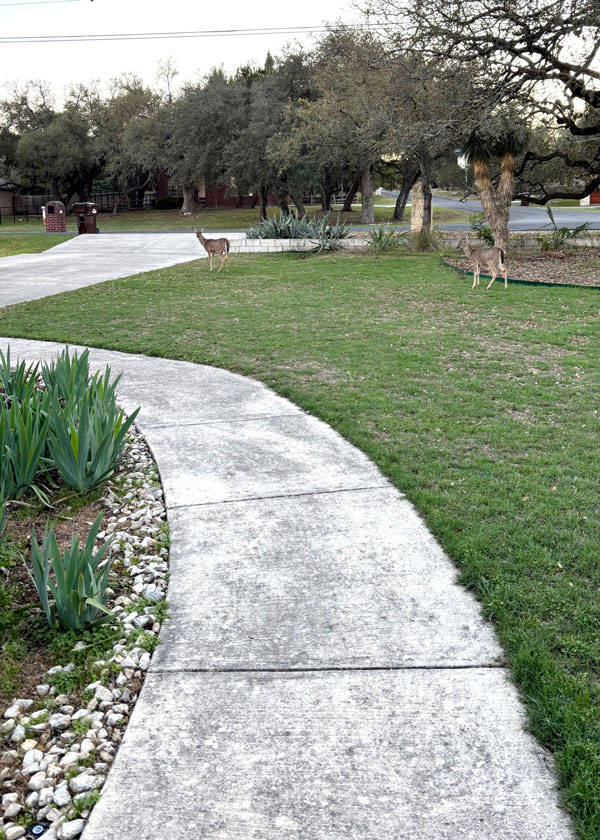
Answer: I see your friends scoping things out, just waiting for you to bring their next course in their meal.
As for your small to mid-sized tree, it should be tall enough to fend for itself. I can see a lavender- or blue-flowering tree such as vitex or Catawba crape myrtle looking great in this setting, or you might like a Teddy Bear dwarf southern magnolia for its boldly dark green foliage. In that case, however, start with a large specimen. It’s slow-growing.
For the groundcover, my normal go-to choice is purple wintercreeper euonymus. We have deer in our area as of the past 6-8 years, and I’ve not noticed any damage to my many hundreds of square feet of this as a groundcover. You could start with a few plants and see if they bother them. Or, this list from Forrest Appleton, Bexar County Master Gardener that he complied years ago, still stands as the best list I have seen. He calls out the best groundcovers he had observed. There are some very nice choices in this list.
QUESTION 6
HOW SHOULD I PRUNE MY LADY BANKSIA ROSE?
Question: I just read your comments on Lady Banksia roses and how to prune them in last week’s e-gardens. How and when should I prune mine? Did you mean I should remove those branches that are growing so long over the top, or should I cut them to the ground in fall? They are just starting to bloom for this spring. Ann L., Forney.
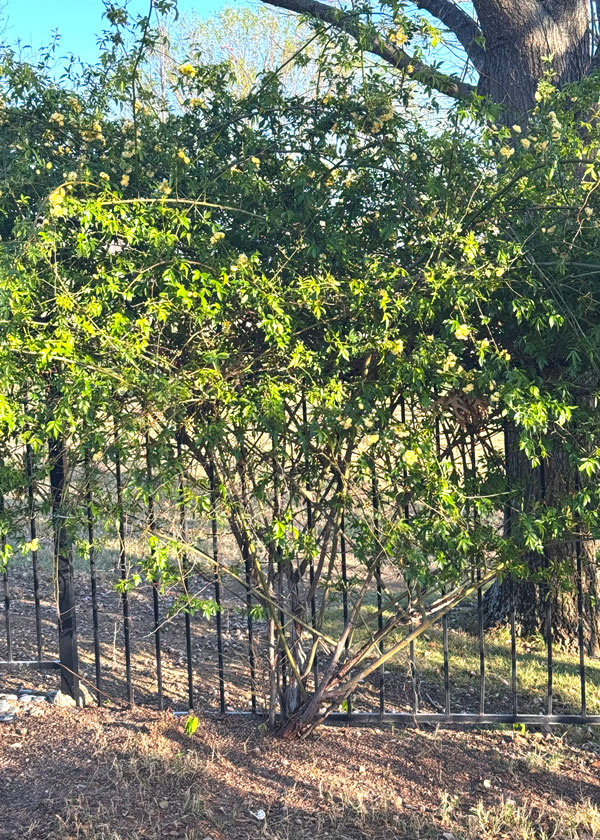
Answer: Not in the fall. No pruning for Lady Banksia and other spring-only bloomers in the fall. The time to have pruned those “fishing poles” would have been last year as they were shooting up. Now they seem to have matured and become a part of the normal growth. As soon as your plant has finished its bloom in a couple of weeks, I would suggest using lopping shears to thin out the stubbly internal shoots as well as those that are rubbing together. I can’t tell exactly which ones should come off, but one that seems obvious is the low one shooting off to the left at a 45-degree angle. It’s against several stems behind it. I’ll bet you could remove 50 percent of the canes and make your plant more attractive and better able to cover the fence and stay flat against it.
QUESTION 7
HOW CAN I SUCCEED WITH TEXAS MOUNTAIN LAUREL IN HEAVY CLAY SOIL IN BRAZOS COUNTY?
Question: What do I have to do to my heavy clay soil to grow Texas mountain laurel here? Jack K., Brazos County.
Answer: Texas mountain laurels can endure the clay soils better than they can survive poor drainage that often accompanies them in your area. You’ve also had a couple of winters in the past 15 years that have taken a toll with them in the Bryan/College Station area.
As horticulturists sometimes will say in that situation, “plant them high.” Build a berm 6-10 inches taller than the surrounding grade so that water can drain away quickly during heavy rains. Mountain laurels (Sophora secundiflora) are native to part of Southwest Texas where average annual rainfall is less than 20-22 in. per year. That’s half what you might expect where you are, and that’s a huge difference for them.
Make provision, too, to cover your plant anytime temperatures might fall into the teens. Have frost cloth on hand, precut and ready to tie down over the top of the plant. Be ready to secure it to the ground so that radiant energy can be released from the soil up beneath it on cold nights. Make note of additional growth so that your frost cloth is large enough to accommodate recent growth.
This is probably a good time to point out that, while Texas mountain laurels are “native Texas plants,” rainfall and winter temperatures are the two main reasons they’re not native over wider parts of the state. The same can be said, for example for Texas sage.