
Doublefile viburnum puts on a spring show
Transferring from A&M to Ohio State as a junior meant that I’d already taken my woody plant materials courses with a big dash of Texas salsa before I made the move. I got a degree in horticulture from O.S.U., but it was a struggle to learn all the maples and yews – and viburnums.
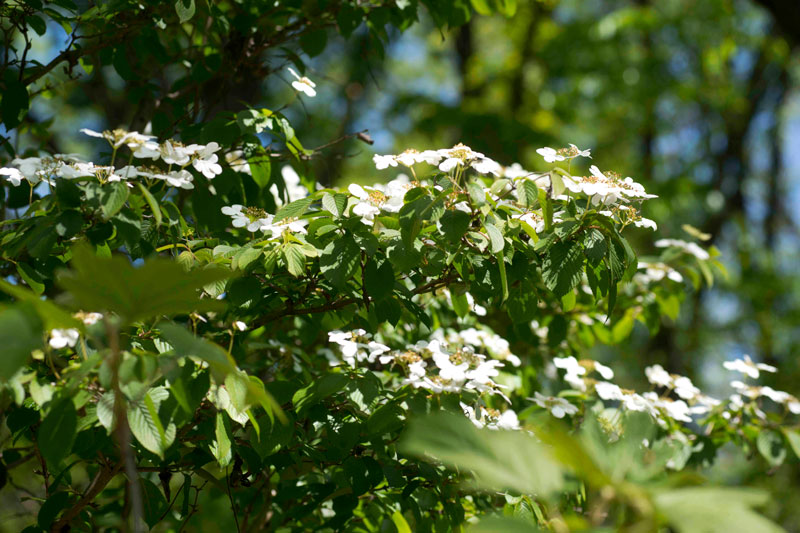
I soon found out that those viburnums were great flowering shrubs up North, and this was one of their favorites. One summer, while we were visiting the in-laws, I loaded our station wagon with plants, and doublefile viburnum was one of them.
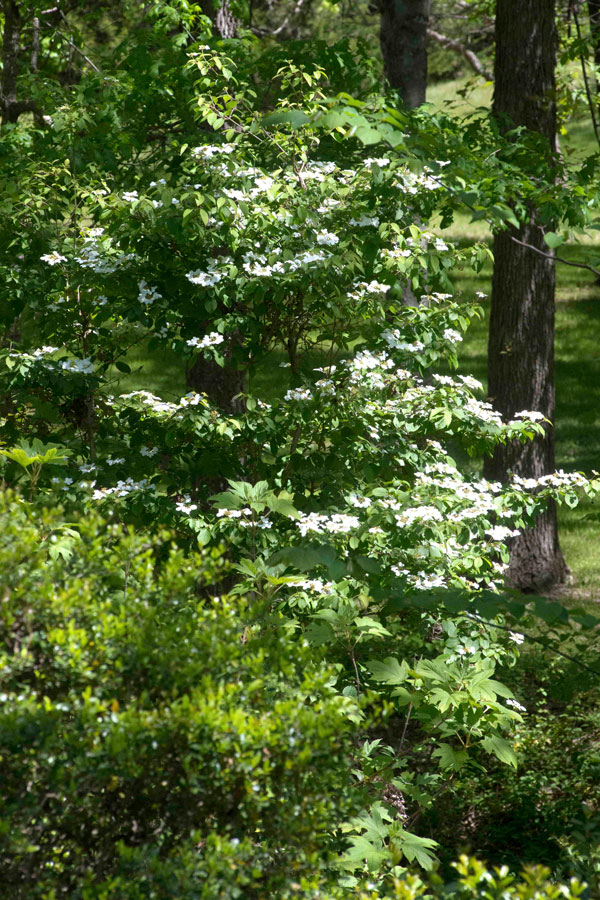
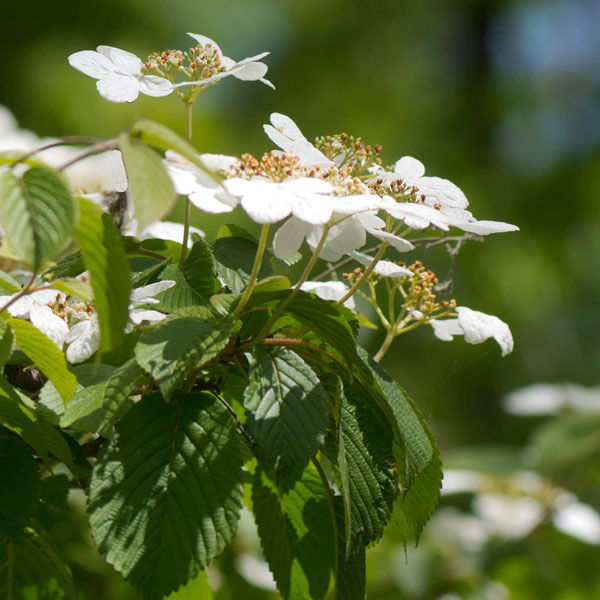
I’ve had this particular doublefile viburnum in a very shady part of our backyard for 35 years. It’s grown to be a lovely large shrub or small tree 10 or 11 ft. tall. Its boldly patterned leaves are the backdrops to the bright white floral bracts it produces every April.
It seems to be content in our heavy alkaline clay soil, which is something I certainly can’t say for dogwoods in our area. Yet, from the distance of our sunroom windows, it’s a good imitation.
Here’s what you might want to know…
Common name: Doublefile viburnum.
Scientific name: Viburnum plicatum var. tomentosum.
Native home: China, Japan.
Hardiness Zones: U.S.D.A. Hardiness Zones 5-8, so it would include most of Texas, but probably it’s best suited to eastern third of the state.
Growth Habit: Upright shrub or small tree to 10-12 ft. tall and 6-10 ft. wide.
Evergreen/Deciduous: Deciduous.
Soil preference: Does best in rich, highly organic soil that is kept uniformly moist. However, very adaptable.
Sun/Shade: Shade or morning sun with afternoon shade.
Bloom season: April.
Pest problems: None that I have observed and none that I have read about.