
Timing the feedings
What fertilizer should you use? When should you use it? Those are two critical questions every gardener wants to have answered.
Here’s how I narrow it down.
• Start with a soil test. The Texas A&M Soil Testing Lab gives excellent results and can help you monitor your plants’ needs over the years. Have one test done on a sample collected from your flowerbeds and vegetable garden soils. Have another done on soils from your shrub and groundcover beds and lawn. Just those two tests taken every 3-4 years should suffice.
• Consider your soil type. Sandy soils require more frequent feedings. Clay soils hold nutrients much longer. The types of plants you’re growing will be a factor, as will the frequency and amount of rainfall your area usually receives.
• The type of fertilizer you’ll be using is critically important. Organic fertilizers have much lower analyses and they become “available” for uptake by plants’ roots at a much slower pace. Inorganic fertilizers are more quickly available, but they do not add organic matter to the soil like many of the organic fertilizers can do.
If you are using organic fertilizers…
Timing is not a huge issue here because you are looking for a long-term gradual build-up of the soil’s fertility. These products are not quickly soluble, so you don’t apply them and expect to see results a week later. You apply them at the beginning of the spring growing season, again later in the spring, and again in early fall. If you do that for several years your plants’ growth will be working its way up to pace.
Timings for inorganic fertilizers…
Timing is much more important when you’re using these products because their results show within days or weeks. For almost all Texas soils we want to use either an all-nitrogen or a high-nitrogen fertilizer. That’s especially critical with clay soils because phosphorus (middle number of the 3-number fertilizer analysis) is very slowly soluble. It becomes bound on the clay particles to the point of being harmful to the uptake of minor elements by your plants’ roots.
The ideal fertilizer would have 30 to 40 percent of its nitrogen in encapsulated or coated slow-release form. A Texas Certified Nursery Professional can explain that and show you the details on the product bags. Get that type of help at a local independent retail garden center.
Here are some general guidelines that may be of help…
• St. Augustine lawns: Early to mid-April; early to mid-June; early September. (None applied in mid-summer due to likelihood of gray leaf spot disease if N is applied in hot weather.) We tend to over-feed St. Augustine in Texas.
• Common bermuda: Early April; early June; early August; early October.
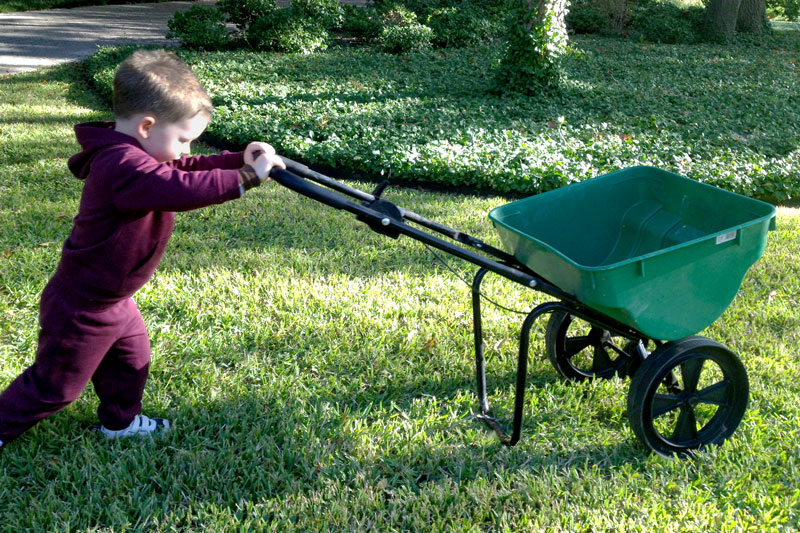
• Hybrid dwarf bermudas: Early April; repeat on 6-week intervals until mid-fall. Watch your rate of application. You’ll feed the dwarf bermudas less nitrogen, but you’ll feed them more often.
• Zoysias: Early April; early June; early September. Like St. Augustine, zoysias are also susceptible to gray leaf spot if nitrogen is applied during hot summer weather.
• Buffalograss: Mid-May. If you over-feed buffalograss, bermuda will invade and overtake it. (It may happen anyway. That’s the main downside of buffalograss.)
• Fescue: Early November; mid-February; mid-April. It will thin out in hot weather, but do not try to thicken it by feeding at that time. It’s a cool-season grass that basically slows its growth when the weather turns hot.
• Trees: Same schedule as turfgrass. In fact, they will compete with the turf for nutrients so no need to make special effort to feed them. Perhaps make one extra pass around the drip line with the rotary spreader. Be certain you’re not using a weed-and-feed product.
• Shrubs, vines, and groundcovers: Every two months beginning early April. You’ll probably use the same fertilizer you use for your turfgrass. The exception would be for spring-blooming shrubs and vines. For those you would probably skip the fall feeding so they could begin setting their flower buds over the winter.
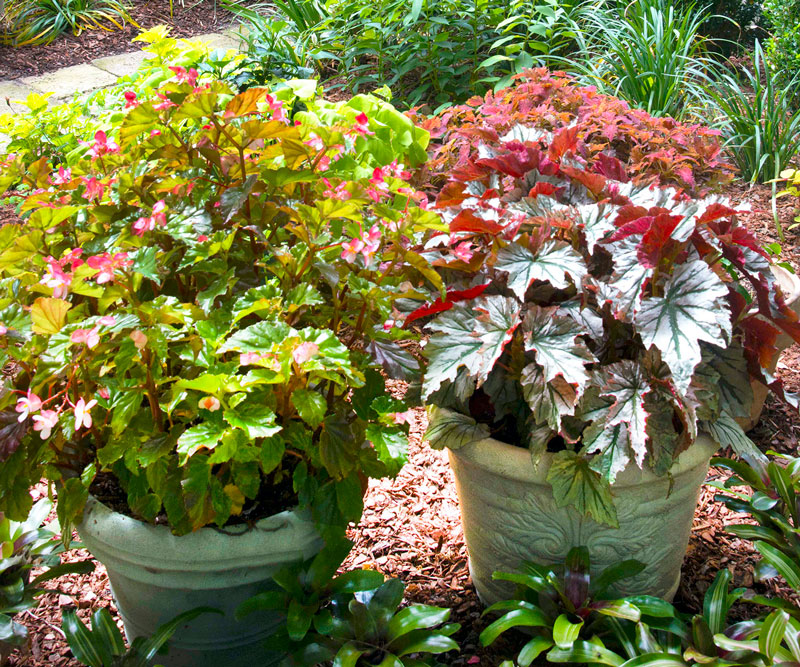
• Annual flowers: Two weeks after planting (half-rate application); monthly thereafter. Water by hand to wash granules off leaves and away from stems. You may prefer the results you get by using a water-soluble, high-nitrogen plant food weekly.
• Perennials: Monthly during periods of active growth and leading up to bloom. Many types will go dormant part of the year. Do your best not to apply fertilizer directly to them at those times.
• Fruit trees: As new growth begins in the spring and again in early fall.
• Vegetables: Two weeks after planting; Repeat every 2-3 weeks until harvest to keep vegetables growing actively. Sideband the granules along the rows of vegetables and water by hand to wash granules off the leaves.
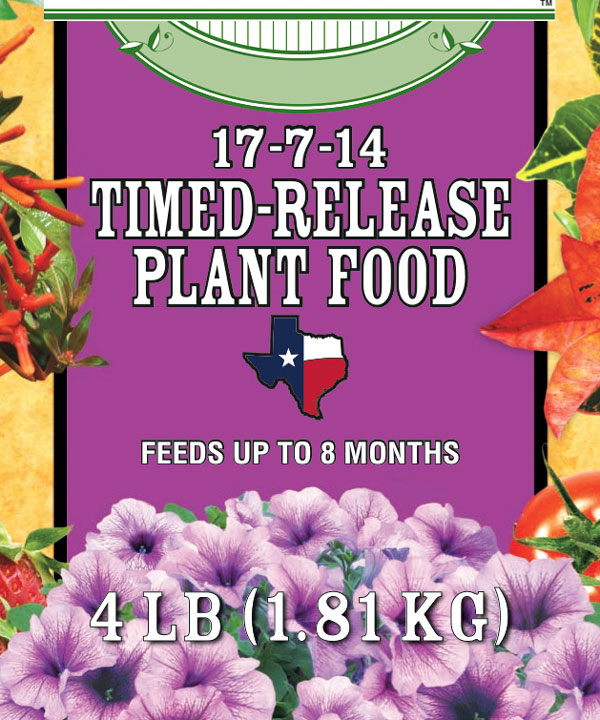
• Container plants: Apply a diluted solution of a water-soluble plant food to these each time that you water them. That will give them sustained growth. Supplement that with timed-release pellets for sustained feeding.
• Iron deficiency: Look for yellowed leaves with dark green veins, most prominently displayed on the newest growth (ends of stems) first. Apply an iron product with sulfur soil acidifier. Keep iron products off masonry surfaces that could be stained. Iron products can also be sprayed directly onto foliage, but again, be careful that spray does not drift onto stone or brick on side walls of your house. Try a small area first to be sure you get the results that you’re seeking.