
Gorgeous Guzmanias
It must have been stunning to make your way into tropical rainforests of Central and South America in the early 1800s and discover the wide diversity of plants growing all around you.
One of the most interesting of all groups were the bromeliads, sisters to Spanish moss and pineapples. There are scores of types of Aechmeas, Vrieseas, Neoregelias (some of my favorites), and today’s stars, the Guzmanias.
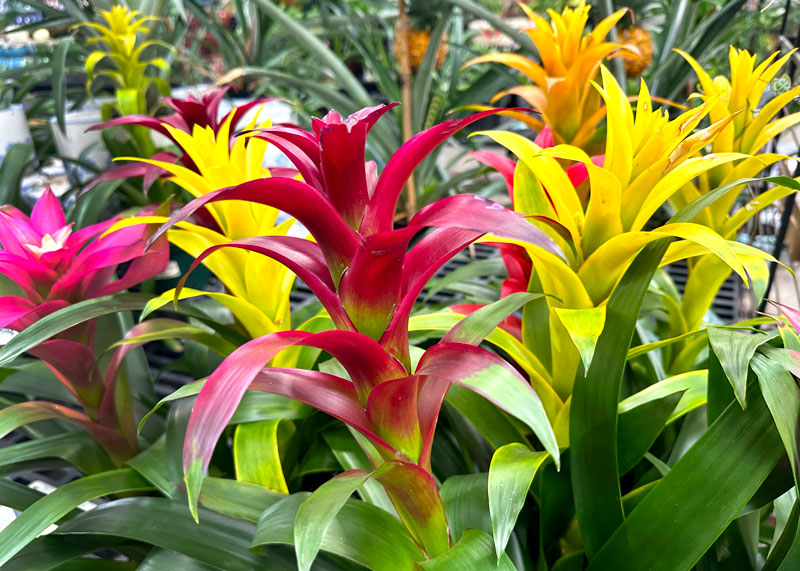
Here are the facts…
• Native homes: Southern Mexico through Central America and into Columbia, Ecuador, Peru, and Venezuela.
• Most are hybrids of Guzmania lingulata.
• These are epiphytes, meaning they grow suspended from tree trunks where their seeds catch hold in the crotches of old leaves and branch stubble, also in snaggy rock ledges.
• The plants’ leaves form a water-tight cup. The cup captures and holds rainwater. It also catches organic matter that falls from above, including leaves, ripe fruit, dead insects and the like. The plants get their water and nutrients through their leaves. Always keep their “cups” filled with water.
• Their roots function for support and not for taking nutrients off the trunks. Still, you’ll want to keep their roots moist but never soggy for prolonged periods. They are subject to rotting under continuously wet conditions.
• The plants need bright light to produce their colorful leaves. If they are grown in dark surroundings the colors will be muted. If they’re in bright sunlight the leaves may scorch and be unsightly. Your goal is to hit the space in-between.
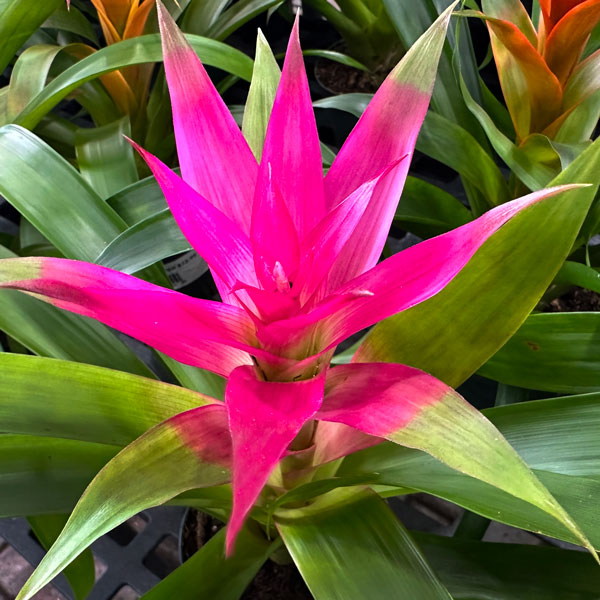
• Guzmanias’ actual flowers are produced within the flower cups. They’re small white blooms concealed by the surrounding leaves. They are not showy, especially compared to the colorful leaves.
• Most bromeliad mother plants, Guzmanias included, die after the flowering has finished.
• Concurrent with that decline of the mother plant, young offsets called “pups” will arise from her base. Those offsets, once they are large enough, can be severed with a sharp knife, then potted into a loose and well-draining planting mix similar to what you might use for orchids.
• Grow your new plants in bright indoor conditions at 60F or warmer.
• After 18-24 months the plants will be mature enough to bring into flower.
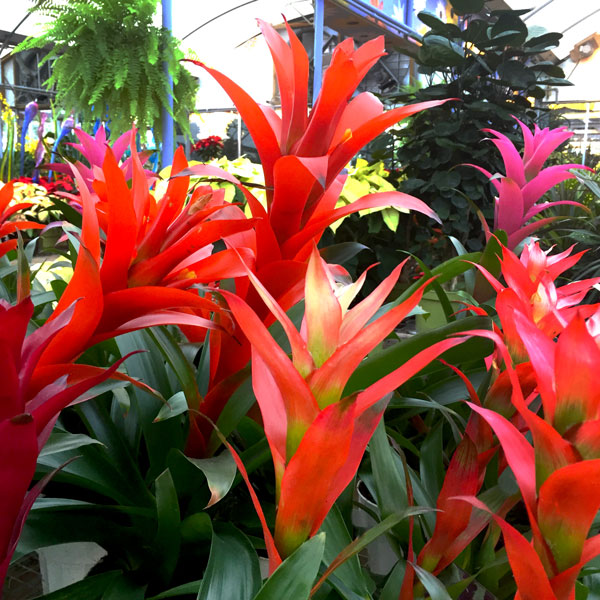
• Greenhouse growers initiate blooming by surrounding the plants with ethylene gas in airtight rooms or tents for one week. They begin to show color and bloom 6-10 weeks later.
• Home gardeners can accomplish the same thing by encasing their Guzmania plants in an airtight clear plastic tent and putting an apple core in the center of each plant for one week. Apples give off ethylene as they age.
Note: You may remember that all this works for raising your own pineapple and bringing it into flower and fruit. Root the top in a pot filled with potting soil. Grow it for a couple of years as you protect it from freezing weather. Place an apple core in the center and encase it in dry cleaner’s plastic that you secure to be airtight. Wait 8 or 10 weeks and prepare to watch a tiny fruit start to form.