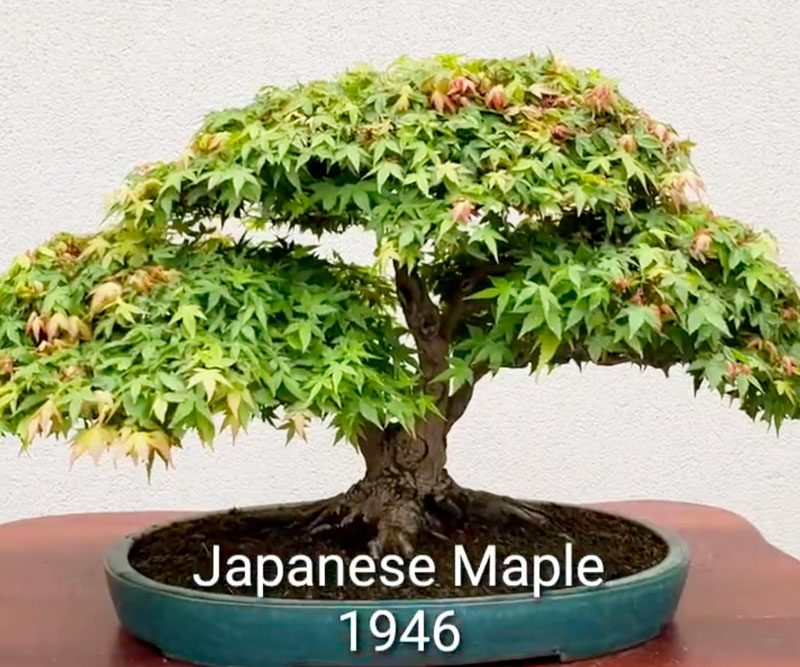
Japanese maples hit the big time in Texas
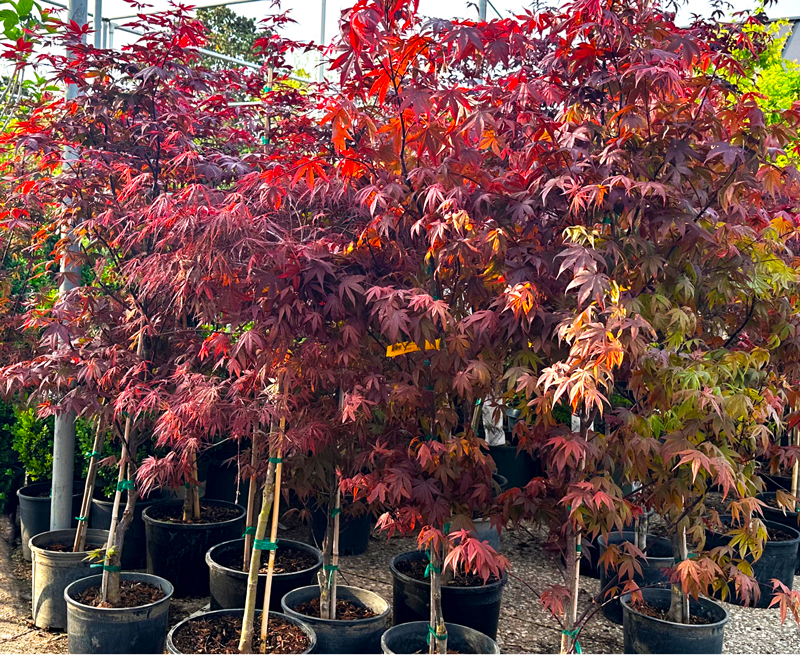
Let’s get one thing straight as we begin. Don’t call these “red maples.” I’ll give you two reasons. (1) They’re not all red, and (2) the true “red maples” are botanically Acer rubrum. These trees are all Acer palmatum.
Real red maples are native to the eastern and northeastern United States, and the Upper Midwest, from East Texas north to Minnesota, east to Maine and south to Florida. They are a major component of the world-famous New England fall color.
Japanese maples don’t grow natively anywhere in the U.S. As you might guess, they’re from Japan where they’re widespread on the main islands. They also grow natively in eastern China and scattered across Korea.
And the differences don’t stop there. Red maples are large shade trees that grow best in full sun. However, their bark is thin when they’re young, so in Texas you really need to apply paper tree wrap to protect them from sun scald for their first couple of summers.
Most of the several hundred (yes, hundred!) cultivars of Japanese maples are small trees, seldom growing to more than 15 or 25 ft. tall, some types no more than 5 or 7 ft. tall. It all depends on the variety.
Rule 1: Unless you have the ideal growing conditions of the Piney Woods of East Texas, Japanese maples, because they’re native to cool, moist climates, should be planted and grown in shade here in Texas.
That’s the first critical mistake many people make when they buy a lovely new Japanese maple and take it home for planting. They plant it where they might plant any other small tree – without regard to the sunlight exposure. It thrives for its first couple of months in the landscape. Then summer arrives and its leaves start to brown around the edges. The tree just can’t pull water through its system fast enough to meet its own demands when it’s exposed to burning summertime rays. By the end of the summer most of the leaves will be dried and crisp and the plant might be lost.
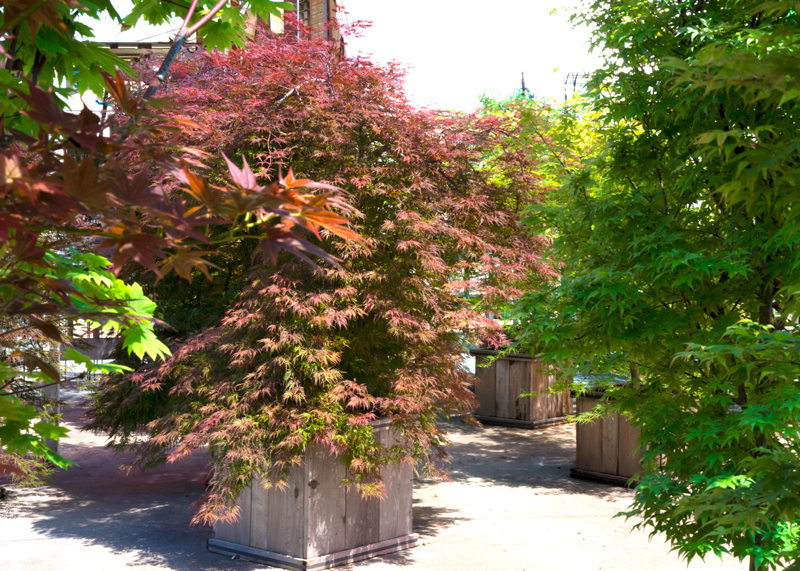
The ideal setting…
Japanese maples thrive with minimal morning sun maybe until 9 in the summer, then shade the rest of the day.
Give them highly organic planting soil and keep it uniformly moist. If you allow the soil to dry out, you can expect the plants to develop dried tips on their leaves. In severe cases entire leaves will turn brown and remain attached to the stems for months.
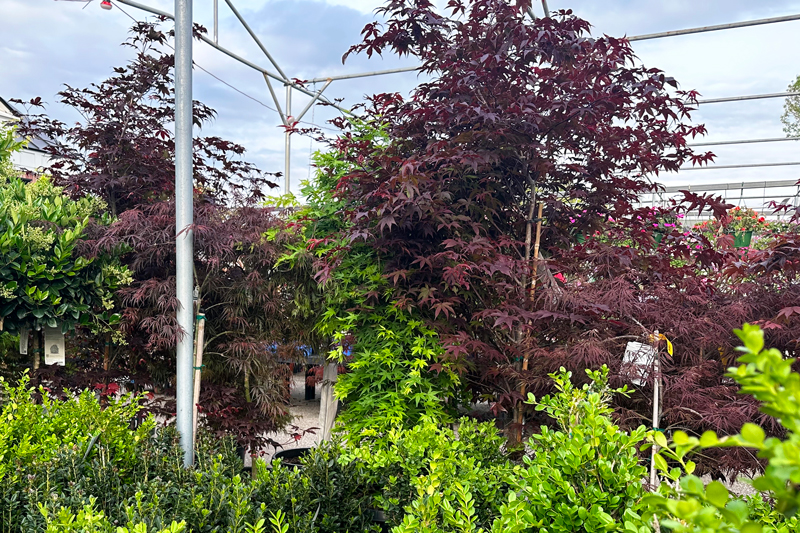
Apply a high-nitrogen food to them in early spring as new growth is beginning, again around May 1 to sustain that vigorous growth, then lay off until mid-September. There’s no point in encouraging growth when it’s so hot.
Since your tree will be growing in shade you won’t have to protect this tree’s trunk with tree wrap. You can plant shade-loving perennials around its base. Choose ferns, ajuga, liriope and ophiopogon, hellebores, and other suitable perennials and groundcovers that do well under similar circumstances.
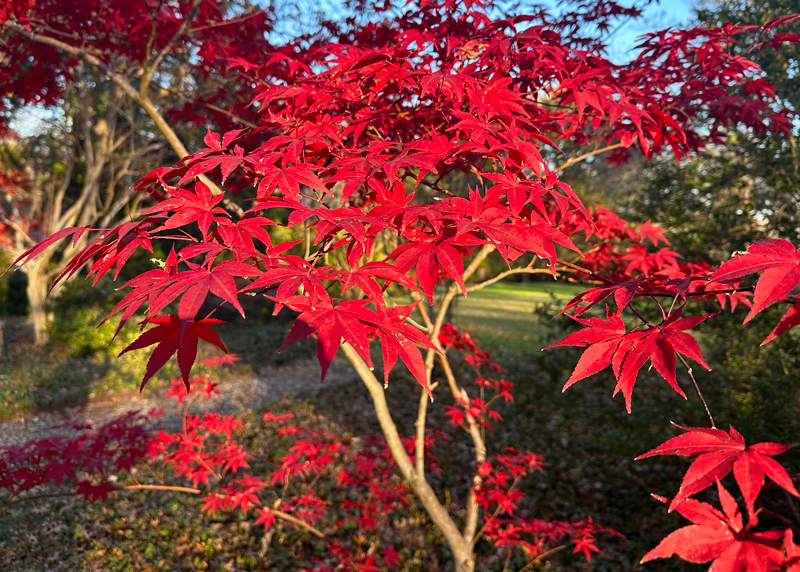
About their leaf color…
Japanese maples have several different foliar colors. The species is a medium green all growing season.
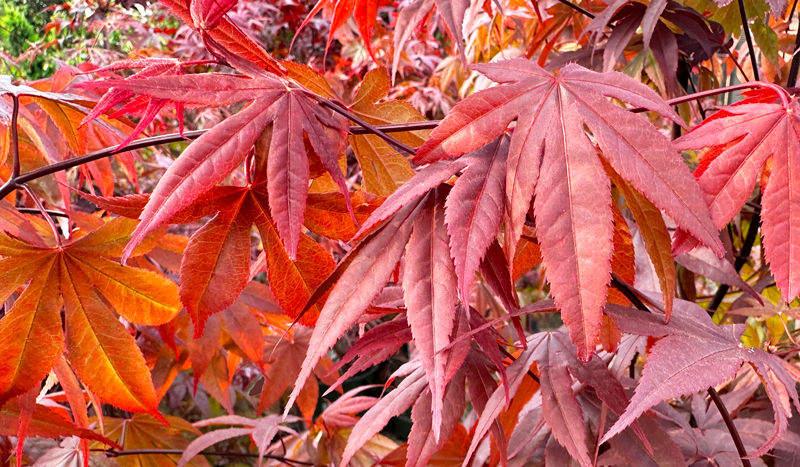
“Red” types are most brilliant for the first 3-4 weeks in the cool weather of spring, then they shade toward purplish-green for the summer. As the weather turns colder in autumn, they develop intense fall colors that can be truly stunning.
There probably are other equally good types, but the variety ‘Bloodgood’ is noteworthy because it has intense spring color and it holds much of that color through the summer entertaining season. Fall colors shows up late – even after Thanksgiving – and it lasts for weeks. That’s why this variety is one of the best sellers year-after-year. We have 10 in our landscape. It’s my wife’s favorite tree. Every time I go nursery shopping for a gift for her, the non-gardener, I end up coming home with another ‘Bloodgood.’ Our 59 years of marriage prove I’m a practical man.
Growing them in containers…
Japanese maples are winter hardy to temperatures well below zero F. That means they’ll grow anywhere in Texas, and it also means they can be grown in decorative pots to be featured in entryway gardens or in prime spots on patios. Their roots will withstand freezing weather even when growing in pots.
The secret to maintaining Japanese maples in pots will be water. They’ll dry out much more quickly than the same plants would in the ground. Check them daily or be prepared for the browned foliage.
One last thing…
If you ever come across a mangled little 1-gal. Japanese maple out by the dumpster in the back alley of a nursery, don’t overlook it. That’s the best possible plant for the beginning of your bonsai collection. As with humans in recovery, miracles happen every day for salvaged plants as well. Amaze yourself! Turn that little plant into a 250-year-old family passalong treasure just like the Japanese do. Today could be your day. (And it doesn’t have to come from an alley plant!)