
Ever-lovin’ Larkspurs
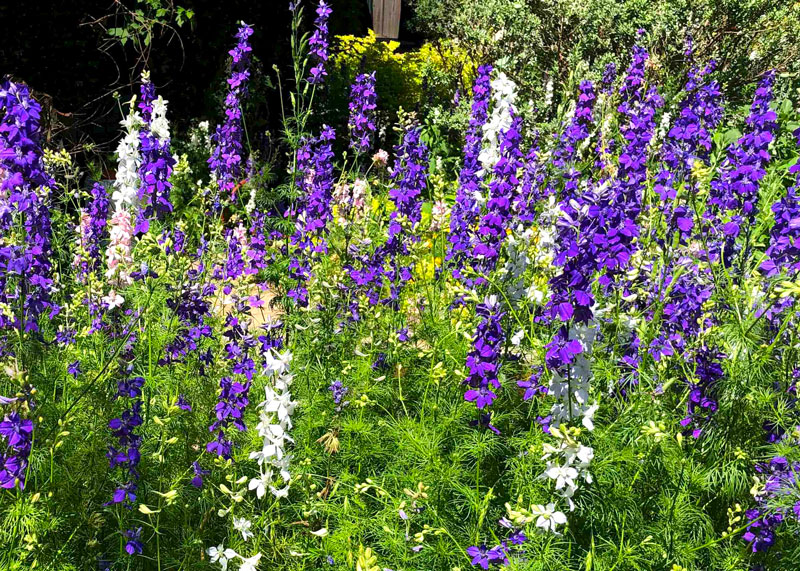
They’re native to cool-winter, warm-summer areas of Europe, so they feel right at home here in Texas. Reseeding larkspurs may be the best of our heirloom pass-along annuals, given from one generation to the next simply as seeds to sow in the garden.
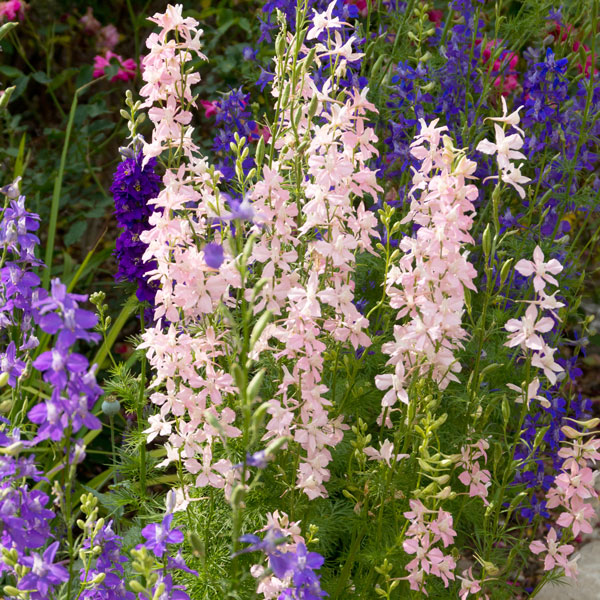
Drive the old neighborhoods of most old Texas cities and you’ll find landscapes dotted with these plants in full bloom currently. Blues, purples, pinks, and whites are their shades, and the flowers will last for several weeks. Seeds will mature in the ensuing weeks, and then the plants will gradually die. Many folks think of them as perennials because they’re there every spring, but they’re actually cool-season annuals much like re-seeding petunias.
Here’s what you’ll want to know…
Common name: Rocket larkspurs or simply “larkspurs.”
Scientific name: Consolida ajacis, formerly C. ambigua.
Plant Family: Ranunculaceae (the buttercup family).
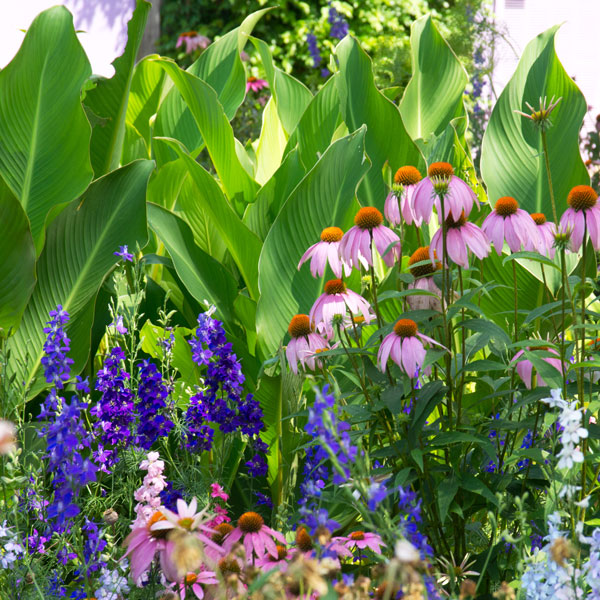
Native Home: Southern Europe and western Asia (around the Mediterranean Sea.
Annual/Perennial: Cool-season annual flower.
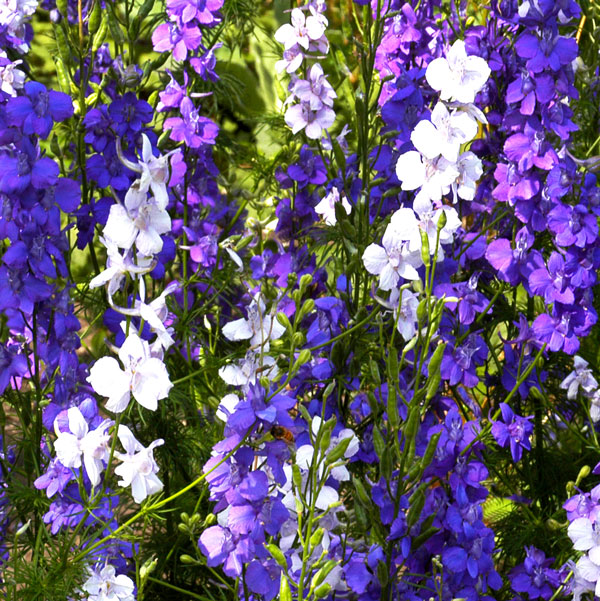
Flower Colors: Blue and purple predominate, especially as a bed ages. They are the dominant genes. Also, pink and white. Hybrids are also sold by seed companies, but after a few years they tend to revert to the old blue-purple types.
Mature height at bloom: 16-30 in. and taller. A lot will depend on the amount of moisture they get as they grow.
Planting: Larkspurs succeed best with morning sun, then shade in afternoon. Sow seed from late September through November into lightly tilled garden soil with 1-2 in. of organic matter included at tilling. Scratch seeds barely into top surface of the tilled soil and water with a soft spray.
Post-planting care: Apply no more than 1-in. of bark mulch or compost over top of soil after plants are growing actively. Be especially careful if you apply pre-emergent weedkiller products to adjacent turfgrass that you do not get it onto the larkspur bed. Keep plantings moist but not wet.
How did Larkspurs get to Texas?
They were brought from Europe to the Eastern colonies and states. Thomas Jefferson grew them at Monticello in Virginia. From there they spread across the South. Settlers packed them away with their belongings and brought them when they came. They’re among the oldest cultivated flowers in our gardens. All because they’re so easy from seed.
You can continue that spread by spotting a lovely landscape in your town this spring and asking permission to collect a few of their seeds once they mature. Store them cool and dry until fall. The easiest way is to put them in a zipping sandwich bag, label it, and put it in the butter compartment in your fridge (not the freezer).
Question: Do you need to save your seed from your own garden and replant/start over each fall? Usually no, not if you let the plants mature, dry, and shed seeds onto the ground.