
Ironing your plants
We’ve talked before here about the major fertilizer elements nitrogen, phosphorus, and potassium.
And, you probably know about the other nutrients plants need in lesser amounts including calcium, magnesium, and sulfur.
And the trace elements manganese, zinc, copper, boron, molybdenum, chlorine, and nickel.
Oh, and let’s not forget iron. In fact, let’s dedicate this story totally to iron. It’s a big deal – critical to plant life. To all life.
Iron, you see, is required for plants to manufacture chlorophyll. That green pigment captures sunlight and enables the action of photosynthesis. That’s where the energy of sunlight is converted into stored sugars that can be used by the plants, also by animals.
Without iron there would be no chlorophyll (and therefore no photosynthesis and therefore no stored energy for life). So, it’s safe to say that iron is an essential building block of all life on our planet.
How do we recognize iron deficiency?
We call a shortage of iron in our plants “iron chlorosis.”
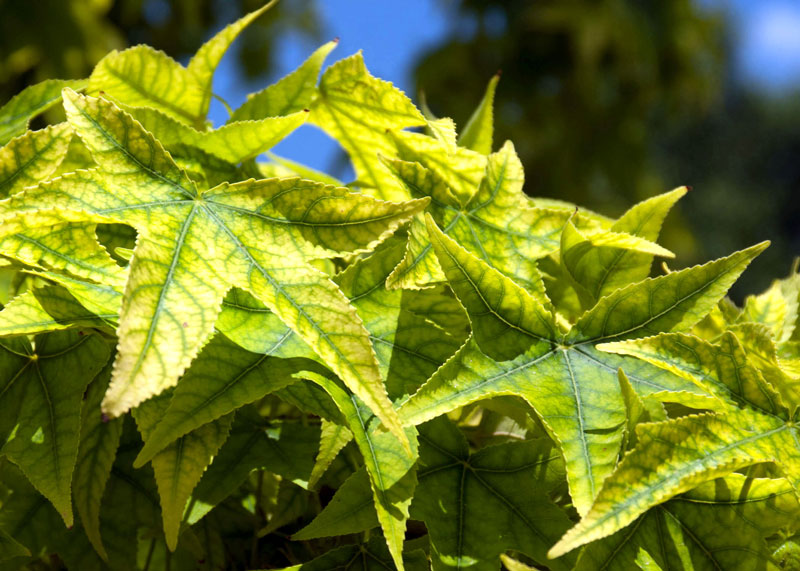
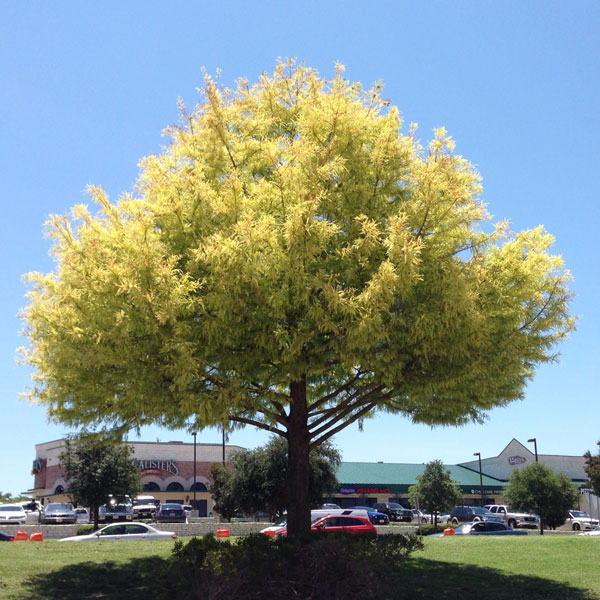
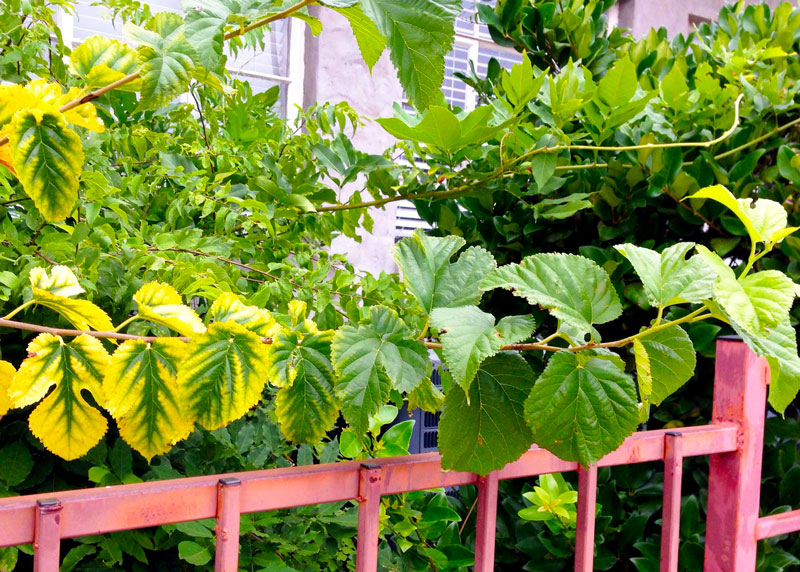
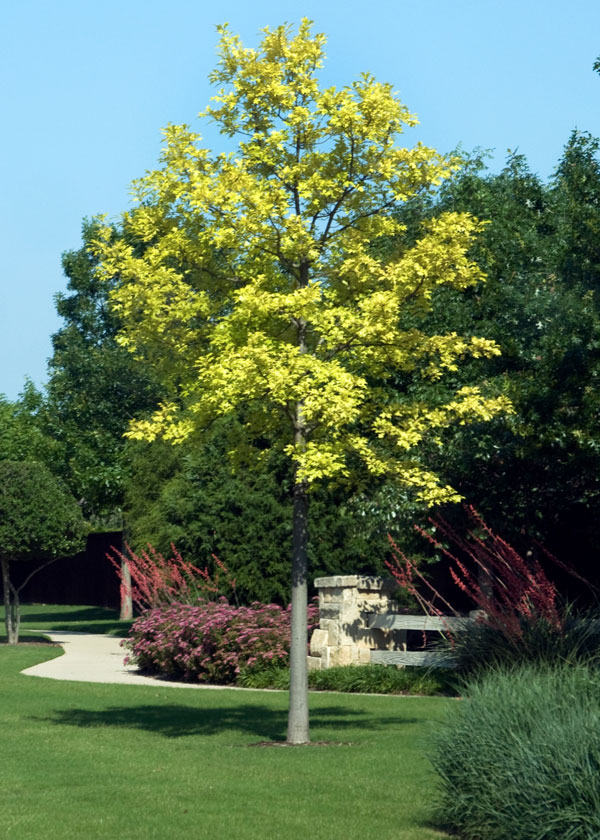
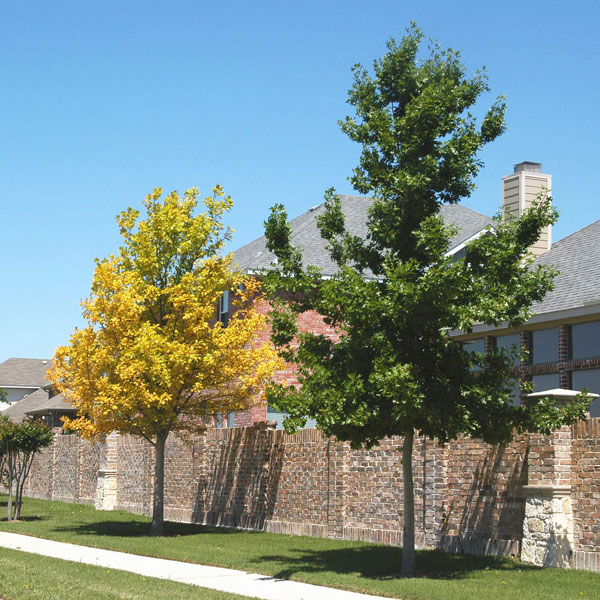
• Iron is not transferred from old leaves to new growth, so iron deficiency is most pronounced on the newest growth at the ends of the branches. That’s a critical symptom in diagnosing chlorosis.
• Veins will remain dark green the longest. Tissues between the veins will turn yellow.
• The plant may grow normally at first, but then growth will gradually slow.
• The leaves remain attached to the plant.
Contrast that with nitrogen deficiency…
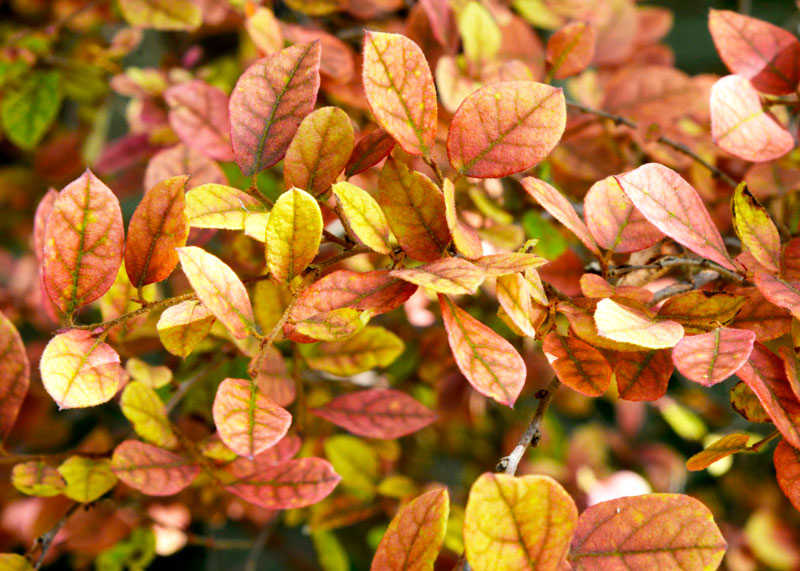
• Older leaves may yellow and fall prematurely.
• The entire plant may take on a yellowish cast.
• Growth is slowed overall.
The contrast with drought…
• Older, lower leaves turn yellow overall and often fall prematurely.
• Edges and tips of leaves may turn brown and crisp.
• Soil will be dry, but plant will usually perk up when watered deeply (unless “permanent wilting point” has been reached).
The contrast with over-watering…
• Plant is wilted overall before leaves start to turn yellow.
• Soil is soggy even though plant is wilted.
• When a hole is dug near the plant, it refills with water within minutes or hours.
How do we correct iron deficiency?
Iron chlorosis will primarily occur in alkaline soils (pH greater than 7.0) and when irrigation water is also alkaline.
It’s not a hard-and-fast line, but I-35 is a pretty good dividing line across Texas. The farther east you go from I-35 the more likely you are to get into acidic soils where iron deficiency is unlikely to occur. Along and west of I-35 it becomes much more prevalent.
Some plants are highly prone to it. They have much higher needs for iron. That list includes blueberries, azaleas, camellias, gardenias, most pines, dogwoods, pin oaks, water oaks, sweetgums, wisterias, hydrangeas, and loropetalums, among others.
It is impractical to try to amend soils for large trees to cope with their alkalinity. You’ll waste hundreds, if not thousands of dollars in the process.
By comparison, we can replace soils for smaller plants such as azaleas and gardenias if we’re willing to bring in quantities of sphagnum peat moss and other highly acidic organic matter. It’s all a matter of how much effort and expense we’re willing to put into it all.
To correct existing problems of a manageable size (shrubs and small vines), we can use a sulfur soil acidifier along with an iron soil amendment. They can be applied separately, or combination products are available for application to the soil. Remember that iron products can cause rust-colored stains to painted and masonry surfaces. Be very careful in applying them either as granules or sprays.
Iron deficiency is an ongoing issue across Texas. Once you are certain that that’s the cause of your plant’s yellowing, attack it with fervor. Hopefully you can correct it and put your prized plant back on the road to good growth.