
It’s Oakleaf Hydrangea time across Texas – by Steve Huddleston
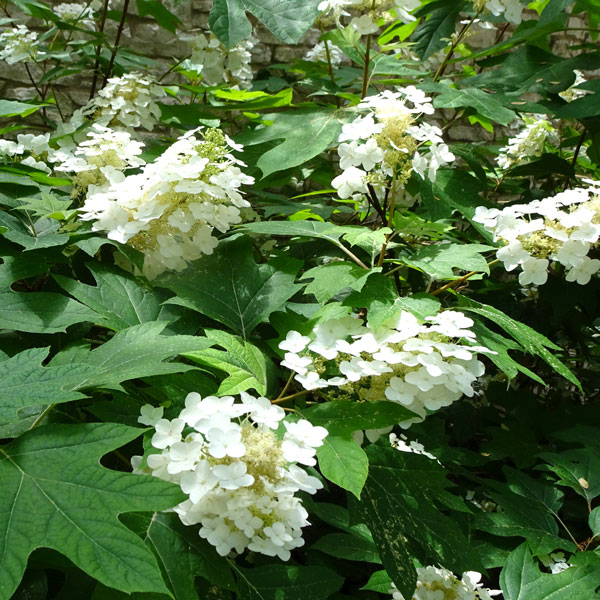
Oakleaf hydrangea ranks as one of Texas’ most beautiful spring-flowering shrubs. It’s a large, multi-stemmed plant that grows into an irregular, mounding shape and offers interest at each season of the year.
• Its large panicles of white flowers in the spring highlight the landscape.
• The flowers are set off by immense, star-shaped, dark green leaves from spring until fall.
• Those same leaves then turn gorgeous colors late in the autumn.
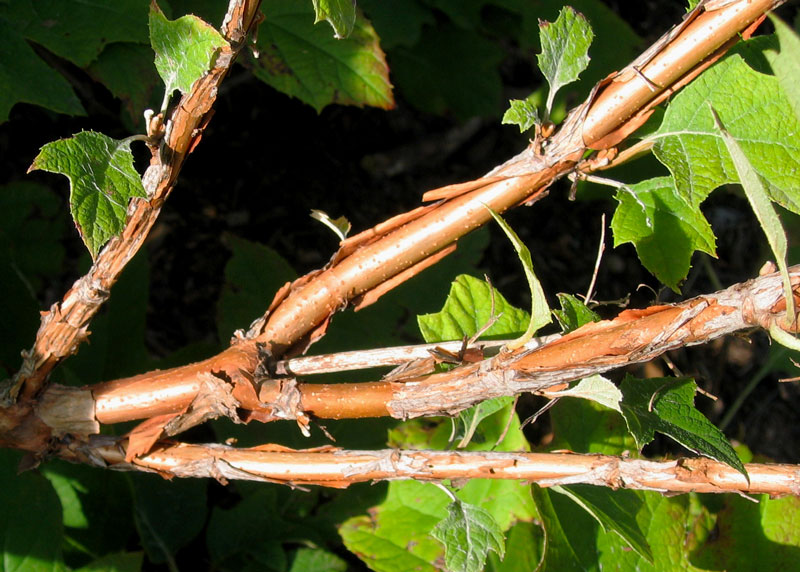
• They finally drop to expose papery, cinnamon-colored bark all winter.
• The dried flower heads first turn pink, then tan as the summer progresses. Some gardeners clip them off to keep the garden tidy. Others cut them and use them in floral design. Still others leave them in place as food sources for birds over the winter.
Facts you’ll want to know…
Here are basic things plant fans will want to learn about this under-used beauty.
• Common name: Oakleaf hydrangea.
• Scientific name: Hydrangea quercifolia (The genus name for all oaks is Quercus, and leaves of oakleaf hydrangeas resemble those of many oaks.)
• Plant Family: Hydrangeaceae, the Hydrangea Family.
• Native home: Southeastern United States where it’s found along moist stream beds.
• Hardiness Zones: Winter-hardy to U.S.D.A. Zones 5-9, so adapted to all of Texas, although it’s better suited to the more moist and somewhat better soils of the eastern half of the state.
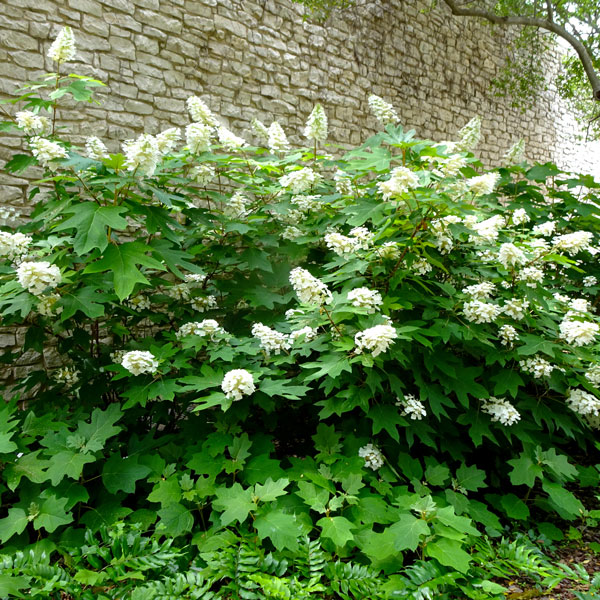
• Mature Size: 6-8 ft. tall and 5-6 ft. wide, although several dwarf cultivars are common in the nursery trade.
• Sun or Shade: Does best with only morning sun. Does well in shade. Leaves are likely to scorch when grown in full sun.
• Soil preference: Moist and highly organic. Can suffer iron deficiency when grown in shallow, alkaline soils.
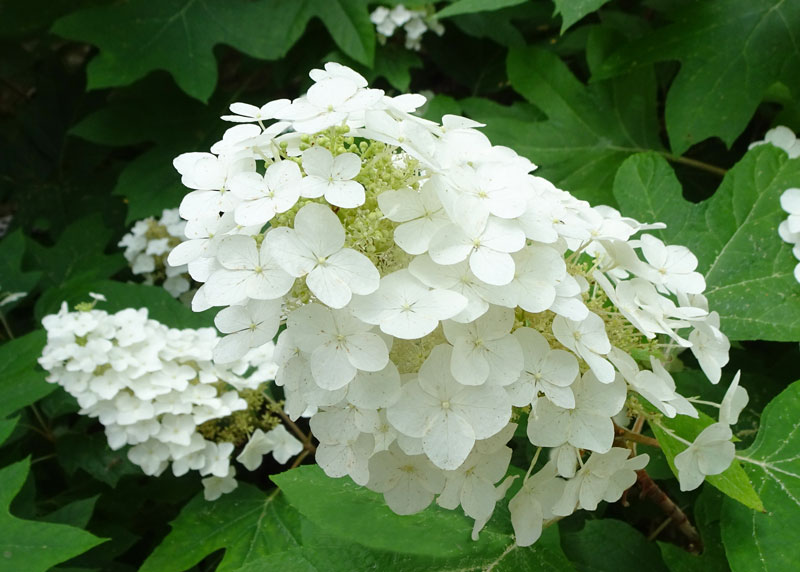
• Floral panicles: 6-8 in. long, but with larger varieties and under ideal conditions may grow to be 15 in. long and 5 in. wide. Flowers are pure white. As they mature, they shade toward pink. Flowers of ‘Ruby Slippers’ turn almost ruby-red with age.
• Pollinator Plant? Yes. A favorite with butterflies.
• Fall Colors: Reds predominate, notably crimson and bright red. Often does not show its best color until late November. Large, colorful leaves may remain for 1-2 weeks.
• Pest problems: Not significant. However, it should not be planted where the cotton root rot fungus is known to have existed in the soil. Oakleaf hydrangea is susceptible.
• Pruning: Do not try to trim into formal pattern. Allow it to maintain its normal growth form by doing all pruning in late spring immediately after it finishes blooming. Oakleaf hydrangea flowers on the prior year’s wood, so you do not want to prune it during the winter.
• Best landscape uses: Accent shrub; massed planting for floral impact; screening in shade; fall color late in the season.