Native Son: Rhodies
Dear Neil,
10:17 pm as I begin to write … the crisp air, wafting through the gazebo laden with the scent of Douglas fir boughs and lilac blossoms, suddenly becomes a fog of mist, which gives way to rain, then silence. 10:21 now. Calm to fog to rain to calm in under four minutes. Go, Oregon!
We were chatting the other day, and you mentioned Rhododendrons. I confessed my sheer ignorance about them. After all, why would I have ever spent time learning about some plants that are basically impossible to grow in Texas … when I lived in Texas? Well, now I live in Oregon and the rhodies are everywhere. And here I am, a horticulturist without a clue. Blech! I have tasted this brand of regret before, when I dropped out of my high school Spanish class because I lived in Chicagoland (“Who needs Spanish?”) … and landed in Texas four months after graduation. C’est la vie; c’est les jeunesse…
Anyhoo, I took a walk around the neighborhood this morning to snap a pic or two to send you. Well, things got out of hand quickly because, well, because it’s springtime in northern Oregon and everything but the road is blooming. So, 262 photos later, my phone burst into flames. The following is what I was able to recover…
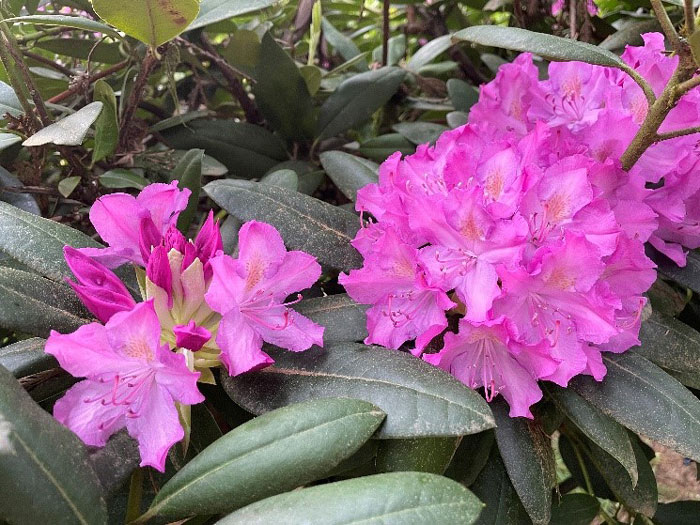
Most landscape rhodies I see in neighborhoods around here are some shade of pink and it’s 50/50 with the blotches. Basically, any shade of white, pink, red, or purple is available. I have not seen any orange or yellow so far.
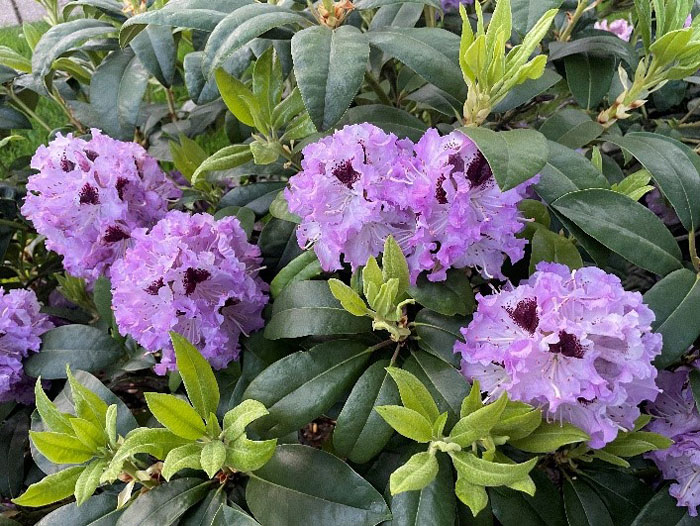
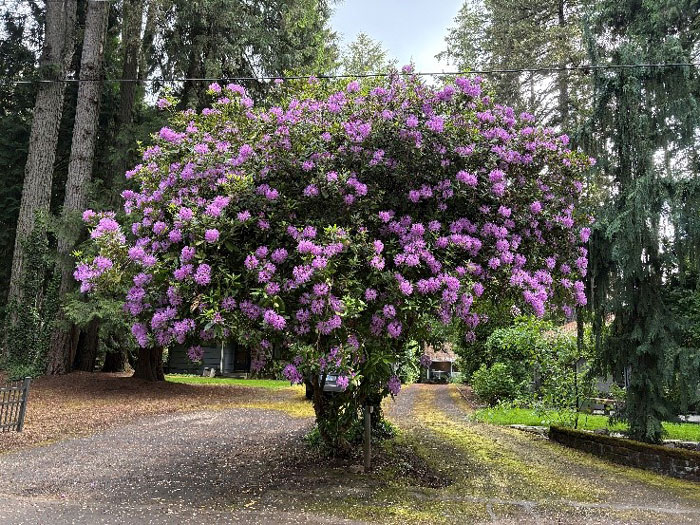
This beautiful rhodie is literally next door. Dot says it was big when she settled here in the 1970s. Yes, it’s touching an overhead wire … I’m guessing about 19 feet.
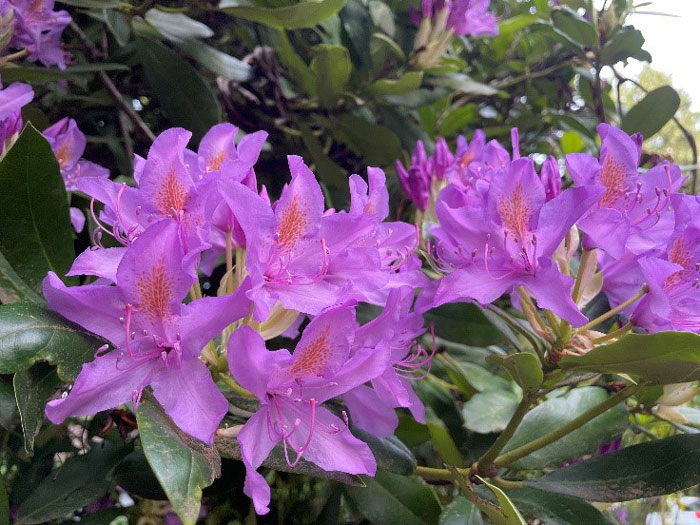
I have noticed that about 90% of garden rhodies around here are maintained at about 6 feet tall. I credit this to intensive efforts by plant breeders … plus, that’s about how high most folks can reach up to trim them.
Trimmed into 40-inch spheres, these rhodies have gone corporate … they are planted at an attorney’s office. Although I prefer a little more naturalistic style, I have to admit they look great.
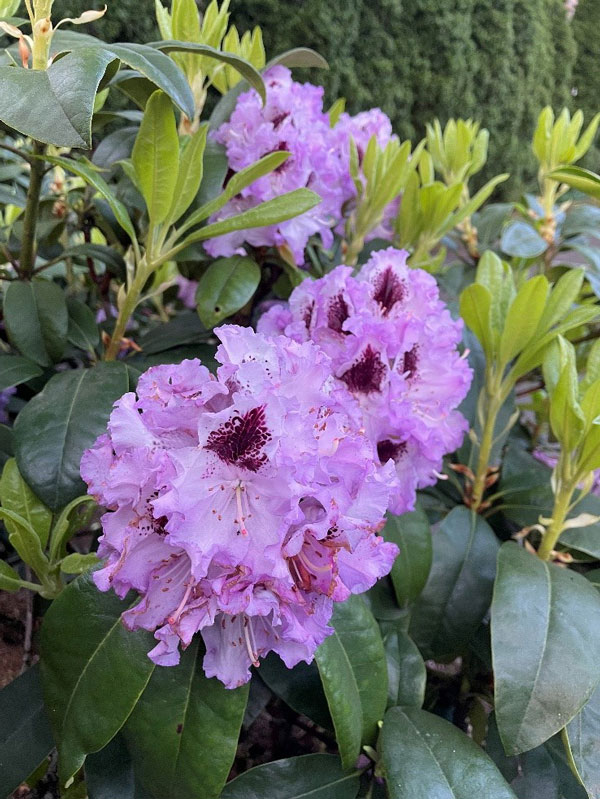
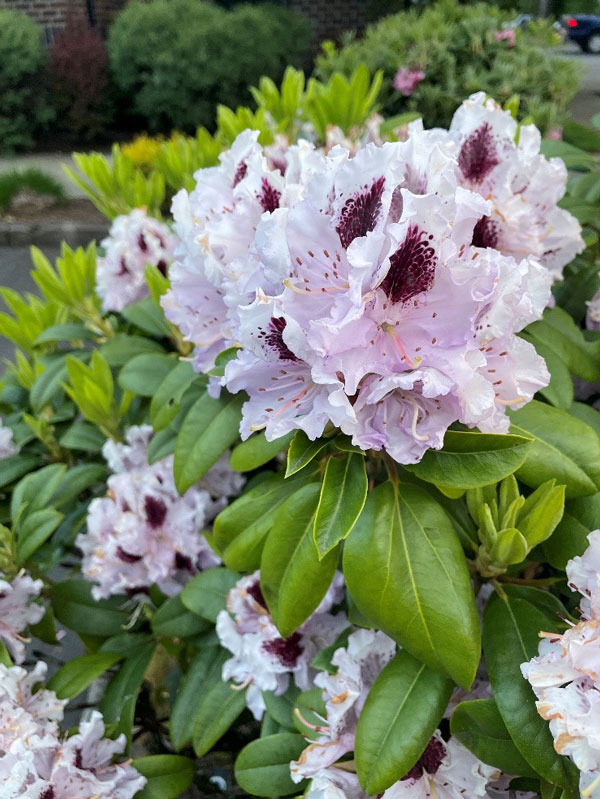
The most important thing I have learned about rhodies is they are not wimps. Like others before me, my ecstacy upon first sight of a rhodie — glorious blooms floating on clouds of heavenly foliage — led me to imagine myself treading reverently upon some sort of horticultural holy ground. Truth is, they tolerate city life, busy-with-other-things gardeners, and the hot, dry periods of summer better than I would have ever guessed. That said, this is Oregon … volcanic soils, mild climate, rain, Subarus. I’m unsure how rhodies could stand up to Texas’ fire ants, grasshoppers, tornadoes, hail, real heat, etc.
Yes, all the swanky neighborhoods have rhodies, but so do more modest homes.
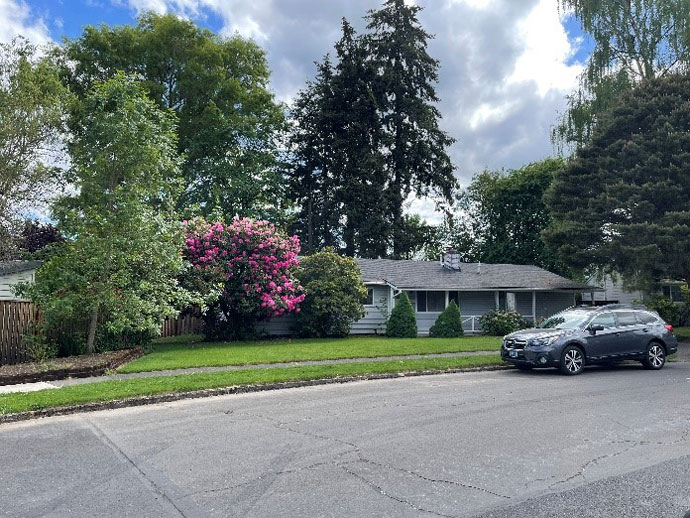
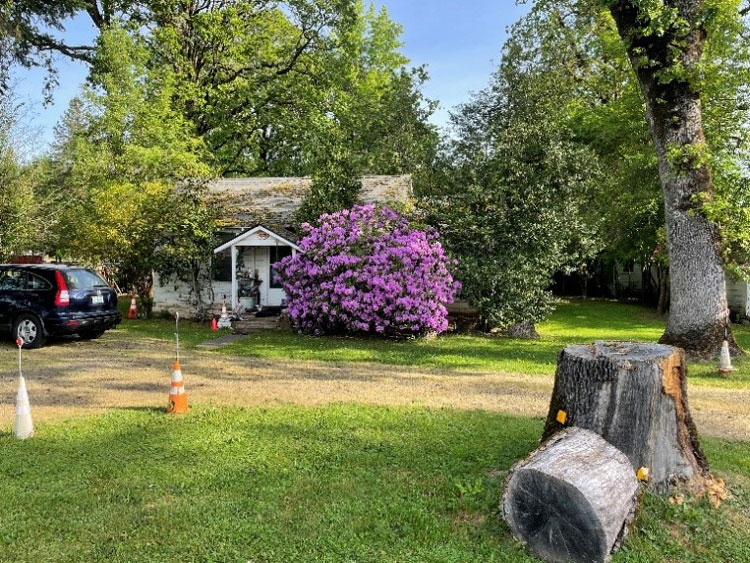
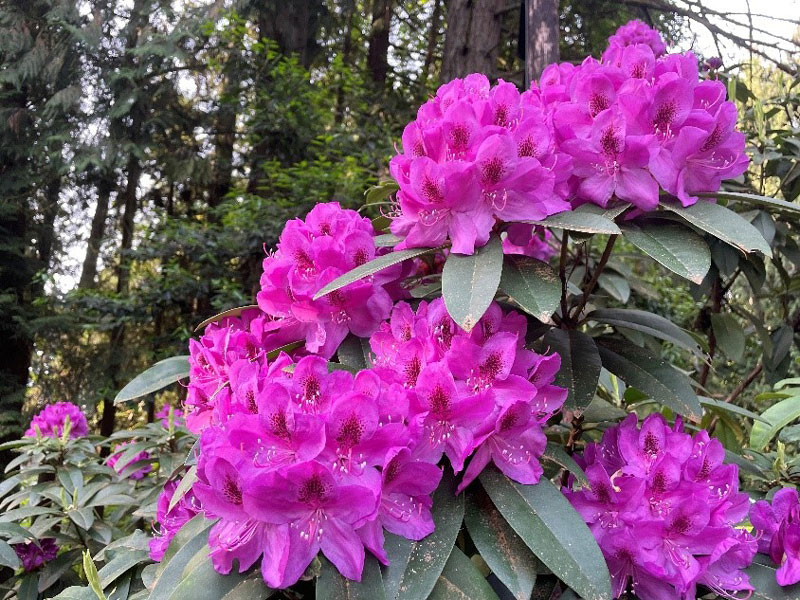
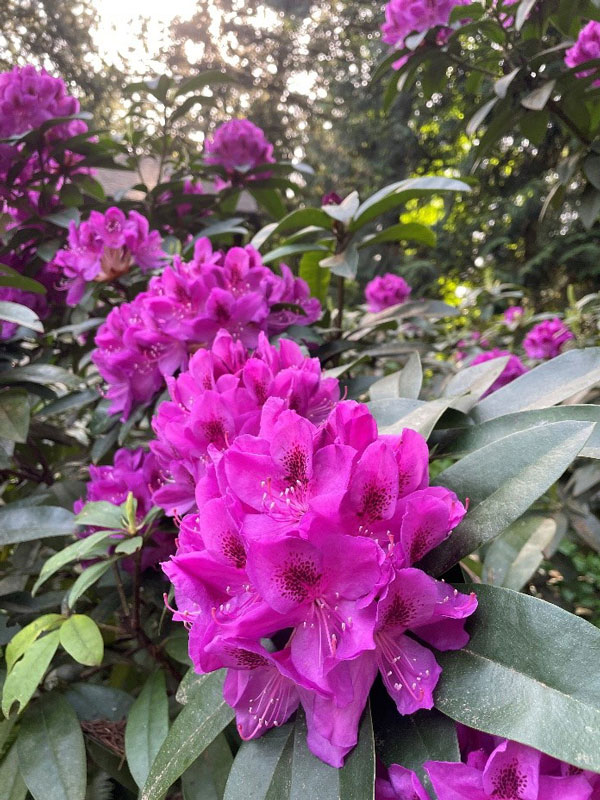
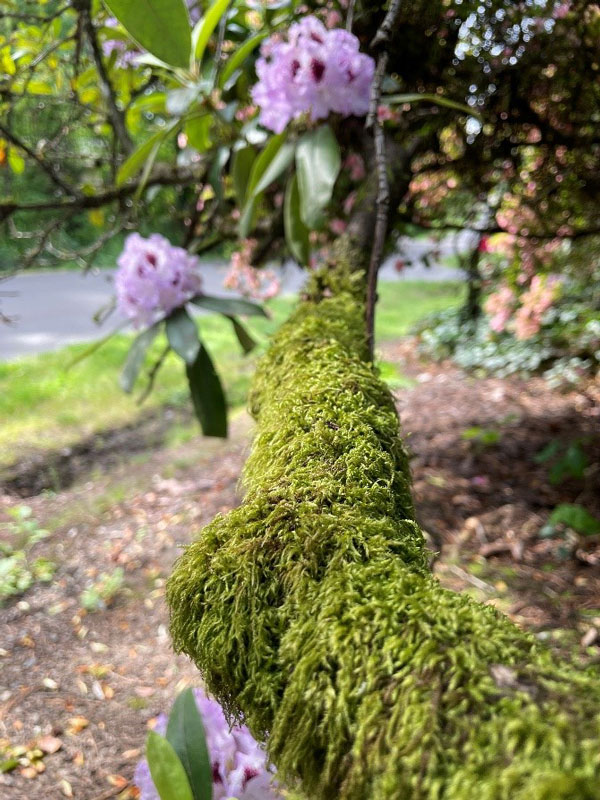
I took the photo on the left, below, and made it the screen saver on my cell phone. Looks amazing. I will consider it a compliment if you do the same. At right, below, it’s a bryophyte party on a rhodie stem! Bryophytes include mosses, liverworts, & hornworts … oh my!
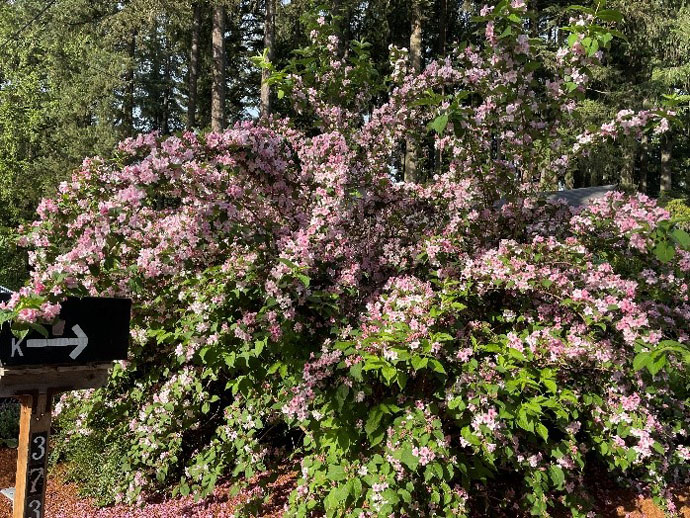
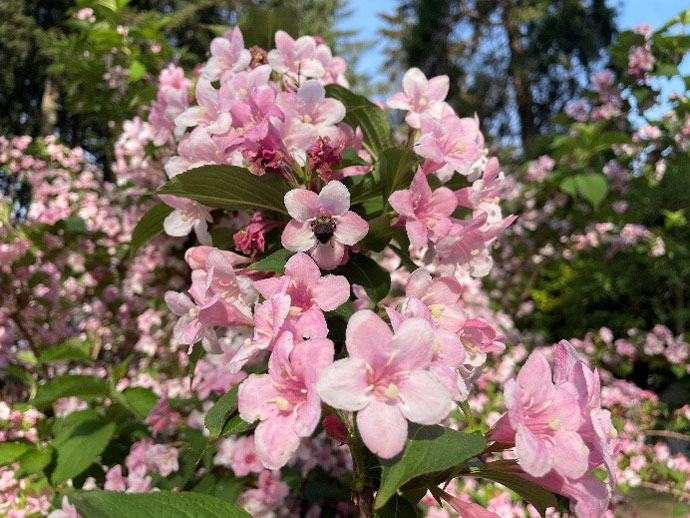
Oh yeah, there are other things in bloom. This one weigela (below, left), festooned with hundreds of delicate pink blossoms on dramatically arching branches, tops out at about 12 feet tall and 19 feet wide. Cute lil’ bee butt dead center in photo below, right.
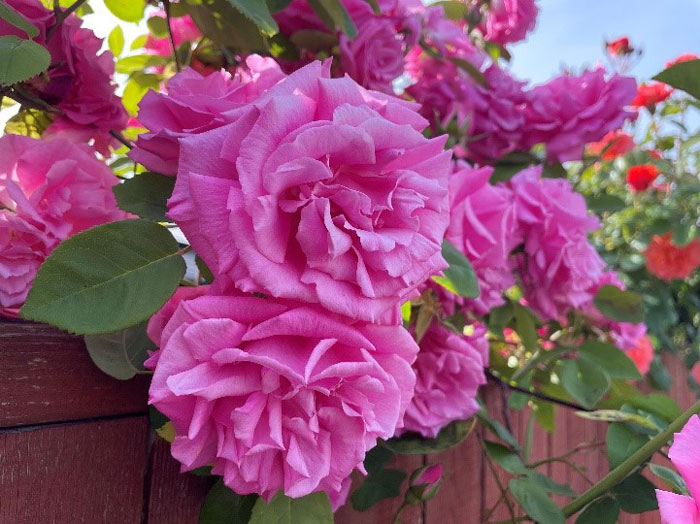
Whether in Paris, France or Paris, Texas … Portland, Maine or Portland, Oregon … there’s nothing like that first flush of roses in the spring. Sumptuous!
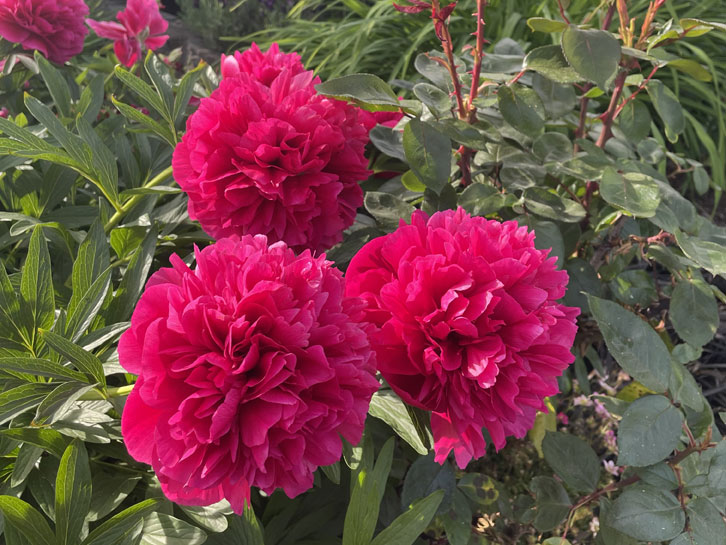
Peony barely standing from the weight of its incredible bounty of blossoms.
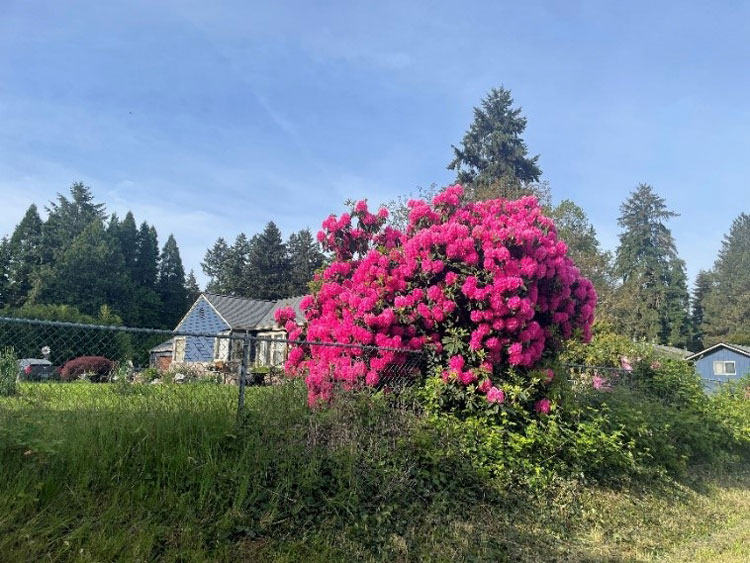
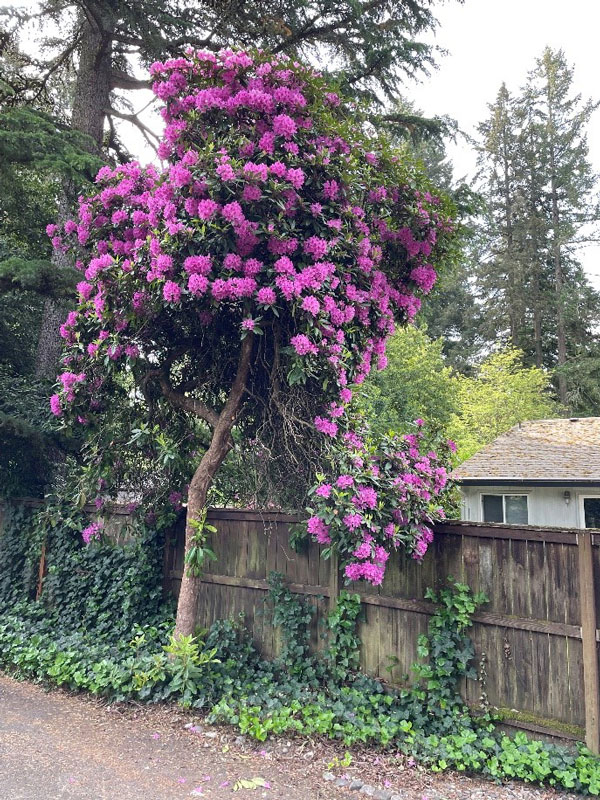
As my phone gasped and wheezed its final breaths, I came across my own personal favorite rhodie. I was back home before I realized why … this is me, incarnate. Wait … that’s not right … ”invegate.” This plant is me if I was a plant. Large always; dramatic seasonally; flowers in full view; damage behind the fence. Planted in an alley, it has been hit by a car and survived several poor pruning jobs. Yet, there it stands, outliving the person who planted it there many decades ago. (Perhaps it was not an alleyway then.)
Maybe it’s more than me. Maybe it’s symbolic of all of us. Aren’t we all just doing the best we can with what life has given us?
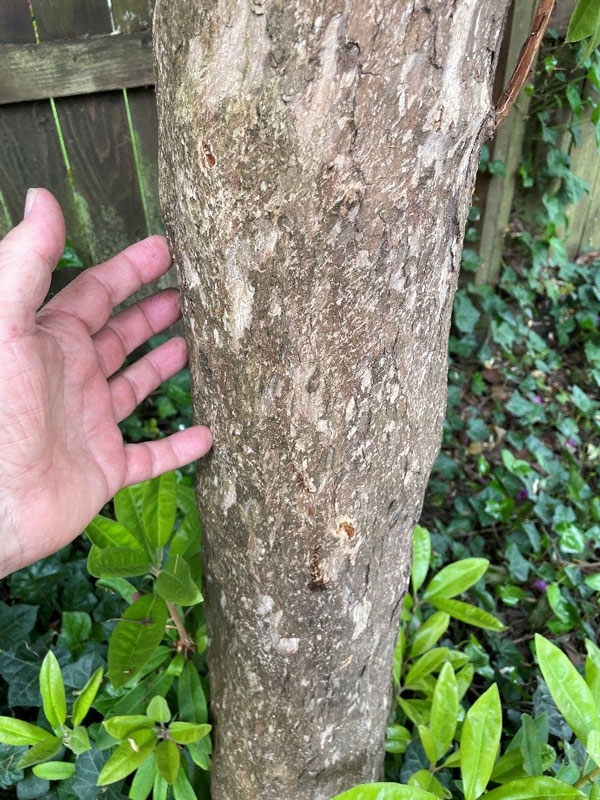
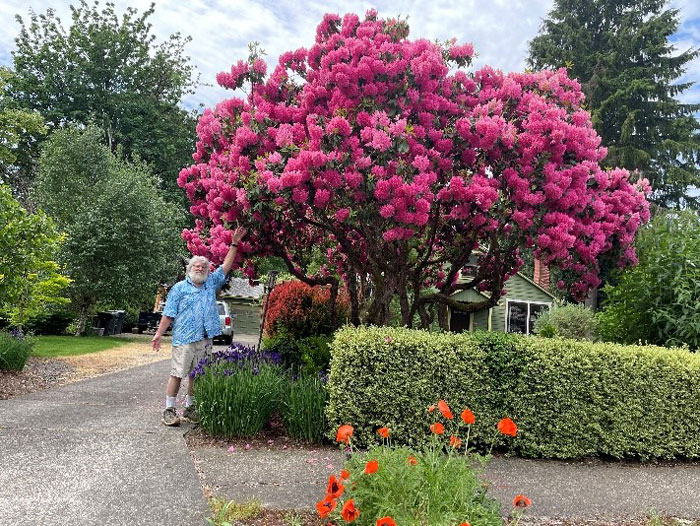
And finally, my horticultural favorite, which I hope inspires hundreds of Texas gardeners. No, you can’t grow this plant, but you can learn from it.
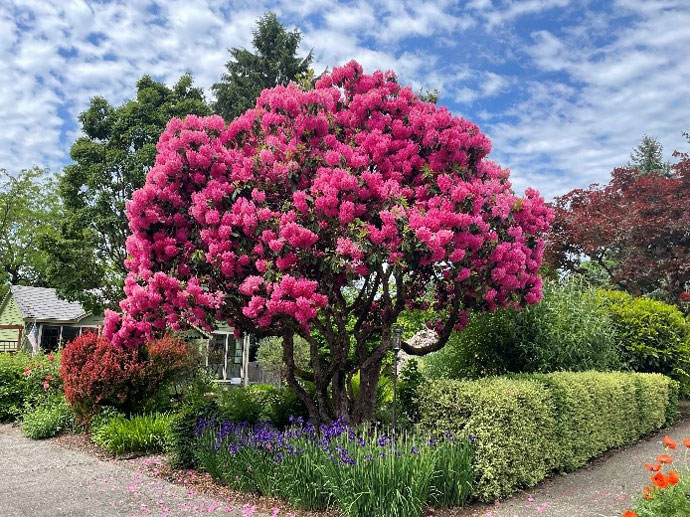
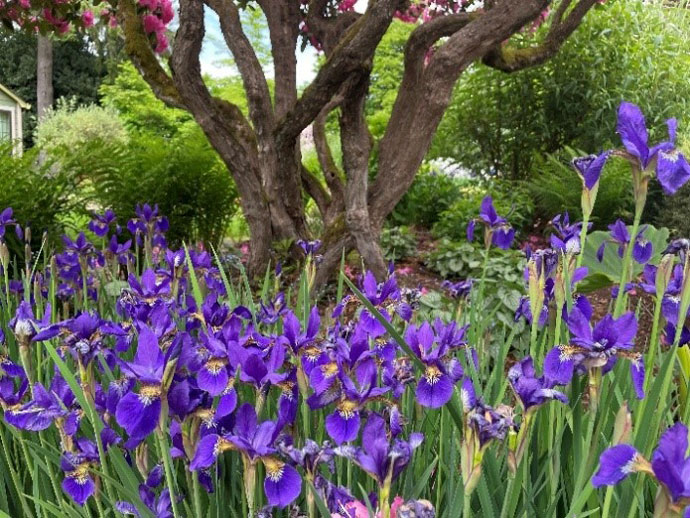
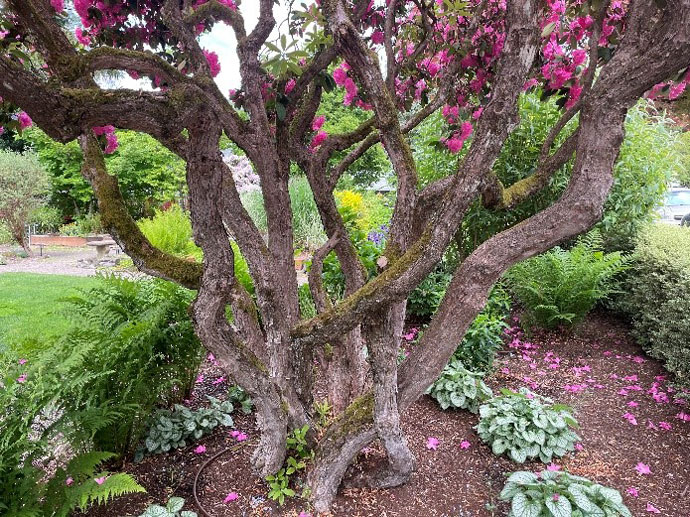
There is a time when plants need to be respected for what they actually are, not what we want them to be. I know many gardeners who would literally chop this plant in half without a second thought … “It’s supposed to be a shrub and it’s blocking the neighbors’ view of this lovely house.” To this I say, “Nay and double nay! It’s actually a small, multi-trunked tree that is blocking our view of the ugly road!”
This plant serves different purposes than it did forty years ago. It has grown and matured and changed along the way … just like you and me. And just like you and me, there is no going back. No ridiculous hard pruning, magical face cream, or sports car thrill will bring us back to youth. So, let us wisely embrace and appreciate the gifts this plant already possesses and bestows, rather than foolishly follow the path that begins at Plant Torture and ends at the intersection of Regret and Lamentation.
“Your recent acquisition of a new chainsaw does not necessarily mean anything needs cutting.” Chamblee
In spite of decades of complaints, warnings, and apparently futile public education, thousands of these trees are needlessly butchered every year. Disfigured trees all around town. All that time and effort to grow something beautiful … only to just chop the top off like a maniac. Seems like a terrible waste to me. Y’all realize I’ve been talkin’ ‘bout crape myrtles in Texas for the last three paragraphs, right?
Peace & Love,
Steven