
An “A+” for the Bees
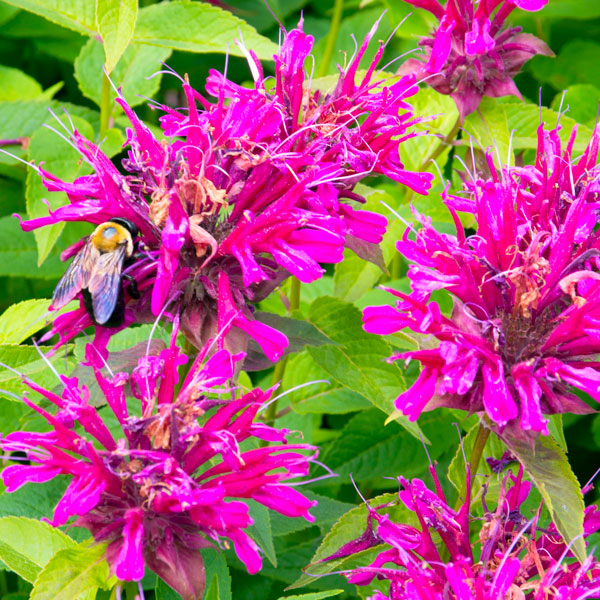
You’re not going to find a better plant for your pollinator garden than beebalms (Monarda sp.) They’re strong-growing perennials. They’re native plants across Texas. They’re suited to all kinds of conditions. They’re awaiting a space in your garden.
Curiously, beebalms aren’t all that commonly planted.
Perhaps they’re thought of as being from a different generation of gardeners: “My grandma grew them.”
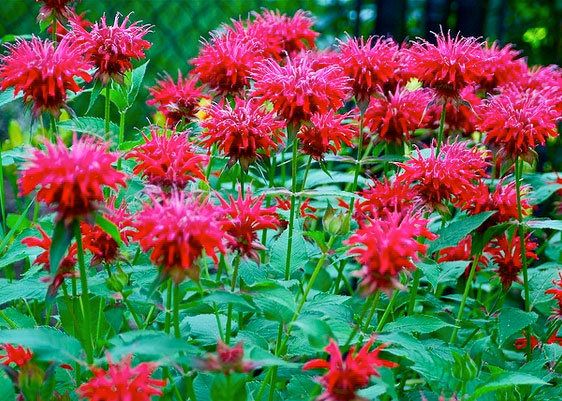
Perhaps people look at them as being unruly: They do grow to 18-42 in. tall and wide.
Perhaps they fill too much valuable gardening space in today’s smaller urban gardens, again because of their size. Plus, they do spread by underground roots. (Remember: they’re in the Mint Family.) Ask my friend Kenneth Cranfill how he likes his beebalm he’ll tell you he loves it, but that it has an aggressive root system.
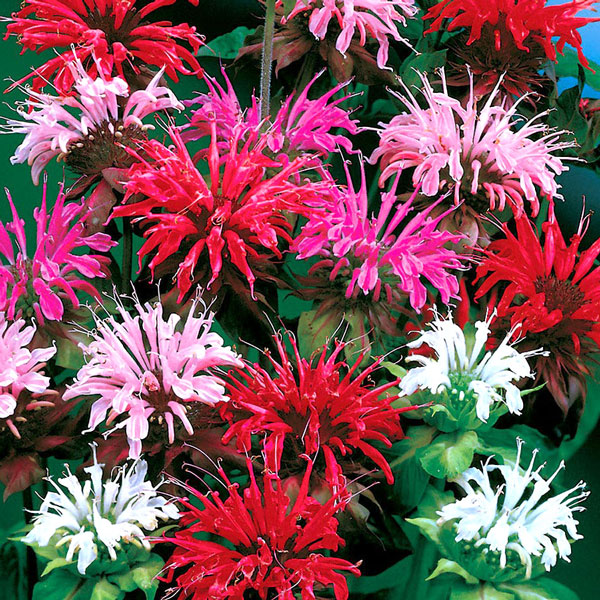
Nonetheless, positioned behind and alongside other perennials, beebalms can bring rich colors to the late spring and early summer garden.
And, oh, will they bring the birds and the bees!
Some things to know…
Common names: Beebalm, horsemint.
Scientific name: Monarda sp.
Plant Family: Mint Family (Lamiaceae). That means the plants will have square stems, opposite leaves, and aromatic foliage.
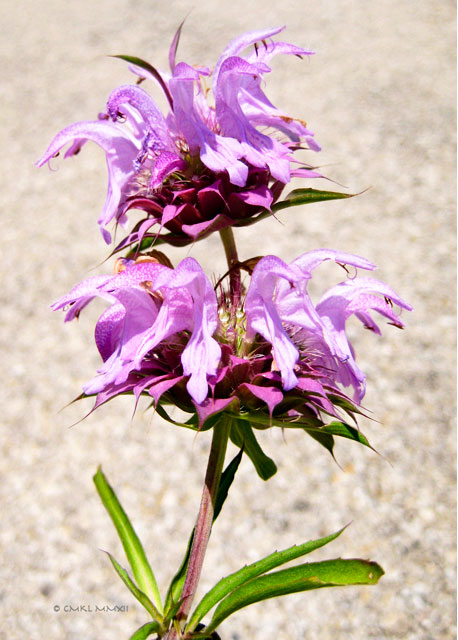
Native home: North America, especially Appalachia and even Texas.
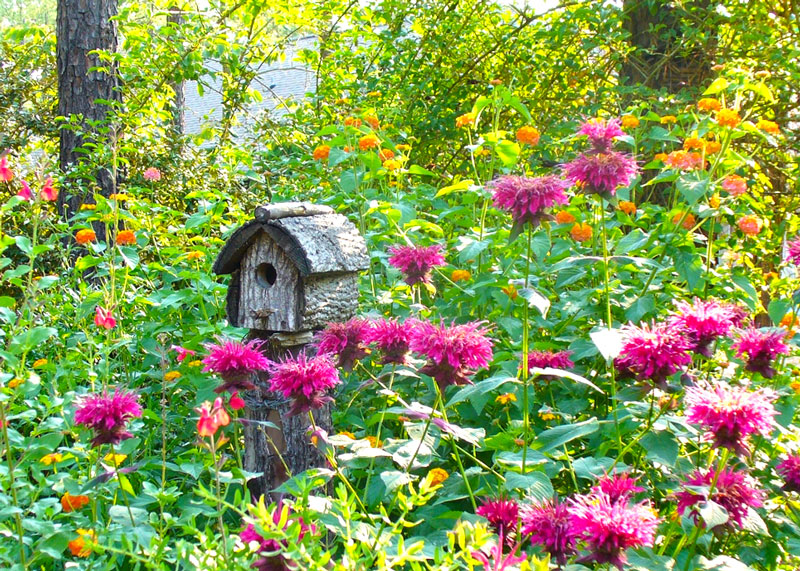
Mature size (height and width): Depends on species and variety, but ranges from 18 to 48 in.
Annual/Perennial: Perennial. Some types function as short-lived perennials.
Colors: Scarlet, crimson, pink, magenta, purple, lavender, white, bicolored.
Exposure: Full sun if kept uniformly moist. Better with morning sun and afternoon shade.
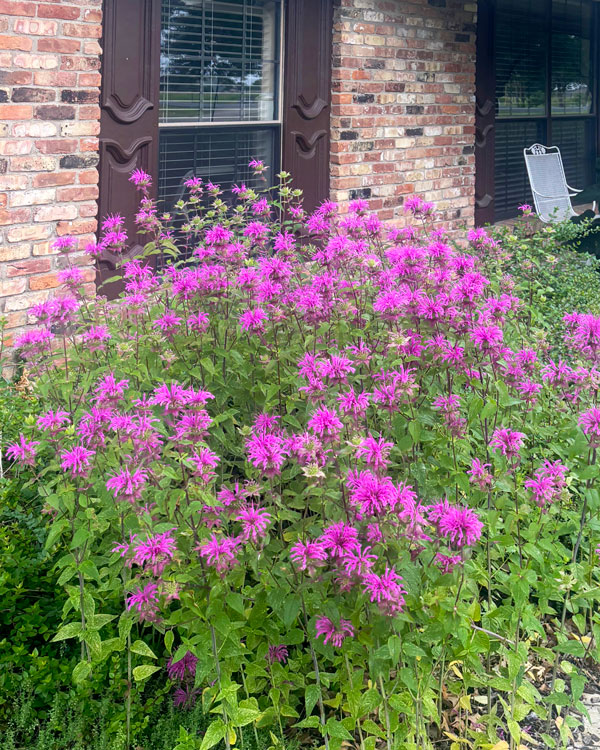
Bed preparation: Well-draining, but highly organic with several inches of compost or sphagnum peat moss tilled to a depth of 10 in.
Plant spacing: Best to give generous room for good air circulation. That will lessen the chance of powdery mildew and leggy growth due to plant shading. Hybrid varieties have been bred for resistance to powdery mildew.
Sources: Can be passed along from friends and relatives by division in late winter, or better retail garden centers will stock them in spring. Online sources of perennials are likely to stock them in spring. Remember that you won’t need as many of these transplants as you do of summer annuals since the plants grow much larger.