
Tiny pest causes huge problems
You could probably put 20 spider mites shoulder-to-shoulder on the head of a pin and have room left over.
They’re so small you might have thousands of them on an afflicted juniper or row of beans or tomatoes.
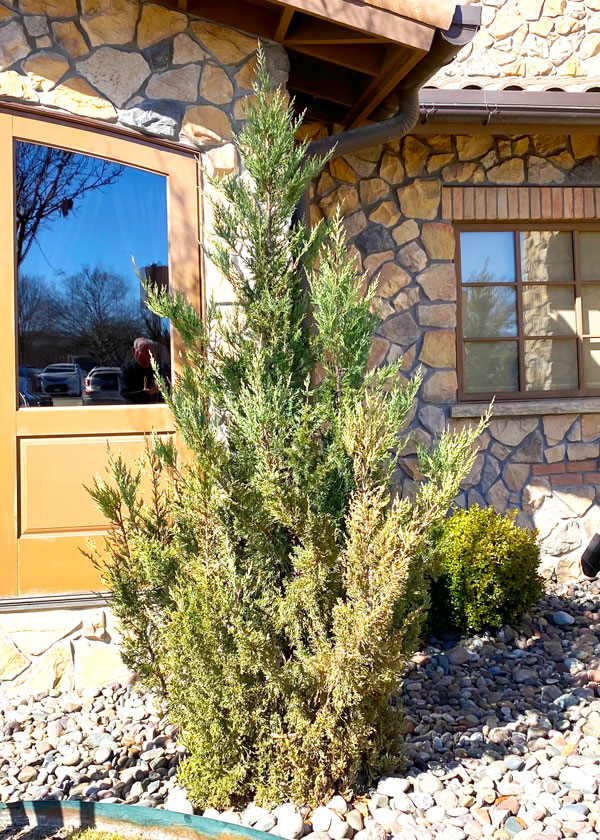
They attack a wide range of cultivated plants including houseplants, flowers, vegetables, shrubs, groundcovers, and even an occasional tree.
Their early damage is hardly noticeable to beginning gardeners. By the time it’s plainly visible it’s generally too late to save the plant.
Random facts that will help you…
• Spider mites are 8-legged, meaning they’re more closely related to ticks and spiders than they are to 6-legged insects. Therefore, conventional insecticides may or may not control them. Read the labels carefully to be sure you’re getting one that will be effective against them.
• Some plants are highly prone to them. Learn to know which are likely to develop an issue. Some of them are beans, tomatoes, sweet violets, marigolds, crotons, scheffleras, palms, and junipers of many types. And there are scores of others.
Quote of Note…
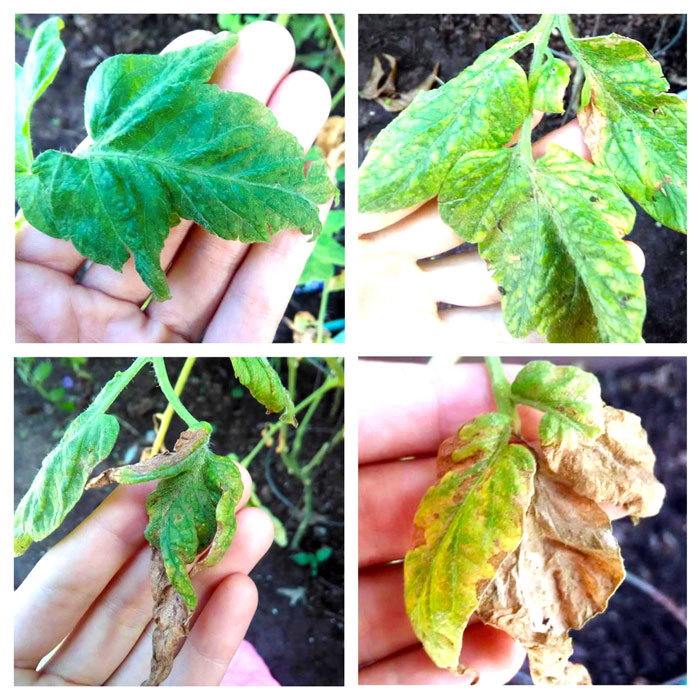
“My plants just ‘burned up’ last summer.”
That’s how old-time gardeners used to describe plants that probably were loaded up with spider mites. That’s about how they looked, and those folks didn’t realize that something almost microscopic was literally sucking the life out of their plants.
• Damage normally starts at the bottoms of the plants at the points closest to the roots. It then “flushes” its way upward.
• First signs will be mottling of the leaves to a pale tan color in tiny spots. The mites will be present on the backs of the leaves, but you’ll normally not notice them unless you know how to look for them.
• To see the mites, thump a suspect leaf over a sheet of white paper. Look for tiny specks that hit the paper to start walking around 10 or 20 seconds later. If they are much smaller than a period on a printed page, those would be the mites.
• Spider mites normally prefer hot, dry conditions, but the types that attack junipers show up in late winter. Watch conical, upright, and groundcover varieties of junipefrs for olive-drab patches toward the bottoms of the plants. Affected areas will then begin to fade to the color of manilla folders, then they’ll turn tan and crisp.
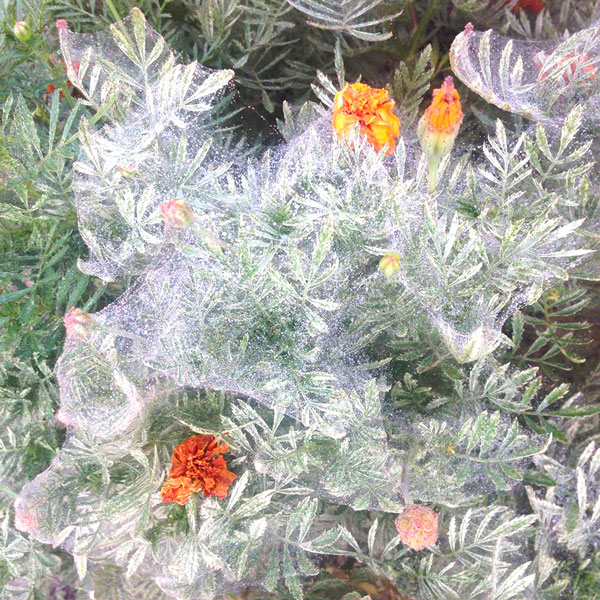
• Once spider mite populations become severe you will see very fine webbing between leaves and twigs. By then the outbreak is usually so severe that parts of plants or entire plants will be lost.
• The best way of dealing with spider mites in the future is to know which plants are most susceptible, then to watch closely for early signs. Spray a labeled product onto the bottoms of the leaves. Wait one week and check for presence of live mites and then, if necessary, treat once again.