
“Bee” as in “Beneficial”
Many gardeners have never seen the work of a leafcutter bee. Even fewer of us have ever seen the little lady herself doing her work. It’s a fascinating process, quite simple once you know a few facts.
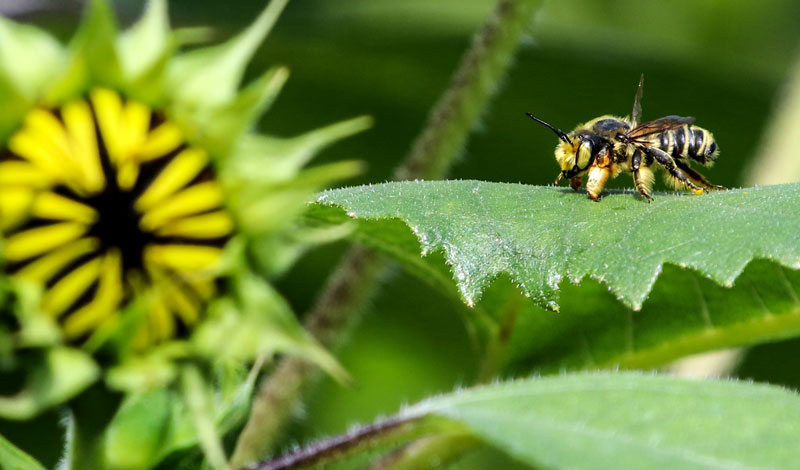
Leafcutter bees are solitary insects. They don’t live in swarms. They don’t make hives. There are no queens. They’re about the size of a regular honeybee, but they’re darker and they’re not as aggressive. They seldom sting unless provoked, and when they do sting, it’s not nearly as painful as the sting of a honeybee or yellowjacket.
The females do all the work in building the nests. They use cracks and crevices in old tree trunks or fences, or they hollow out rotted stumps into tubes.
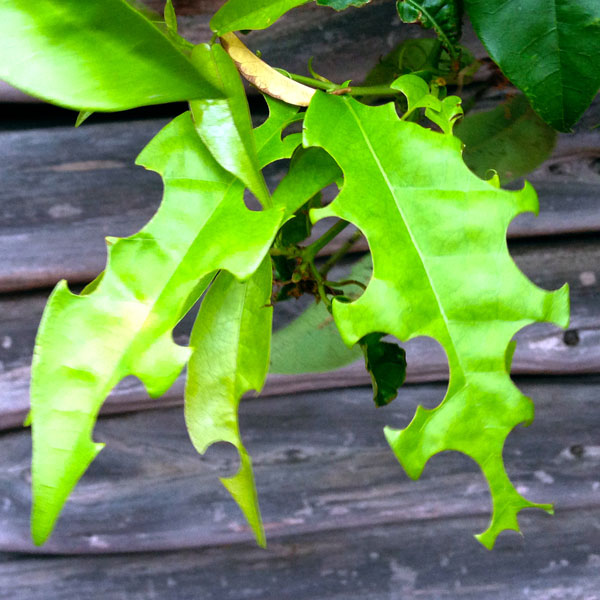
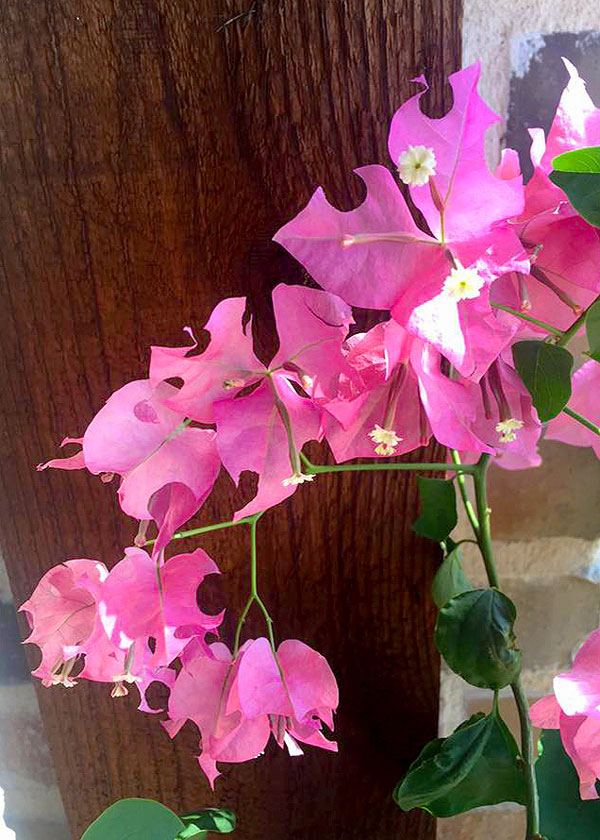
Once they have their nesting tubes, the lady leafcutters are ready to construct their nesting cells, and that’s where the pieces of leaf tissues come into play. Each bee will use her sharp mouthparts to cut perfect semi-circles out of leaves or flowers and carry those pieces back to the tube to construct the nests for her eggs. She does not eat the plant parts, so common insecticides don’t help.
The eggs remain in the tubes for the rest of that year and through the winter until the following spring when they emerge, fly, mate, and start the process over again. Each female lays 20 to 40 eggs in her spring season, then she dies.
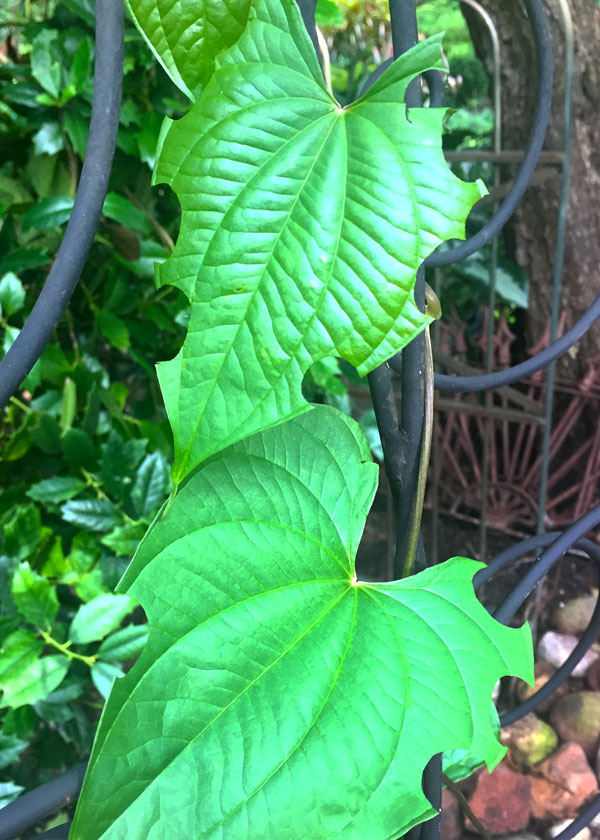
Unless there are several bees attacking the very same plant, damage is seldom any concern. If it starts to become severe you can cover the plants temporarily with cheesecloth during the day to keep them away.
Note: Leafcutter bees are efficient pollinators. Each female has a “pollen brush” on the underside of her body, and pollen gets caught on the stout bristles. It’s then deposited on the flower parts of the next plant she visits.
Google “leafcutter bees” and you’ll find many matches for buying bee boxes for encouraging their reproduction for pollination of alfalfa.
All of which is to say: These girls are your friends. Don’t do anything to hurt them. Help share their story. They’re another marvel of nature.
Note: The way I met my first leafcutter nest – I turned on a faucet I almost never used. It sputtered for a moment, and then a wad of dried leaves (and probably leafcutter eggs) blew out all over my shoes. They’re also known to inhabit downspouts that are no longer functioning – any hollow area where they can pack in their little nests.