
Terrific Turk’s Cap – by Steve Huddleston
(Photos by Steve Huddleston unless otherwise noted)
We have here an old-fashioned pass-along shrubby perennial that’s been grown in Texas landscapes since our grandmothers’ grandmothers. It’s a multi-stemmed plant with a sprawling, upright habit that looks best when grown toward the back of a mixed border or when used in a massed planting beneath a large shade tree.
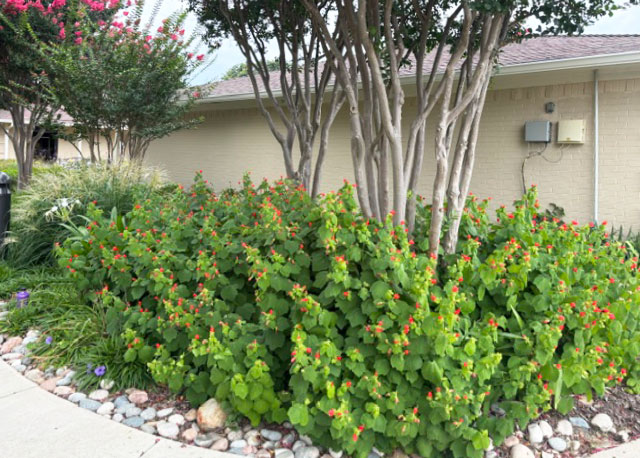
Although it’s native to a large part of the Hill Country and Mexico, north to Arkansas and east across the Gulf Coast states to Florida and Cuba, you didn’t see Turk’s cap sold in retail nurseries until recent decades. Gardeners shared it with other gardeners.
Turk’s cap is a member of the Mallow family – one that also includes hibiscus of all types hardy and tropical, hollyhocks, roses-of-Sharon, okra, and cotton.
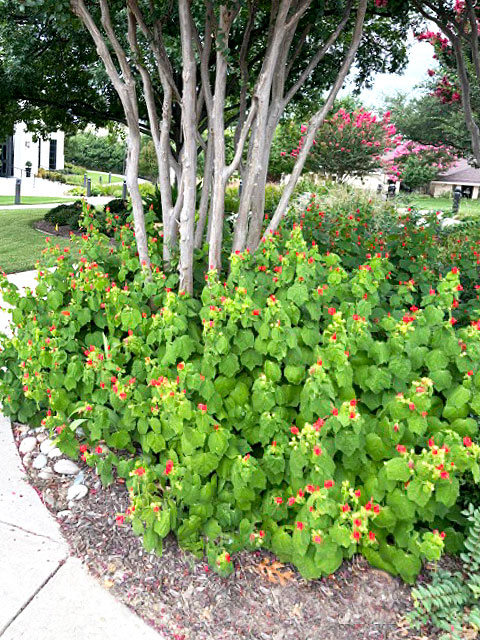
Plant Turk’s cap in large drifts beneath deciduous shade trees. Combine it with Southern wood fern (Thelypteris kunthii), plum yew (Cephalotaxus harringtonia ‘Plania’) and Carex ‘Feather Falls’ for stunning contrast.
What you’ll need to know…
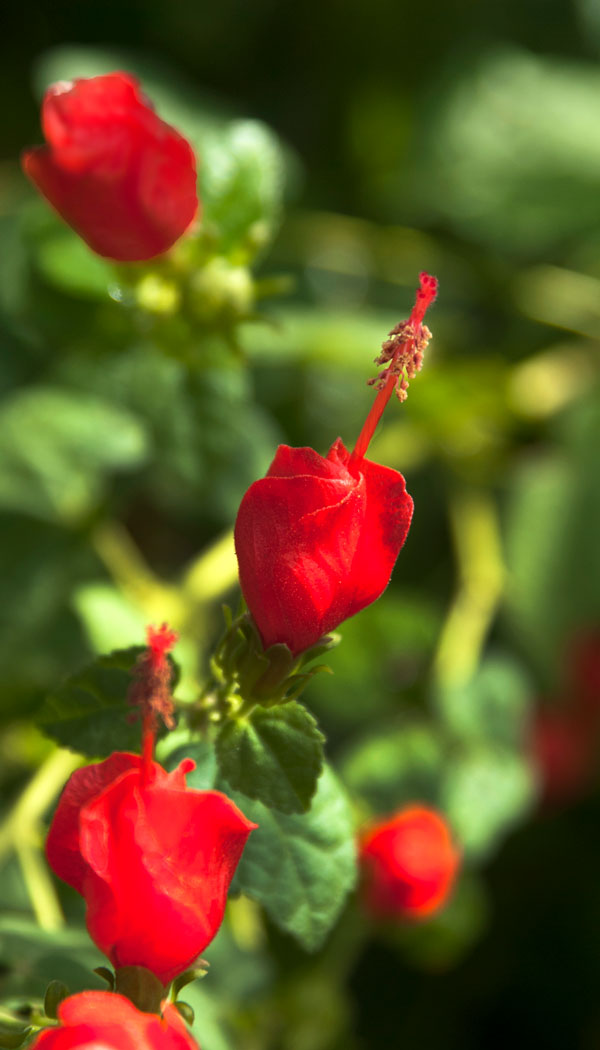
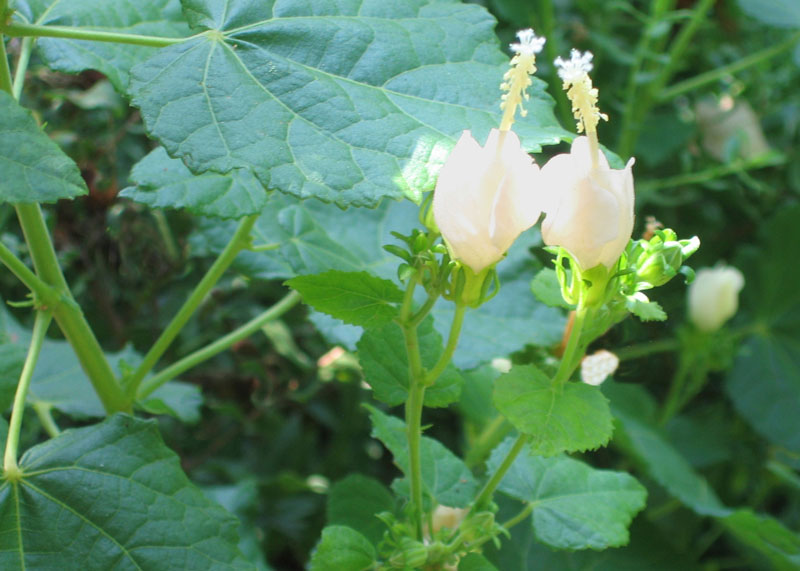
Common name: Turk’s cap (in recognition of the flowers’ tightly spiraled petals and their resemblance to Turkish turbans. They never unfurl through the life of each bloom.
Plant Family: Malvaceae
Scientific name: Malvaviscus arboreus var. drummondii. Species name honors Scottish naturalist Thomas Drummond (ca. 1790-1835) who spent 21 months collecting plants, including this one, in Texas.
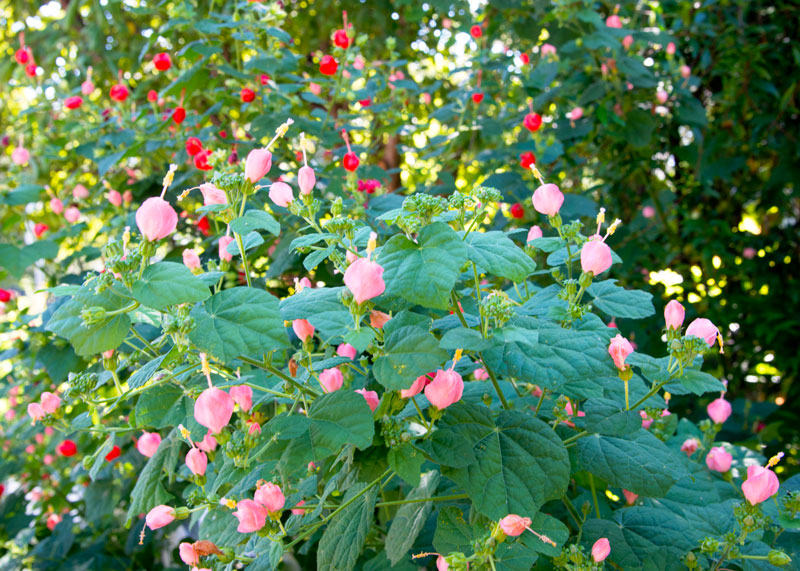
Hardiness Zones: Zones 7-11. Freezes to ground Zones 7 and perhaps northern parts of Zone 8. Will always come back from its roots. In rest of Zone 8 as well as Zones 9-11 it often remains as a shrubby perennial, a true woody shrub.
Sun or Shade: Does best in morning sun with shade in afternoon. Will tolerate full shade well. May struggle in hot, reflective sun.
Soil preferences: Adapts well to a wide variety of soils as long as it has good drainage. Moist, highly organic soils are beneficial.
Mature size: 4-6 ft. tall and wide depending on variety.
Blooming season: Early summer through fall.
Is pruning needed? Only to maintain tidy habit, also to remove winter-killed stems soon after first frost. Leave 3-4 in. of stubs of stems to show where the clumps are so you won’t disturb them over the winter.
Insect or disease problems? Nothing serious. A small caterpillar may feed on them, but it can be quickly stopped by applying Bacillus thuringiensis (B.t.) dust or spray.
Deer problem? It is not highly attractive to deer as they feed.
How propagated? Stem cuttings during growing season. Division in fall or in late winter. Seed if you’re trying to start new varieties.
Recognized as a Texas Superstar® plant.