
Quick Tip to Save Plants and Money
New trees and shrubs almost always come to us in containers. Sizes range from 1, 2, 3, 5, 7, 10, and 20 gallons and larger. But they all have a couple of things in common.
They all were grown in lightweight, highly organic potting mix, probably containing a great deal of bark and compost. That’s because those components are inexpensive and lightweight for easier handling and cost savings in shipping.
Most were, to some degree, rootbound when they were removed from their containers and planted.
Add those two things together and you get plants that have 95 percent of their roots still in their original soil balls for their entire first year in your landscape. For most, that continues on through the second year as well.
That means that you’ll need to water those soil balls, therefore their roots where the roots are growing – in those original soil balls.
Sprinkler irrigation won’t cut it – it gets applied over too wide an area. It never soaks down to the majority of the plants’ roots.
Drip irrigation with above-ground emitters also won’t work – we don’t leave it running long enough to soak clear to the bottoms of the soil balls.
In most cases the adjacent soils (the native soils in the plants’ beds) stays very wet, while the plants themselves wilt and wither because they dry out much more quickly.
Here’s your solution…
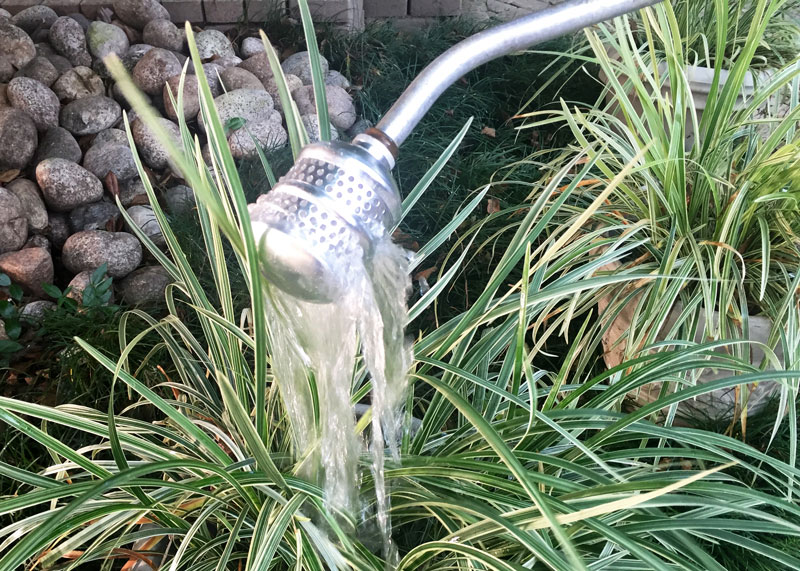
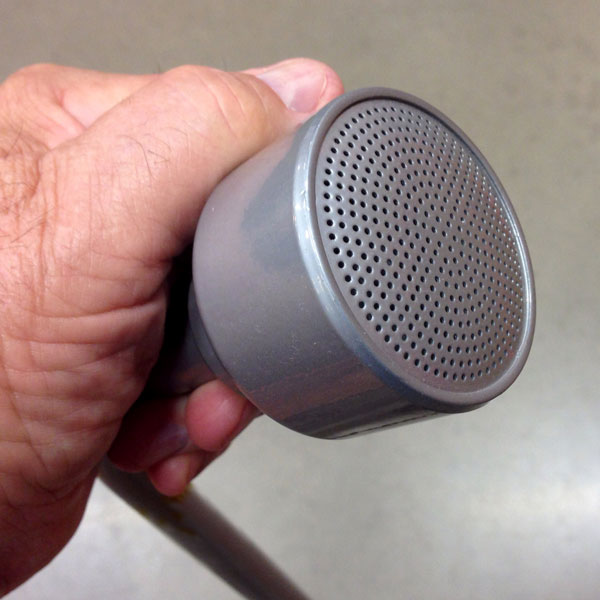
Water new plants by hand. Buy either a water breaker or a water bubbler and put it on the end of a 36- or 48-inch watering wand so you can soak the plants while standing erect beside them. You can turn the water on at full volume and with either of those devices it won’t wash the soil. (Water bubblers are better for that purpose.)
Apply water to each plant’s root system equal to the size of the pot from which it was planted. Do so every other day during the 98-degree weather.
A 1-gal. plant gets 1 gallon.
A 2-gal. plant gets 2 gallons.
A 3-gal. plant gets 3 gallons.
And so it goes no matter the size of the plant and its original pot. Do that every other day, and at these temperatures you won’t overwater them.
The alternative?
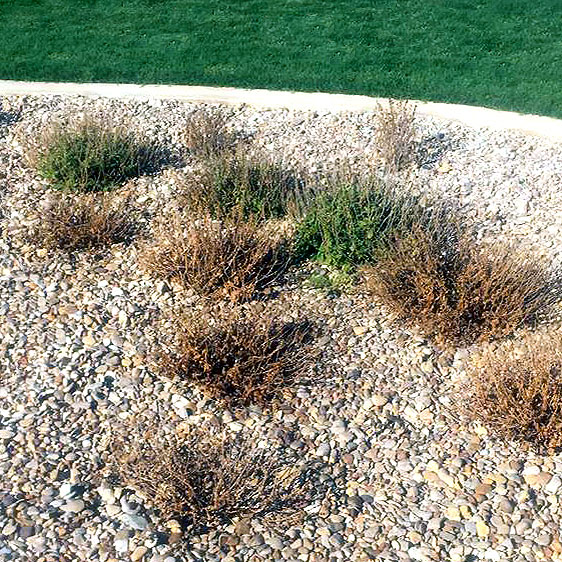
You won’t be happy. Let a plant go beyond the “permanent wilting point” and it won’t recover. For some thick-leafed types like hollies, ligustrums, and others, you won’t even know when you’re getting close. Don’t take that chance.
Follow my tip and you won’t have to find out.