
Lucious Lantanas
I spent several summers climbing the hillsides in Uvalde and Real Counties when I was a teenager. I was grunt labor working on herbicide research for my dad. Fact is, I probably climbed over some of the same hills as Gracie the giraffe escape artist (check recent news stories).
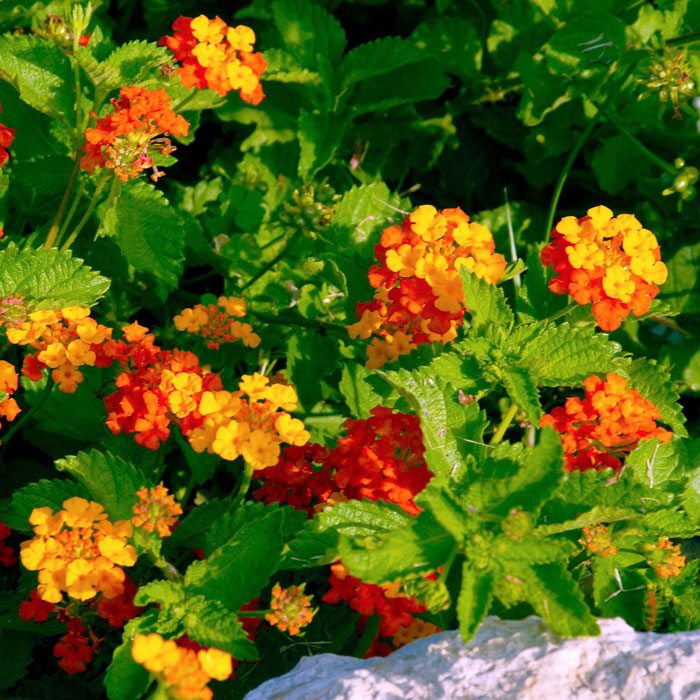
It was on those hills, specifically, in many of those washes, that I learned to appreciate this plant that found places where moisture accumulates and ways to take advantage of it. Big clumps would arise out of the bases of boulders – the ultimate mulches to keep the soil from drying out.
I came away with a lifelong love of lantanas.

The odd thing was that you didn’t see them used in Texas landscapes very often. They grew too tall. It was when dwarf and spreading types came into nurseries that interest skyrocketed. Gold Mound, Silver Mound, then trailing lavender lantanas were popular. But then New Gold blew the top off the market. It remains one of the finest.
As interest in perennial gardens has grown over the past 30 years the taller types of lantanas have come back into the picture. They’re attractive backdrops to other flowers and they keep blooming from spring until frost.
How to succeed with lantanas…
Here are some quick tips to getting the results you want with this great group of plants.
• Lighting: Full or nearly full sunlight. Shade is their enemy.
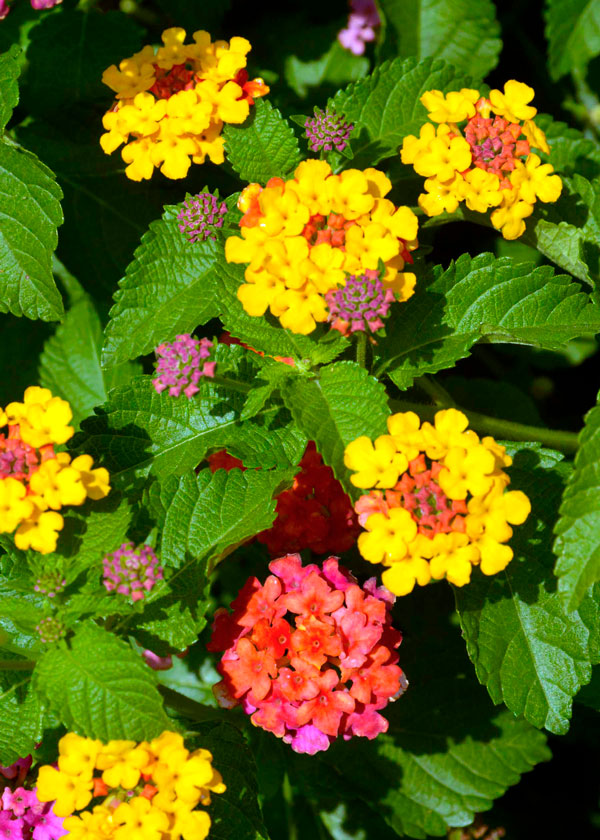
• Soil types: Perfectly draining. Highly organic with ample amounts of expanded shale or sandy loam topsoil. Raised beds are great, but they also are excellent in large patio pots.
• Fertilizer needs: Water-soluble, high-nitrogen fertilizer applied weekly. They bloom on new growth, and nitrogen dissipates quickly with irrigation, so it must be replenished.

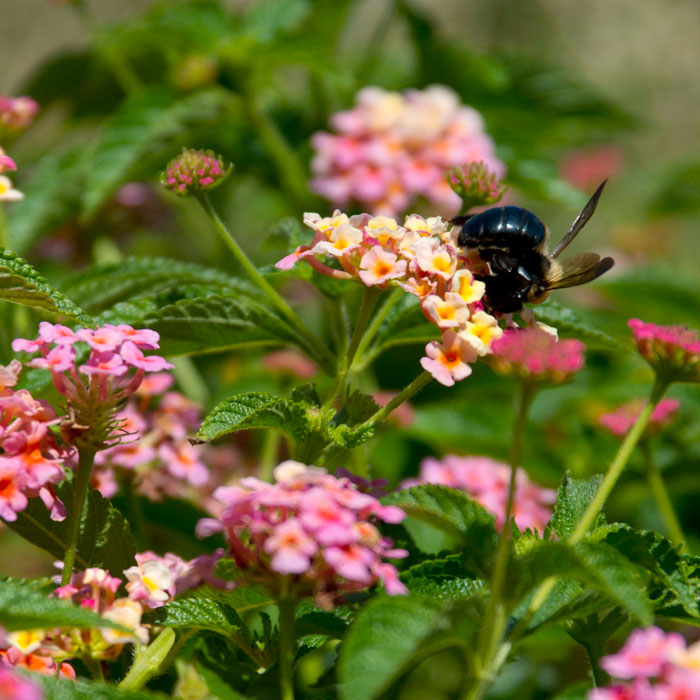
• Pruning: Trim to maintain good growth form but avoid formal shearing. Let them grow naturally.
• Deadheading: Most varieties will cycle in and out of bloom so keep seedheads trimmed off as they try to form. One of the advantages of the variety ‘New Gold’ is that it’s a sterile triploid that is incapable of setting fruit. It blooms almost continuously.
• Winter protection: The farther south you are in Texas the better luck you’ll have in getting lantanas to come back from their roots the following spring. In fact, they may not even freeze back to the ground. If they do, however, trim off the dead tops immediately, and pile compost or shredded tree leaves over the bed 2-3 in. deep as a mulch.
• Propagation: Most growers start new lantanas from cuttings taken from soft new growth during the summer. They can also be divided in very early spring, just before the plants start sending up their new shoots.