
Take notes about pencil plants
I’ve been growing pencil plant euphorbias since I was about 12, and I don’t think I’ve ever killed one. Other than freezing, nothing much hurts them. It’s a perfect plant to throw in with cacti and bold-textured succulents. Its needs are simple and nothing much bothers it.
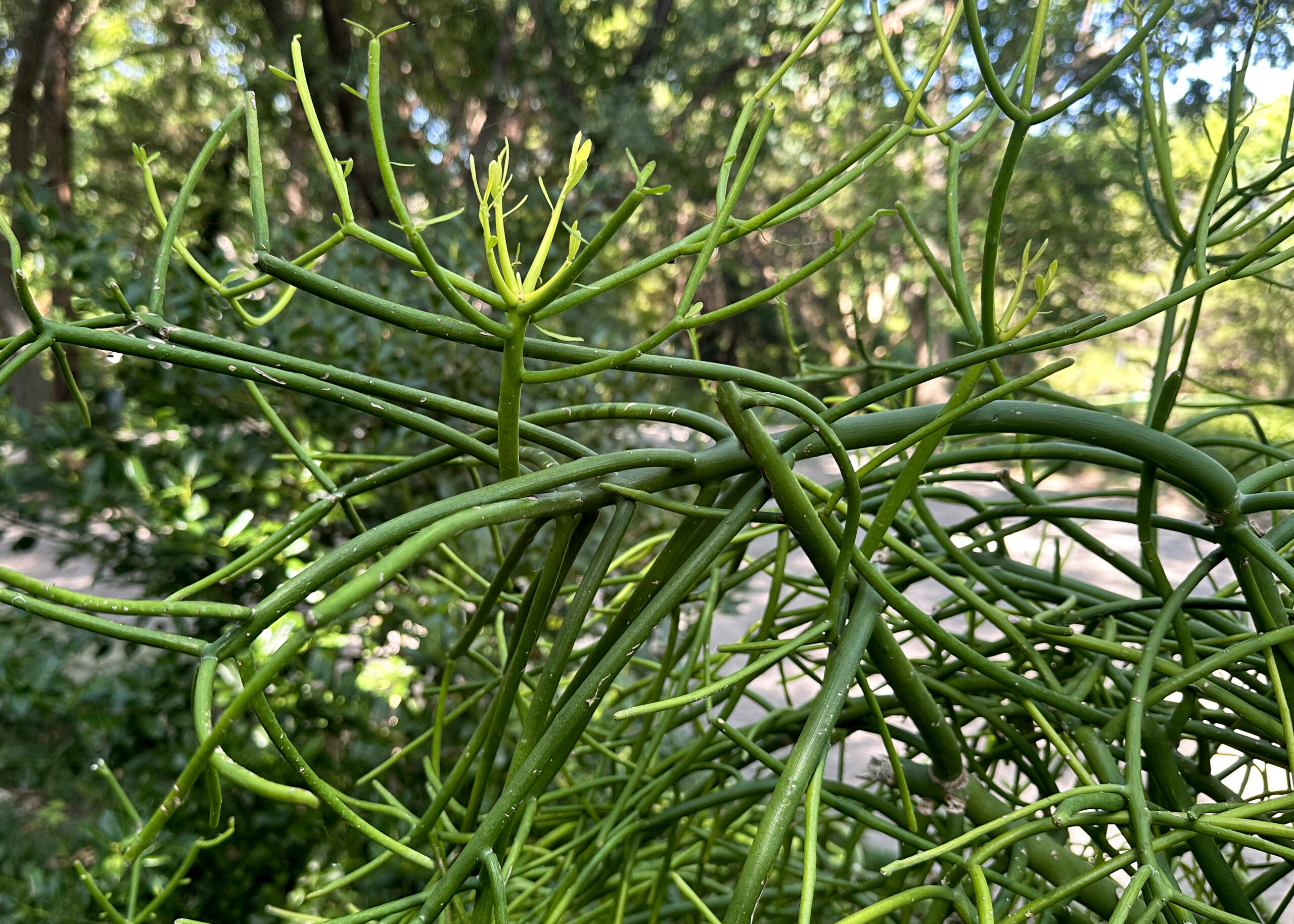
Frankly, I think I can give you its details better in the form of short points and pointers. See what you think.
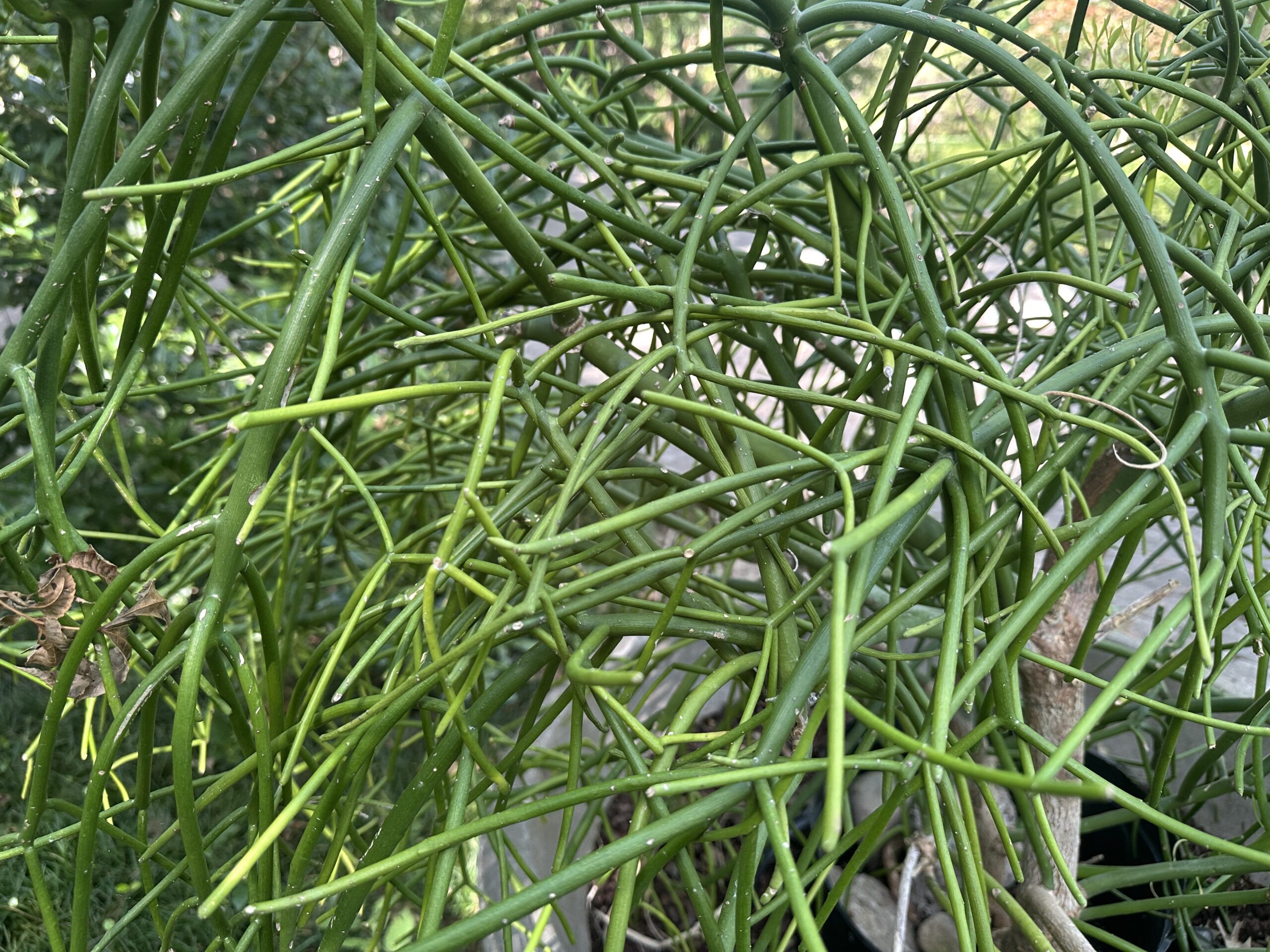
Common name: Pencil plant euphorbia
Scientific name: Euphorbia tirucalli
Plant Family: Euphorbiaceae – one of the largest plant families in the world.
Native home: Eastern and southern Africa, from Kenya and Ethiopia southward to South Africa. Pencil plants are also native to areas within the countries of the Arabian Peninsula.
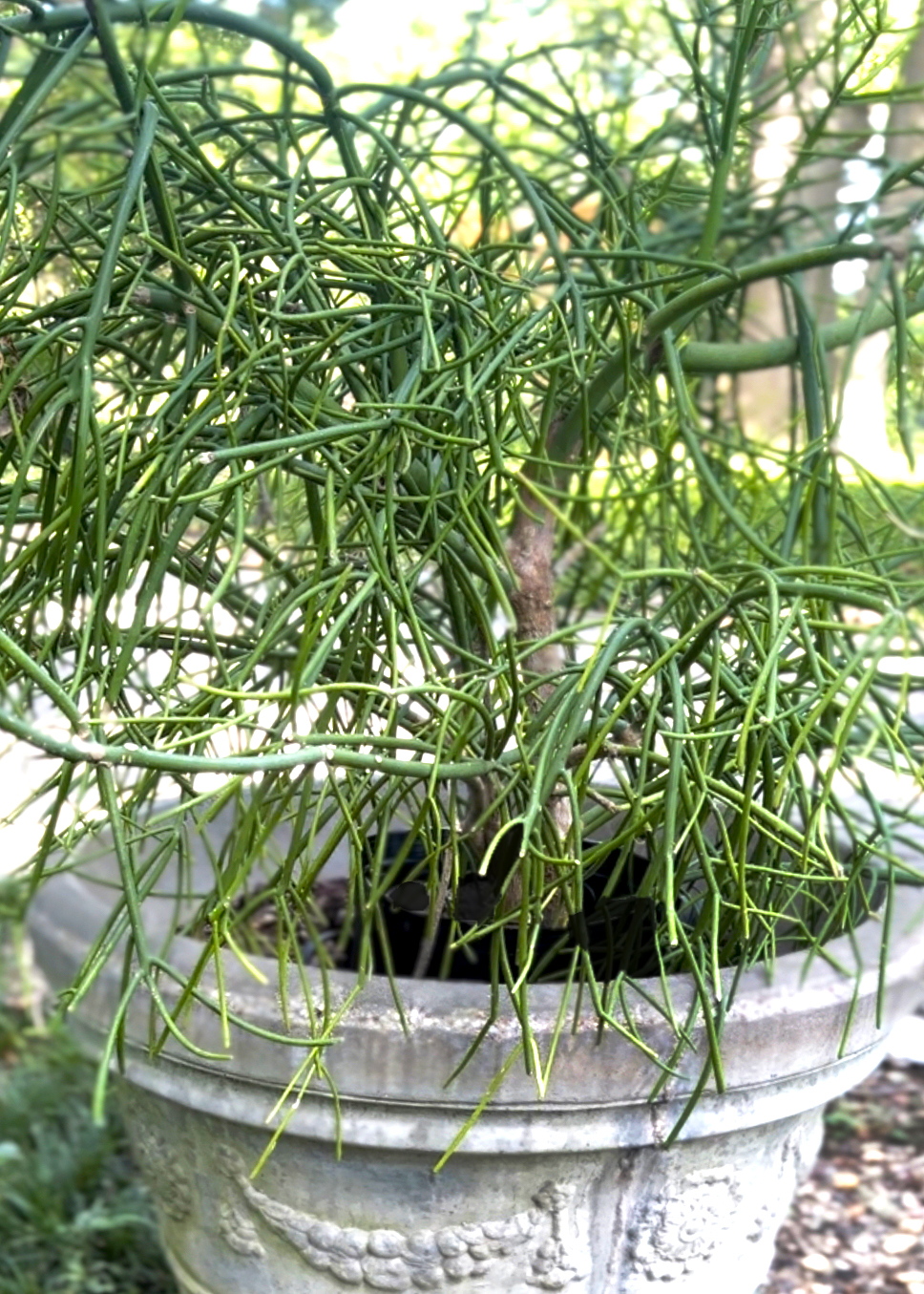
Hardiness Zones: Zones 10 and 11. Will not withstand temperatures below 31-32F. I will deal with it here as a container plant, outdoors if you wish in the summer, but inside in freezing weather.
Soil preferences: Must have excellent drainage. Start with a high-quality commercial potting soil and combine one-third (by volume) horticultural perlite or expanded shale to ensure the good drainage. Perlite is very lightweight. Shale is heavy. Which you use will be determined by the type of container you choose. The plants become top-heavy as they mature. You may need the ballast of the shale.
Lighting requirements: Almost full sun, although filtered shade in the afternoon during the summer is a good idea. Bright light encourages dense, compact growth.
Propagation: Stem cuttings. Choose 4- to 6-in. sections of the stems. Cut them with a sharp knife and lay them on disposable paper to let the latex sap stop flowing so the wound can callous over.
After a couple of days, stick the cuttings into a 6-in. clay flowerpot filled with the potting mix described above. Keep it moist but not wet and the cuttings should form roots within a few weeks. At that time, you re-pot them 3 or 4 per container and let them start growing.
Important Note: As with other euphorbias, the latex sap can be irritating to your skin and especially hurtful to your eyes. Protect yourself and keep the plants away from children and pets. It is not poisonous, but it can cause discomfort and concern.
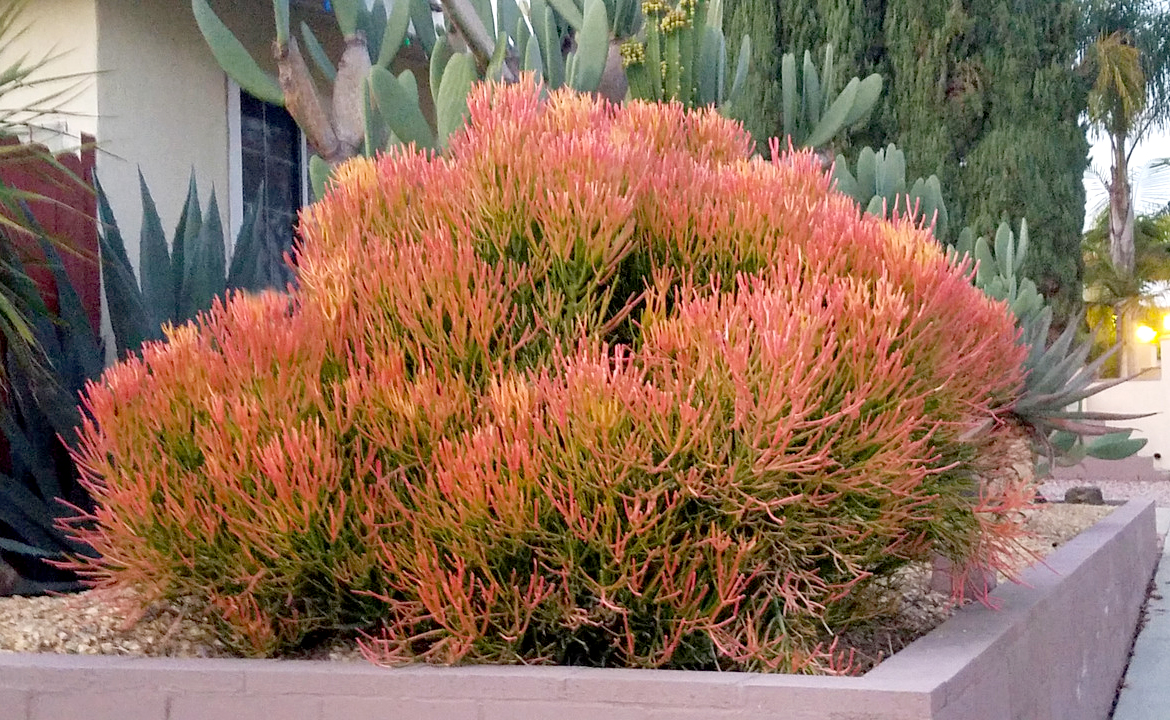
Varieties and Cultivars: You’ll see primarily one type that has been selected for its tendency to produce stem tips of bright orange-red. Appropriately, it’s called ‘Firesticks.’
Other Euphoribas…
Perhaps you’re familiar with three other euphorbias that are common in our lives.
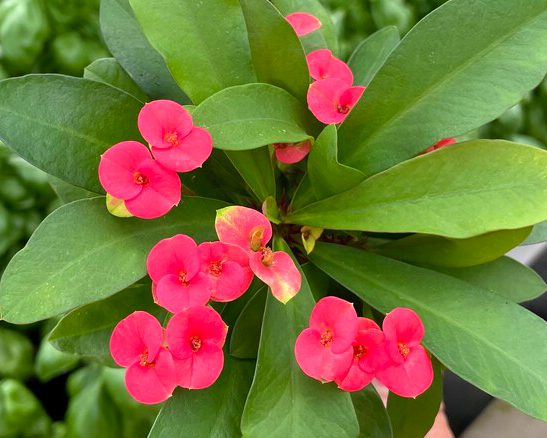
• Crown of thorns is a handsome succulent plant grown for its red, pink, or white floral bracts. Its stems are covered in thorns, hence its name.
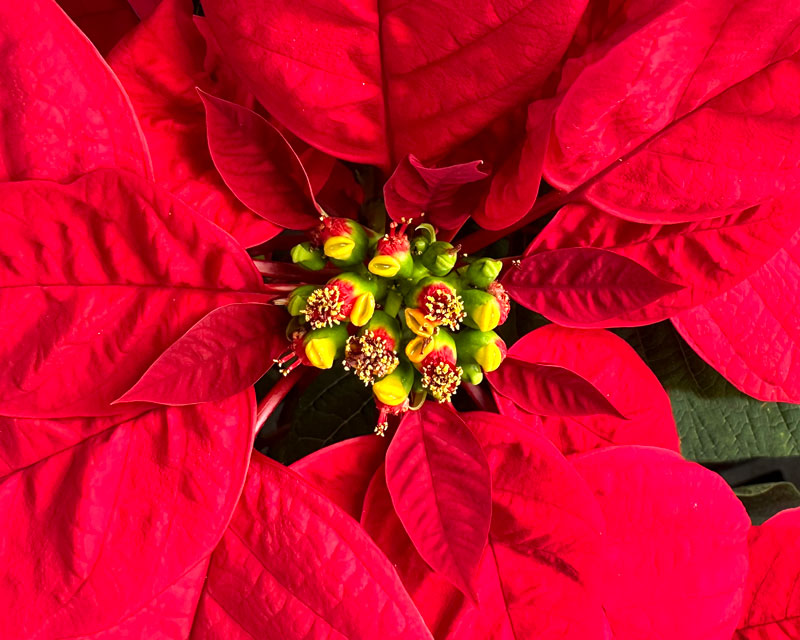
• And, of course, poinsettias are sisters to pencil plants. Who would have guessed that one!
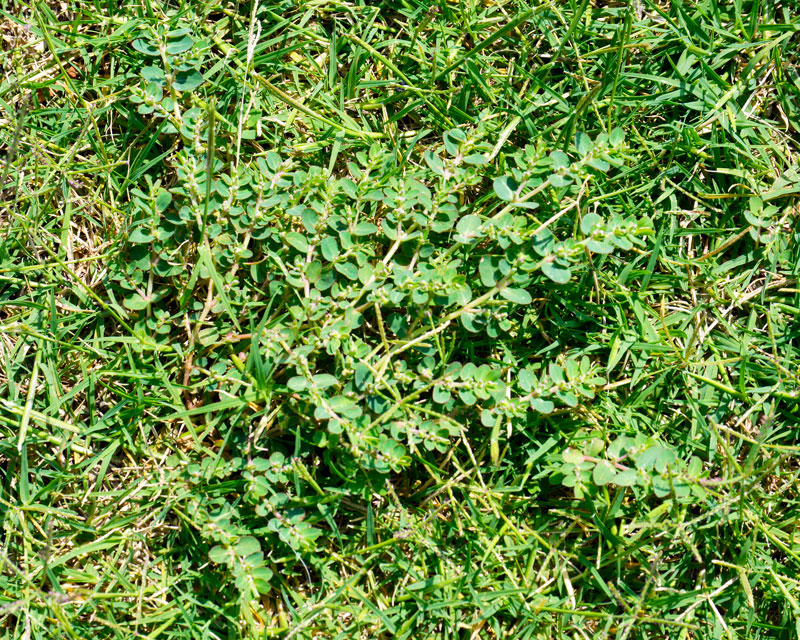
• And that weedy little thing that grows in cracks in the sidewalk and in bare spots in the lawn – the one with milky sap when you pull it out. It’s called “spurge,” and it’s a euphorbia, too. Quite the plant family.