
Remembering an American beauty(berry)
American beautyberry was never a mainstay of Texas landscaping, but it was popular with gardeners who wanted a plant that would make a bold statement in bright, shaded gardens where soils were rich and moisture was steady.
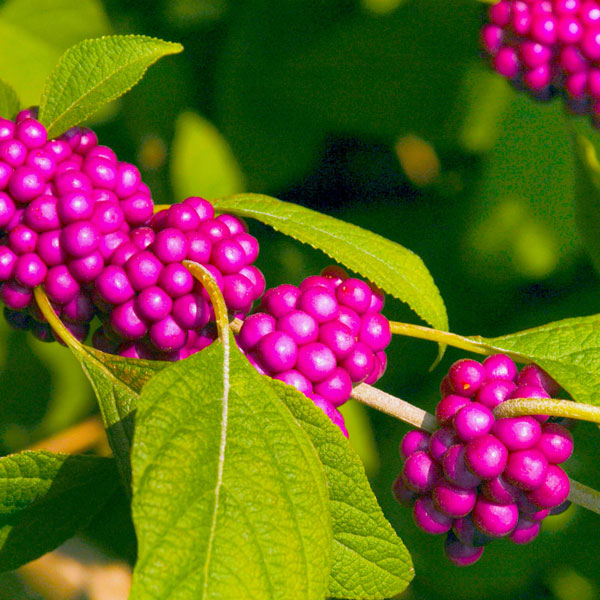
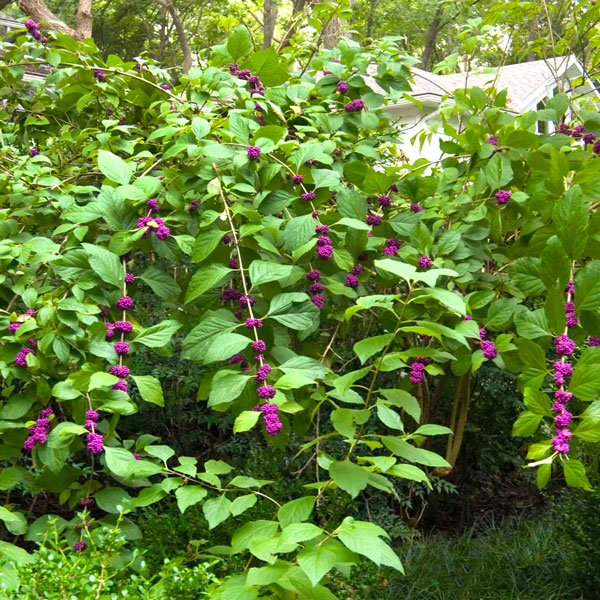
Perhaps those were a few restrictions too many. It needs sun in the morning and protection from the beat-down of the Texas heat in summer afternoons. And, all the while, it needs rich, highly organic planting soils that are constantly moist. Think of the garden you’d prepare for its partners: ferns, columbines, summer phlox, hostas, and violets – those kinds of plants. Put it in the background behind those plants and it will do fine.
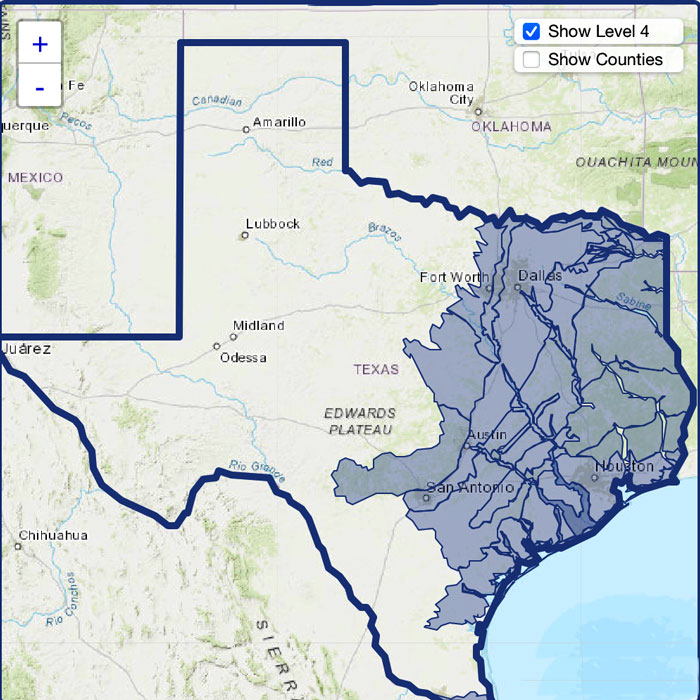
I grew up in a post oak forest in College Station. Beautyberries loved that rich humus. It was common in those Brazos County woodlands, and it’s found in the wild from there westward, to the north and to the south, as shown in the map of the Native Plant Society of Texas. I’m guessing that the Hill Country representation is in some of the pockets of moisture along streambanks and near springs, because this plant has large leaves that use lots of water. I remember it as a young gardener being my signal of time to haul out the garden hose and start watering my plants. It was always the first thing to wilt.
Its biggest selling point…
You can talk about this plant all day long, but until you tune in on its name, you’re going to miss the point entirely. This is American beautyberry, and those clusters of gloriously maroon (remember, I’m from College Station) berries are mashed together like popcorn balls every few inches along the stems. They’re… well, they’re beautiful.
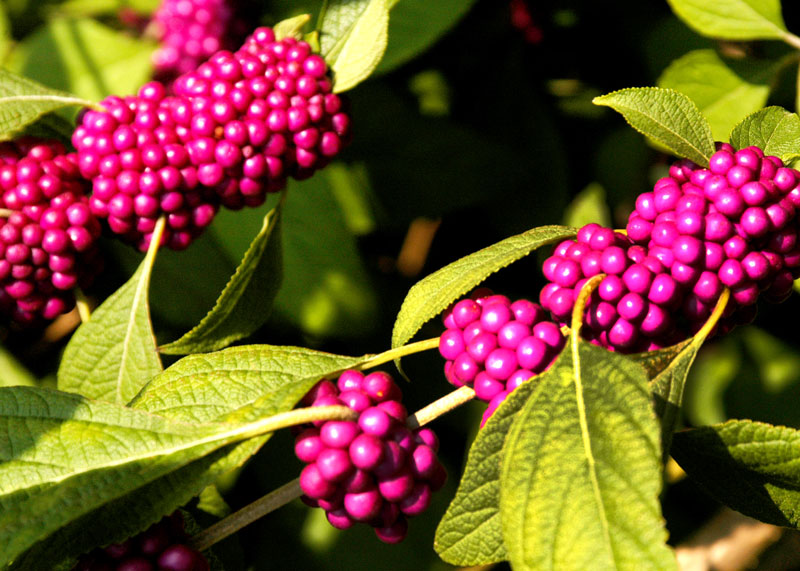
That arrangement of the berries is quite unusual. That’s another thing that makes this plant stand out. You see them coming as the green fruit get larger over the course of the summer, but then they change quickly into their maroon uniforms, and it makes you want to break out in The Spirit of Aggieland.
The birds hear their melody, too. It’s a favorite food of the avians, so your time to enjoy the sight is a little bit limited. They’ll be plucked clean within a few weeks. But then the show can start over again.
This is a plant that is sold in nurseries most commonly in spring. It grows to be 5 to 7 ft. tall and wide, although there are compact forms in the market. There’s also a silvery white type out there. You didn’t ask me, but if you did, I’d tell you it’s about the shade of dingy laundry. Go maroon or go home.
American beautyberry (Callicarpa americana) is winter hardy to Zone 7, maybe warmer parts of Zone 6, but that gosh awful spell of February 2021 killed out a lot of them in our northern landscapes. Gardener, that’s not going to happen again anytime soon.
Mark March on your calendar – next March – to start looking for this American beauty. Let’s get ‘em planted again here across Texas.