
Sweet autumns begin with this clematis
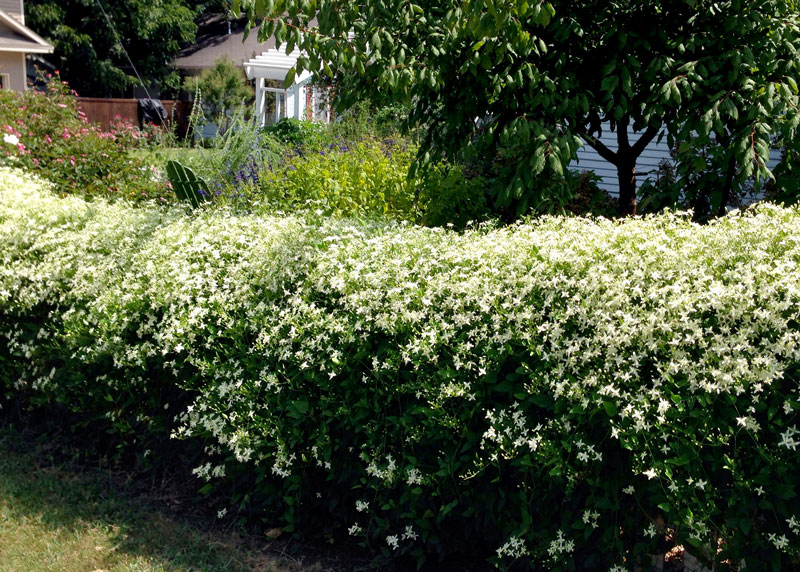
Just when you assumed you couldn’t grow clematis successfully in Texas, here’s one that’s thrilled to have a place in your landscape. You might have been seeing it over the past several weeks without knowing it by name.
Sweet autumn clematis (Clematis terniflora) is a fragrant, fall-blooming vine that has adapted well to Texas. In fact, it’s adapted perhaps too well. It’s become invasive in the great growing conditions of the East Texas Piney Woods where you’ll find it naturalized among the native trees.
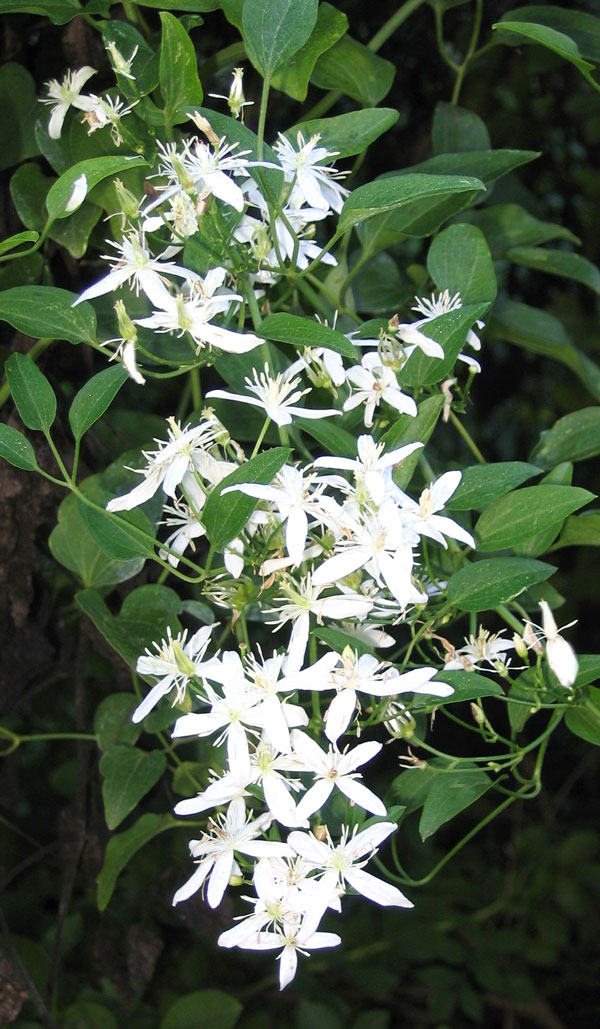
Fall is a great time to plant this vine if you happen to find it in your favorite nursery. That will give it 6 months to become established before next summer arrives. Like other clematis, this one grows best with its roots in the shade and its foliage in the sun. Morning sun and afternoon shade are ideal, as is dappled shade throughout the day.
If you’re planting more than one, set them 15 ft. center to center. Mulch them with a couple of inches of compost. Shade the roots by planting low shrubs, perennials, or groundcovers at the bases of the vines. Sweet autumn clematis is stunning alongside American beautyberry with its rich magenta fruit. It’s also a fine companion with ornamental grasses or Turk’s cap and its red blooms.
What you’ll want to know…
Common name: Sweet autumn clematis
Scientific name: Clematis terniflora, formerly C. paniculata.
Plant Family: Ranunculaceae
Native home: China, Japan
(Has escaped cultivation to naturalize in the United States.)
Hardiness Zones: USDA Zones 5a-9a, which covers most of Texas.
Mature size: 15-30 ft. tall and wide. Blooms on new year’s growth, so it’s wise to trim back dramatically over the winter, perhaps almost to the ground.
Evergreen/deciduous: Semi-evergreen in warmer parts of South Texas. May die back farther north. Leaves are glossy and leathery, dark green.
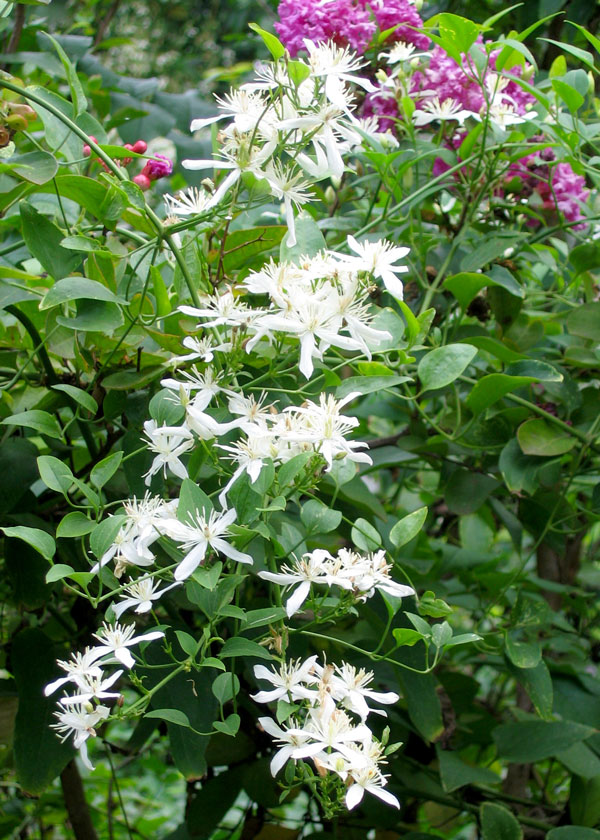
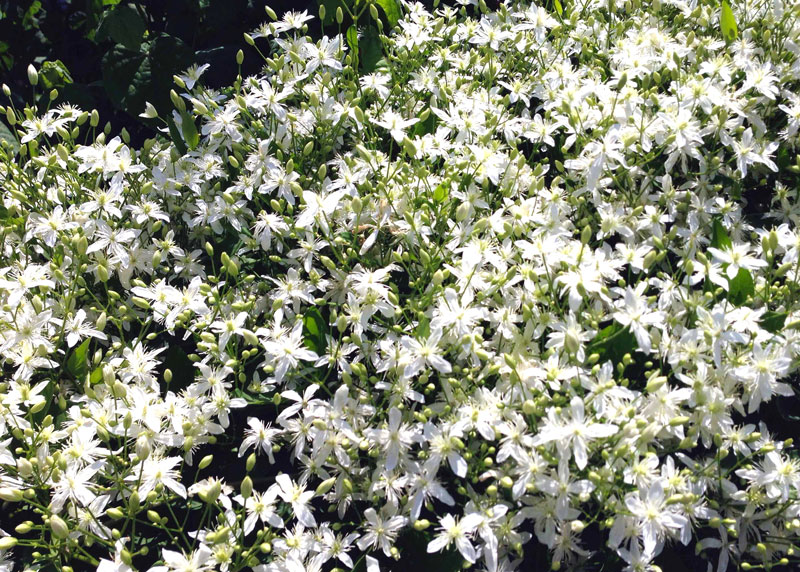
Flowers: White in late summer, early fall. Fragrant, 1-2 in. across. Blooms late August into October. Borne in panicles of many blooms that cover the plant.
Climbing habit: Twining around its support. Clambers aggressively with vigorous spring and early summer growth. Left unpruned it can quickly become a tangled mass of stems, so selective pruning is needed.
Insect or Disease Problems: None.
Propagation: Seeds or stem cuttings.
Pollinator: Attractive to bees.
Invasive: Yes, where there’s enough moisture for it to self-sow its seeds. That would include East or Southeast Texas.
Note: This plant is toxic to dogs, cats, and horses. It is poisonous, if ingested, for humans. Plant accordingly.