
Plants that bloom in the “off” season
Have you ever noticed a spring-flowering shrub, tree, or vine that was blooming its head off in September or October? It’s not uncommon in Texas. Some of the prime candidates include wisterias, Carolina jessamines (“jasmines”), pears, apples, peaches, plums, and others. And one noteworthy group I’ll save for a minute.
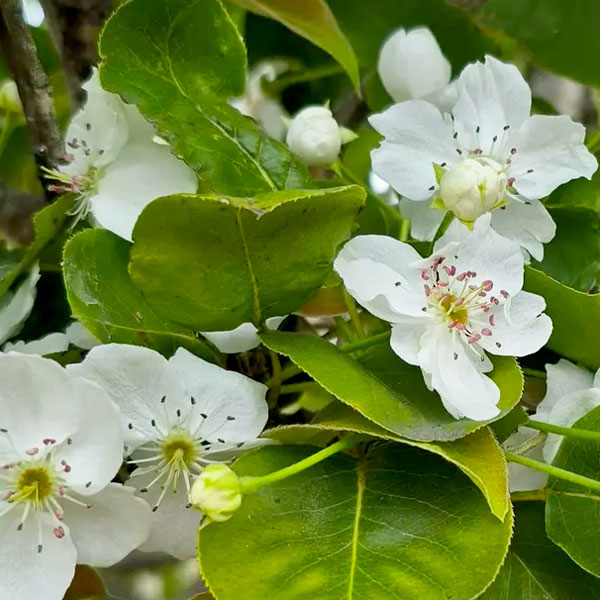
In those cases, the plants’ flower buds start forming while they’re dormant. That normally happens in winter, but they also go dormant in summer’s really hot and dry weather.
When cooler weather returns in early fall, and when we get our first fall rains, some of those flower buds break out of their dormancy and pop into full bloom. It catches us off guard when we drive by and see them happily flowering just as if it were March or early April.
Gardeners wonder (1) if the fruit trees will have time to produce ripe fruit before frost and (2) if the fall bloom will impact the spring flowering significantly. In both cases, the answer is usually “no.” The plants have just been fooled into flowering and nothing will come of it other than a couple of weeks of nice color when you least expect it.
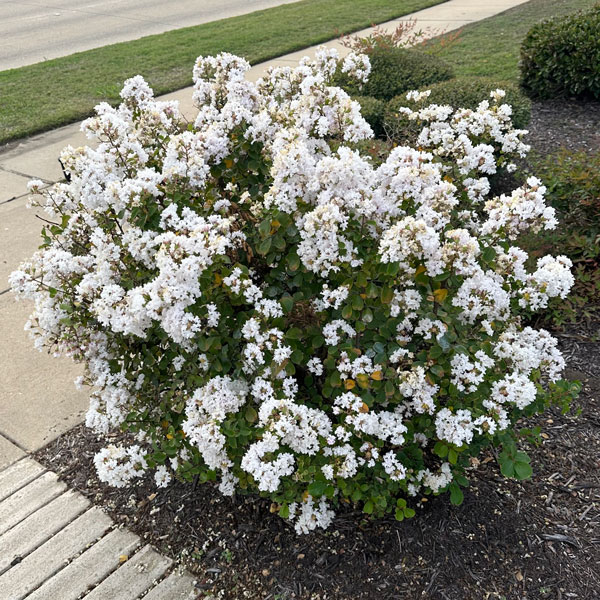
Our featured crape myrtle is just still celebrating that it gets to grow here in Texas. That dwarf variety, in front of a McDonald’s restaurant McDermott at Custer in Allen, has already bloomed a couple of times earlier this summer.
The message it brings is that when we care for crape myrtles by watering and feeding them (high-nitrogen lawn-type food) regularly spring and summer, we’ll be rewarded with several rounds of blooms beginning in May and stretching, in this case, into late October, perhaps even November.
Many home gardeners, and sadly even some cities that feature crape myrtles, don’t irrigate or feed their plants and all they see is one round of blooms in early summer. What you see in this little white plant is what they’re missing.
And then the ultimate example…
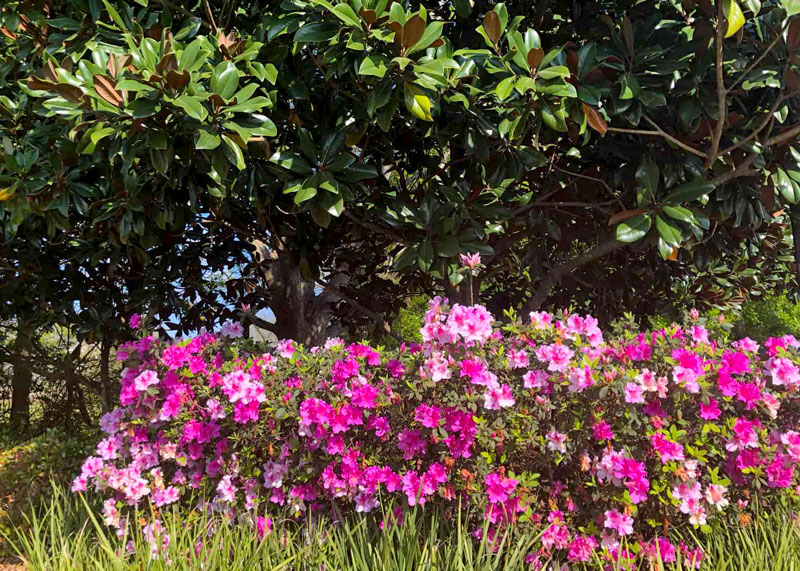
You’ve seen them. You probably know them. And you certainly love them. ‘Encore’ azaleas.
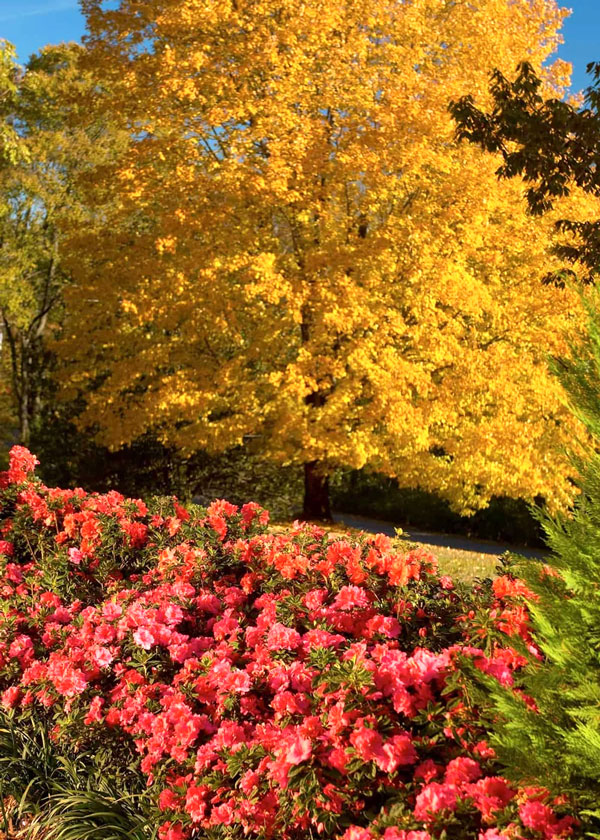
As you might guess, they’ve been bred and selected for their proven habit of producing repeat blooms spring, summer, and fall. Hence the name ‘Encore,’ of course. They have revolutionized the azalea market across the South. And there are other reblooming series in the marketplace as well.
For this story, however, I want to tell you a short version of their developer’s path toward bringing these great plants to southern gardeners.
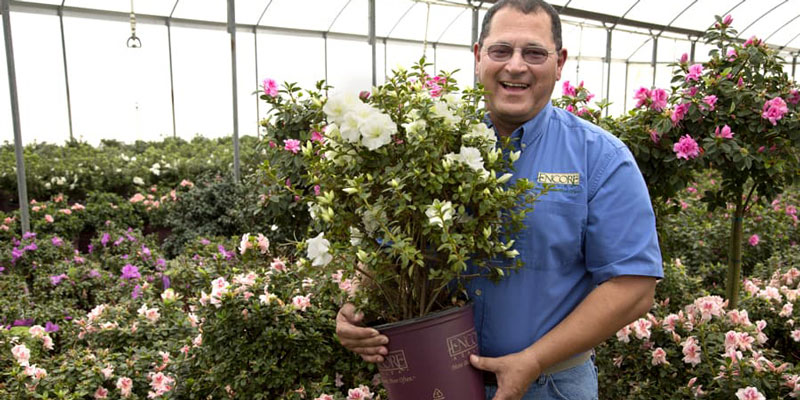
Buddy Lee was a registered nurse in Louisiana where azaleas abound. A plant enthusiast, he worked night shifts so he could support his family – oh, and spend days nurturing his plant breeding passion.
Azaleas were at the top of his list, and the odd habit of one species from Taiwan, Rhododendron oldhamii, was that it bloomed in mid-July.
Buddy worked with thousands of seedlings during the 1980s and early 90s to find traditional spring types that would pick up that trait of summertime blooms. In 1995 the first round of ‘Encore’ azaleas in a nice assortment of colors was introduced into the horticultural trade, and we were off to the races.
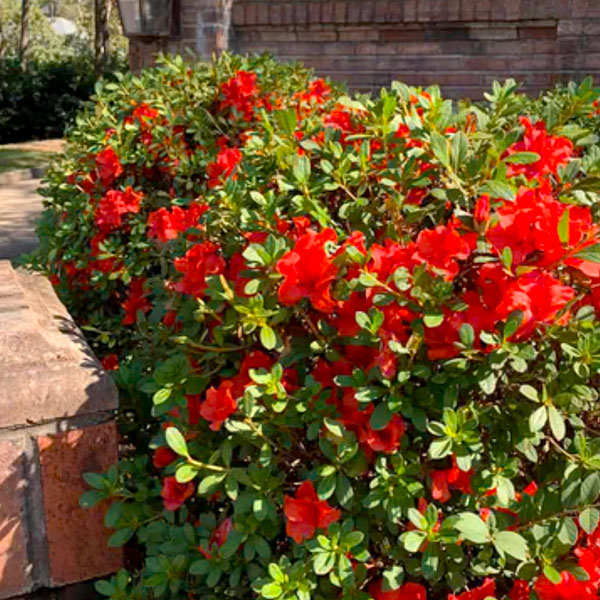
Buddy continued to work with his azaleas, not only to introduce more colors, but also to ensure that they would bloom all three seasons, and that the plants would be tough enough to withstand the rigors of summer heat and drought and winter freezes in the South.
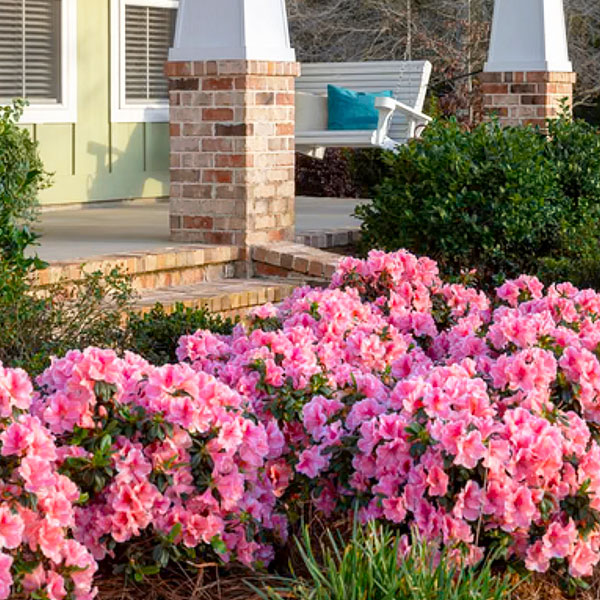
There are now 35 varieties of ‘Encore’ azaleas in the market. Buddy has been recognized for his outstanding work by all manners of industry organizations and by millions of gardeners worldwide.
One can only imagine the joy he receives each time he sees his plants decorating a magnificent southern landscape.
Everything you might want to know about ‘Encore’ azaleas is available at their website.
(All photo credits for this portion of the story go to that website.)