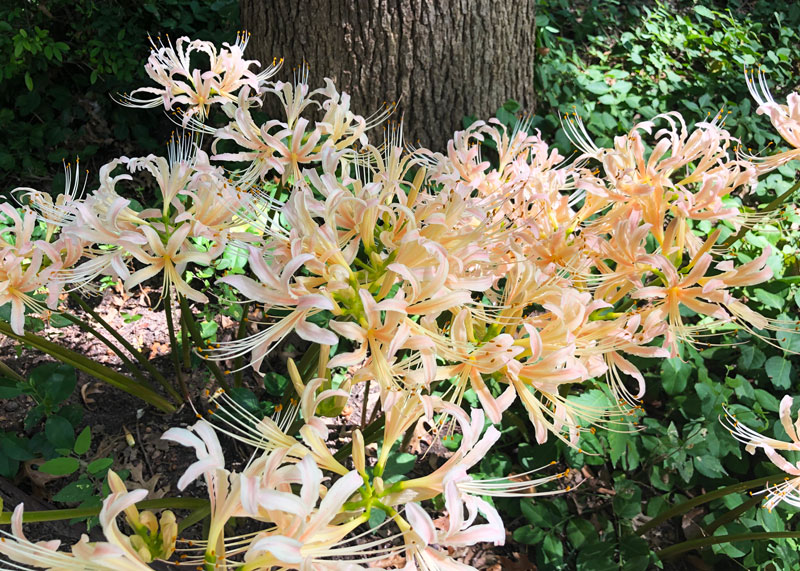
They finally bloomed!
I never know whether my spider lilies are going to bloom or be bashful. So, when they hesitated this fall, I figured they were a “no-go.” But all of a sudden, right after last week’s e-gardens hit your e-mailbox, here they came as if to shout, “Hey! Hold the presses.”
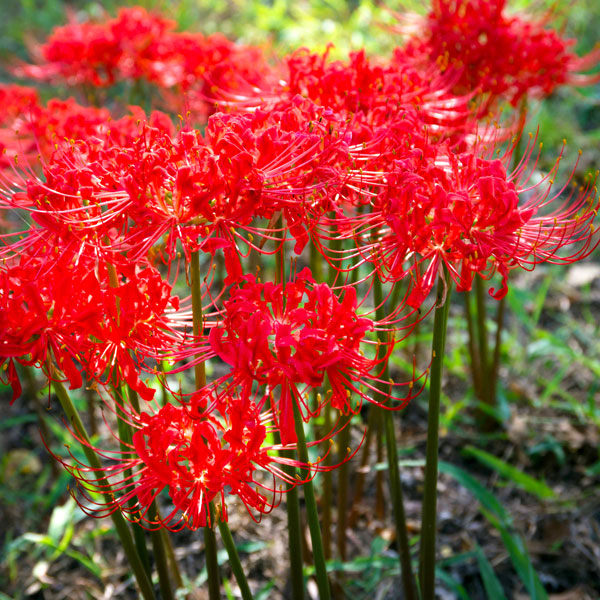
They may already have finished blooming in your area, and nurseries are certainly sold out of them by now, but we can plan ahead for them for next year. Let me tell you their story.
What you’ll want to know…
Common names (and there are many): spider lily (spidery appearance), hurricane lily (season in which they bloom), naked lily (no leaves when they flower), magic lily (appear out of nowhere), surprise lily (“Boo” and they’re there), Equinox flower (appear about the time of the Autumnal Equinox).
Scientific name: Lycoris radiata
Plant Family: Amaryllidaceae (Amaryllis)
Native home: China, Japan, Korea, Nepal
Hardiness Zones: (6-10) Almost all of Texas.
Blooming time: Late August through mid-October.
Flower colors: Brilliant red
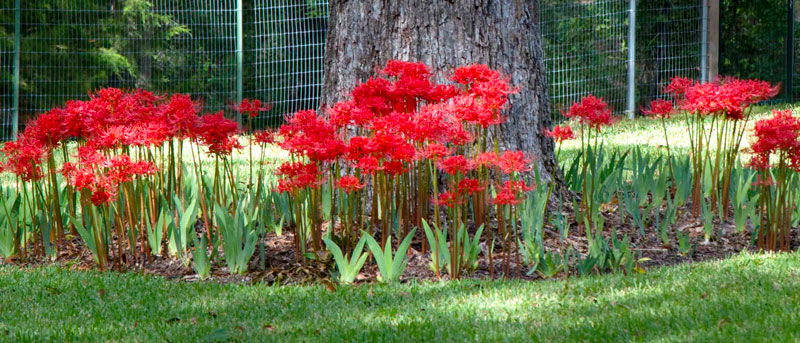
Plant height while blooming: 15-18 in., leaves 10-15 in.
Bulb Spacing: 6-8 in. in. apart in drifts where they can remain undisturbed for many years. This is one bulb that does not have to be dug and divided frequently.
How grown: Bulbs planted in late spring or summer.
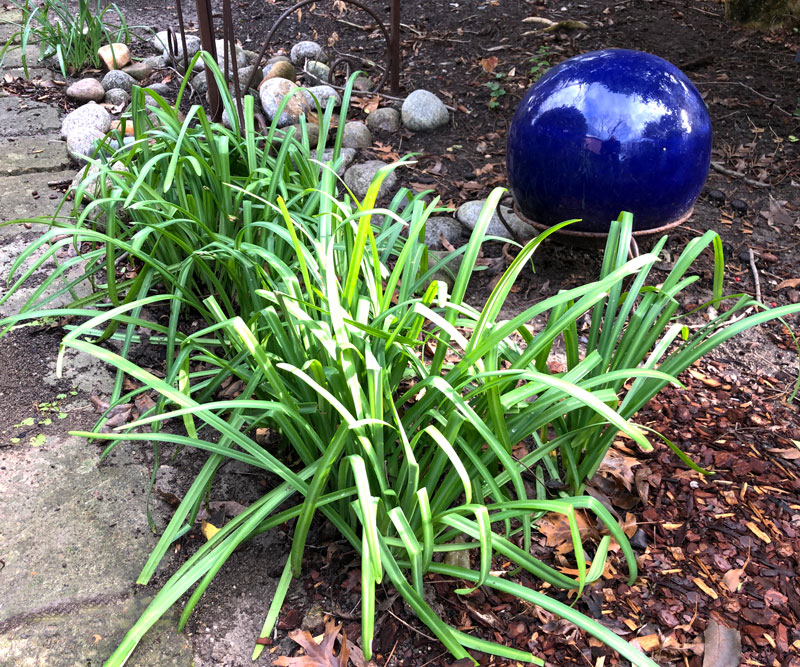
Foliage: Emerges soon after blooms fade. Leaves persist until late spring. It’s important that you leave them in place until they turn yellow, then brown.
Sun/Shade: Afternoon shade in summer. Otherwise, full sun.
Soil type: Highly organic loam or sandy clay loam.
Drainage: Well-draining, but consistently moist, especially while leaves are growing actively. Tolerant of drying soils in summer.
Soil pH: 6.0-8.0 (not picky).
Pollinator: Attracts hummingbirds and butterflies.
Pest problems: None.