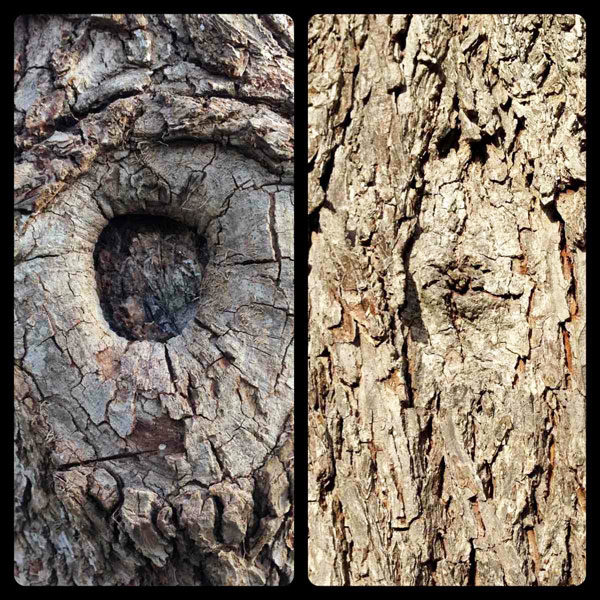
Tiny mistake. Major calamity.
Yes! I’ve covered this topic before here. But my fellow Texans still make the same mistakes, so I’ll keep preaching my sermon until we all do it right.
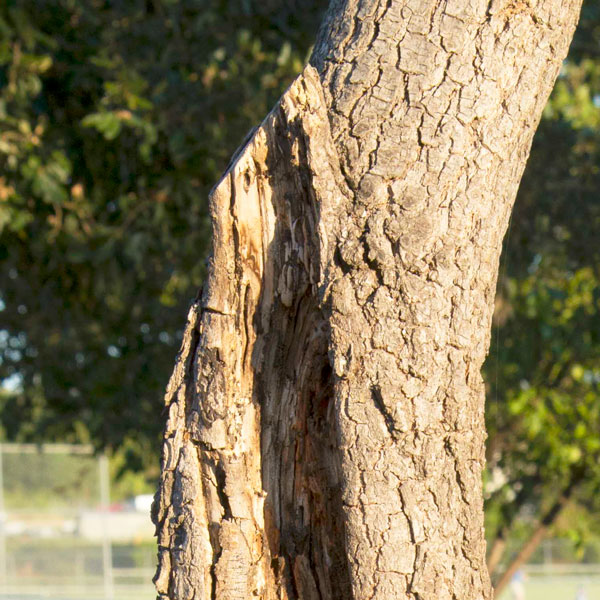
Anytime you cut off a twig or branch, you want to make the cut against the branch collar (the “swell” of the branch as it joins the next branch or the trunk). In other words, you don’t want to leave a stub over which the tree won’t be able to heal.
That applies to any branch that’s more than ¼-in. in diameter. And it applies if you’re pruning or if a storm has caused the branch to break off. If there is a stub long enough that the roll of new bark can’t heal across the wound, decay can start to develop the very first year. It will move down the twig and soon into the trunk. It will generally move down the trunk, although it can also spread upward.
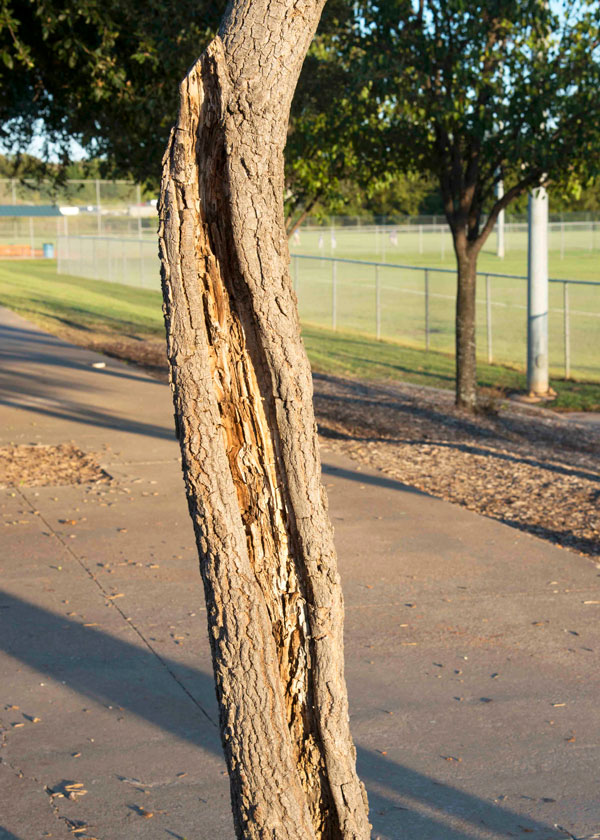
Worst of all, this can happen beneath the bark and out of sight so that you’re not even aware that it’s going on. The first evidence often is a dark, water-soaked area that’s visible through the bark. When you press on the impacted bark, you’ll be able to feel the soft, spongy deteriorated tissues.
The little tree in my photos is racing for its life, but it’s very unlikely that it will survive. Even if the new bark does form across the decay the trunk will be severely weakened. It will be hollow and waiting for just the right windstorm to snap it into pieces. It’s time now to replace it so the next tree can get off to a better start.