
Why don’t my plants behave the same?
For 50 years I’ve made my living answering people’s plant questions. One of the most difficult is why two different plants of the same type, bought at the same nursery, and planted the same day aren’t growing the same way. One is thriving. The other is diving. “What gives?” says the reader. Or the caller. Or the person standing there looking me squarely in the eyes.
Unfortunately, it’s not as simple as that. Plants are like siblings. They may all be out of the same nursery, but their responses to what’s going on around them can be totally different.
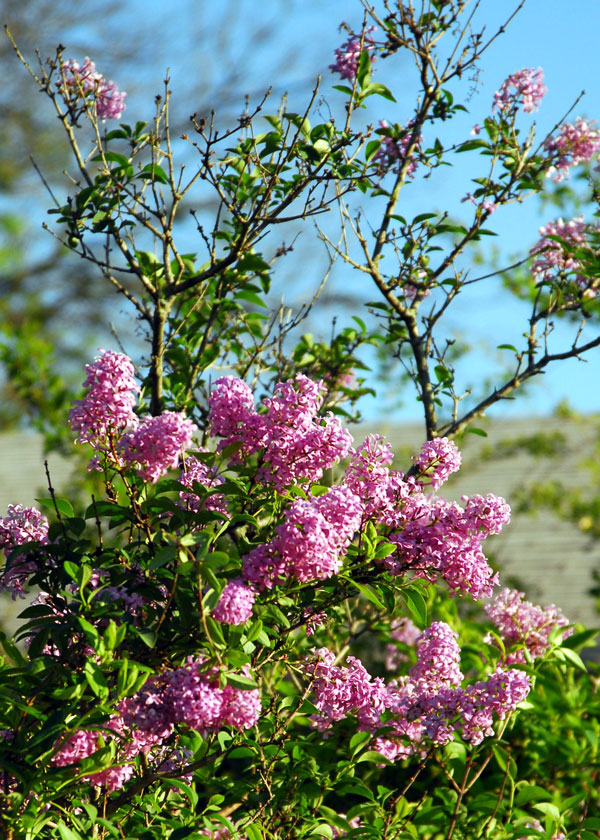
• That lilac I showed you, for instance, found itself growing in McKinney. That’s about 35 miles north of Dallas, or, in lilac terms, about 300 miles south of where it would rather be growing. Temperatures are 10 or 15 degrees warmer than it would prefer all 12 months out of the year.
People from Texas boast about getting their lilacs to bloom – how delicious the fragrance is. But people from the North, the Northwest, and the Midwest know that those plants ought to be 8 or 10 ft. tall and the flower heads should be as big as volleyballs. It’s all due to our climate. So, there’s one reason. Peonies and rhubarb fall into the same category. We’re just too warm.
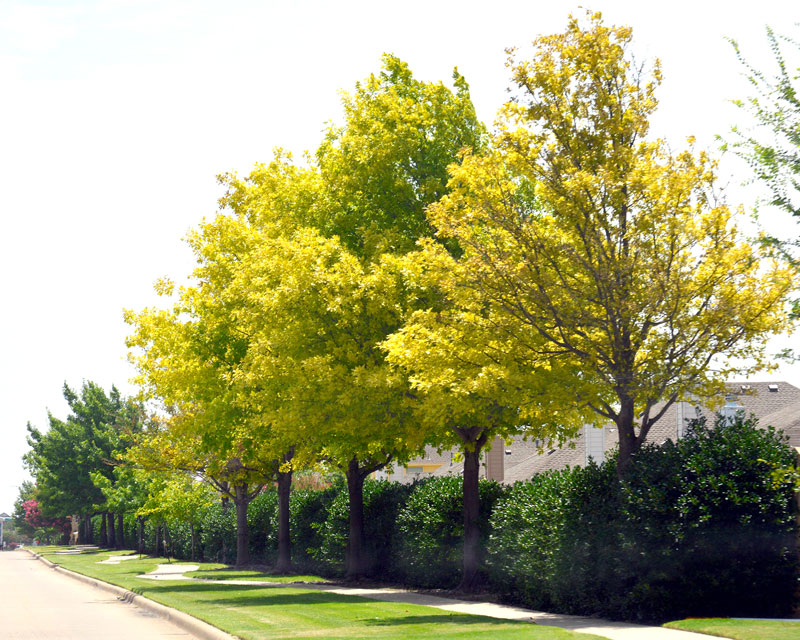
• Red oaks. Some people plant what they’re told is just a “red oak.” What they don’t realize is that they’re gotten some other similar species. Pin oaks (Quercus palustris) look very similar to Shumard red oaks (Q. shumardii), yet they’re light years apart in their adaptability to Texas soils. Pin oaks need East Texas’ acidic sandy loam soils. Without them they’ll eventually (after 8 or 10 years) develop iron deficiency (yellowed leaves with dark green veins most prominently displayed on the newest growth first).
Pin oaks have almost no chance of surviving in alkaline soils for more than 10 years because of iron deficiency, and it’s impractical – make that impossible – to add enough iron to make up the difference. Shumard red oaks, by comparison, are very happy with alkaline soils. They gear up and start growing almost immediately after they’re planted. That is another reason that seemingly identical plants can display vastly different responses.
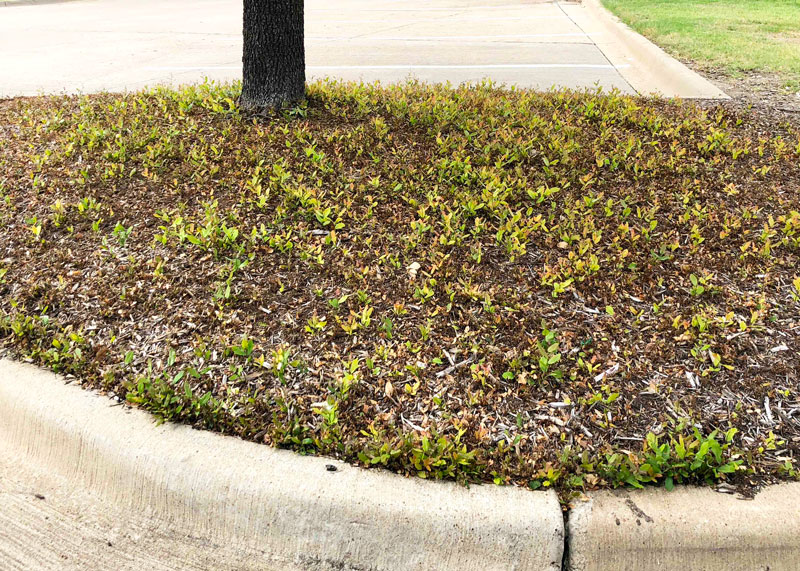
• Live oaks are an interesting lot. About 10 percent of our live oaks in landscapes (my estimate, not an exact figure) have the tendency to push up annoying root sprouts – new shoots of growth from their below-ground roots. One or two now and then wouldn’t be too bad, but we’re generally talking hundreds. When they come up in groundcover beds, they’re especially bothersome. You can’t use weedkillers because they’re tethered to the mother tree, and it’s hard to remove them mechanically with a shovel because you do so much damage to the groundcover.
The best way to deal with this problem is to bypass it from the outset. This is only a long-held educated hunch on my part, but it’s been my observation over many decades of growing and loving live oaks that the ones that send up sprouts the worst are usually the ones that have strongly weeping branches and small leaves. Live oaks with larger leaves and outward branching seem to me to be less likely to send up the sprouts.
If you have a tree that’s doing this now, you probably don’t want to have it removed. So, what can you do? Sad as it sounds, use a sharpshooter spade to remove them manually. Do it when the ground is wet and the weather is cool. That will make for easier digging and less stress on the digger.