
Q&A – Ask Neil: January 29, 2026
(Please read these instructions carefully.)
Before you post your question, please look at recent issues to see if someone else has already asked it. You might find your answer there.
HOW TO SUBMIT YOUR QUESTION…
• Click here to post your question. (Please post your question only one time.)
• Please use this link only for posting questions – not for standard e-mails.
• High-resolution photos (1-2MB – not thumbnails) attached with your question help Neil give you the best possible answer. Please check your photo for clarity and exposure. If you do not see “All images clickable for larger views,” your images’ resolution was not sufficient for enlargement. That might also have made it difficult for Neil to give you an accurate answer.
• Neil chooses questions of greatest reader interest. Plant IDs rarely fit that description.
• Neil requires your first name or initials, also your city or county for an accurate answer. (Texas is a very large state.)
• One question per reader per week, please.
• Watch for Neil’s reply in the next issue of e-gardens.
Note: If you have submitted your question and did not see the pop-up window for attaching your photo, please click here.
QUESTION 1
SHOULD I RE-TRAIN THIS POMEGRANATE AS A TREE?
Question: This pomegranate used to be a tree, but the winter of ’21 knocked it back to bush form. It survived, but the winter of ’24 knocked it back again. Should I return it to tree form, or do you recommend leaving it as a bush? Dennis L., Blooming Grove.
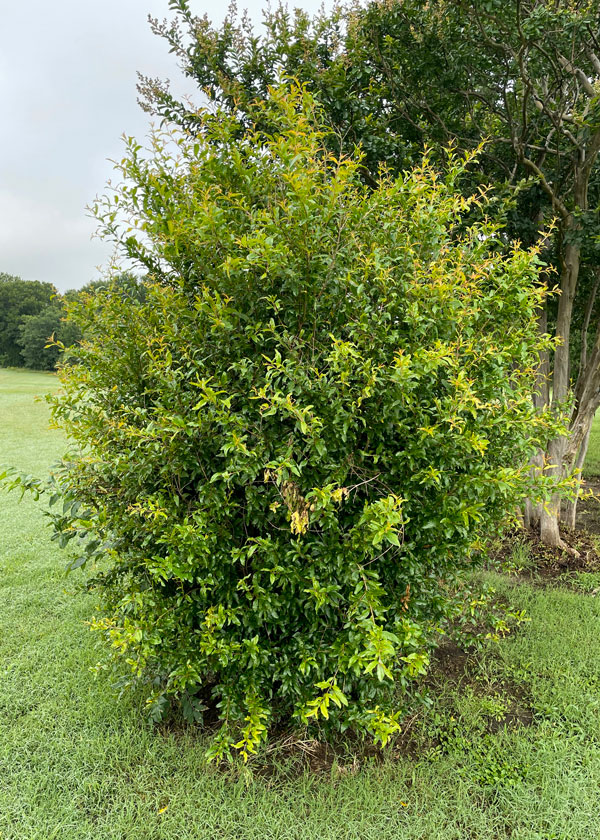
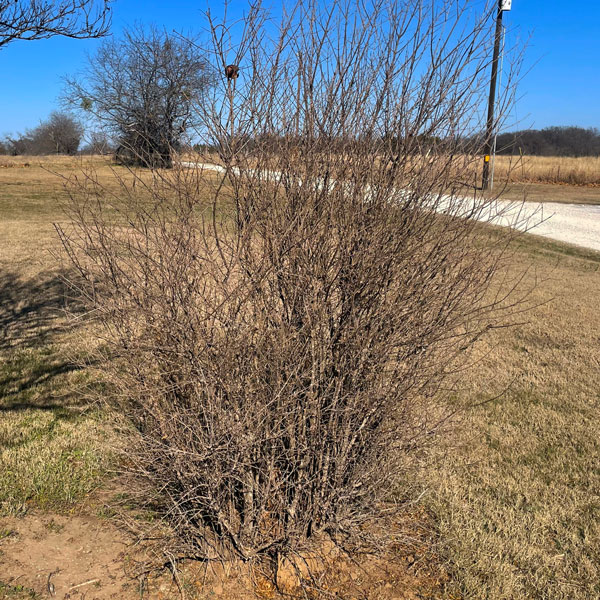
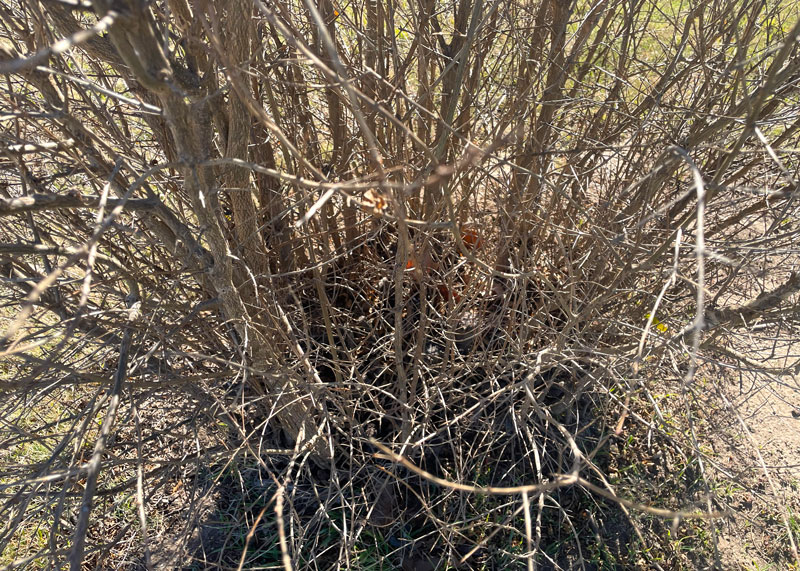
Answer: Your experience has been typical of pomegranates across big areas of the northern half of Texas following those cold spells, also earlier cold winters of 1989 and others. It may have happened again last weekend with the intense cold, although you’ll have to wait a few weeks to find out. The best way to treat regrowth stems is to thin them out to the strongest 8-10 and let them develop as trunks. Remove all the rest of the “weedy” growth just for a better appearance. As the plant gets older and more mature it should develop a few degrees worth of improved winter durability. Unfortunately, you’re not in a prime area where pomegranates thrive. This behavior is going to happen every once in a while.
QUESTION 2
WHEN SHOULD I TRANSPLANT MY SPIDER LILIES?
Question: I need to transplant a dozen spider lilies to get more sun. When should I do that? Liz R., Hurst.
Answer: In late spring after the leaves have turned yellow and died back to the ground. Spider lilies do, however, tolerate shade fairly well. They do most of their growing and food storage while the trees are bare (during the winter), so shade isn’t as much of a concern. Remember that they don’t bloom heavily every year. They seem to have cycles, blooming well one year and then less another. If you’re assuming that a poor blooming year might have been due to shade, it might have been, but it also could just have been one of those “off” cycles.
QUESTION 3
WHEN WOULD IT BE TOO LATE TO PRUNE NELLIE R. STEVENS HOLLIES?
Question: We have several Nellie R. Stevens hollies in our landscape. They are covered with berries. They draw the migrating cedar waxwings each spring. What is the latest we can shape the hollies so we can leave the berries for the birds as long as possible? Nancy S., Fort Worth.
Answer: Hollies make one big flush of growth coming out of the winter. You’ll start to see their buds swell and pop around the time of the last killing freeze in your part of Texas (mid-March in Tarrant County). Don’t go too many weeks into that growth or you’ll set them back several months. I try to do most of my holly trimming 2-3 weeks before that time. Ideally, that would be mid- to late February. The waxwings may not have migrated through by then, but the plants’ vigor needs to rank first.
QUESTION 4
I’D LIKE INFORMATION ABOUT YOUR DECK.
Question: In last week’s edition of e-gardens you showed a view across your back deck. Do you mind telling me who built your deck? My old redwood deck is 30 years old and needs to be replaced. Yours looks like a composite material. Jay G., Bedford.
Answer: Future Outdoors, formerly Future Fence and Deck (https://www.future-outdoors.com) built our deck in 2017, and yes, it is a manmade material. Rick Poland has been a friend for more than 20 years. I’ve watched his business grow and develop and I’m very proud to recommend him for any fence or deck construction in the Metroplex. Our deck looks as good today as the day it was new. It follows two redwood decks that each lasted only 12 or 15 years due to carpenter bees. We couldn’t be happier with this one!
QUESTION 5
WILL OAKLAND HOLLY DAMAGE THE POOL?
Question: We planted our Oakland holly several years ago from a container. It obviously has grown well. It’s 4-5 ft. from the concrete wall of the pool. Will its roots damage the pool? Randy R., Tyler.
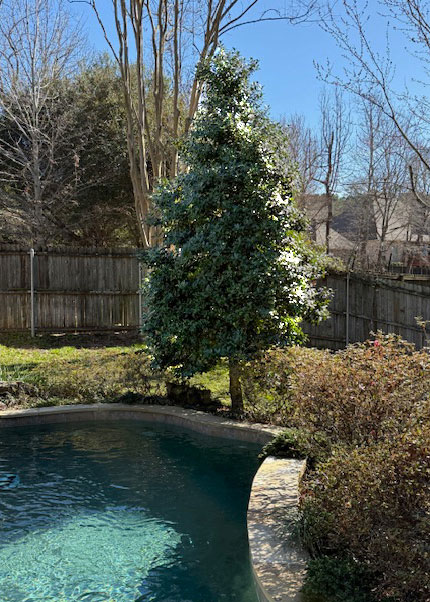
Answer: You East Texas folks do so well in growing your plants. Well done! You should have no problems at all at that distance. I feared, at first glance of your photo, that it was much closer. If you’re really worried you could dig a trench between the plant and the wall and install a root barrier, but a holly’s roots won’t get that large at that distance.
QUESTION 6
AM I DOING THE RIGHT THINGS FOR MY COMPOST?
Question: I’m starting my first compost pile. These are shredded leaves and grass clippings from earlier this month. I’m keeping it all moist and turning it every two weeks. I added a commercial compost starter. Are these good? Steve R., Arlington.
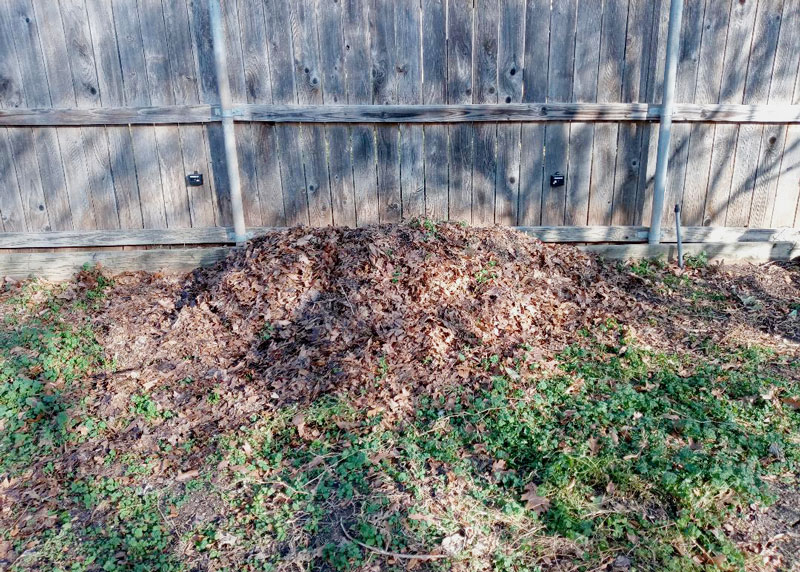
Answer: Move your compost away from your wooden fence. It will cause it to decay very rapidly. It would be best if you could create a real enclosure using concrete blocks in a hidden spot in your landscape. It wouldn’t have to be huge – just 4×4 ft. would be equivalent to this, but it would allow you more depth. It would also make turning the pile a lot easier.
As for the “compost starter,” rich topsoil out of a thriving garden would have all the microorganisms you would need. Add in a source of nitrogen, from either organic or inorganic fertilizer to energize the microbes, continue keeping it aerated and moist, and cover it with black polyethylene to soak up the winter’s rays and you’ll have compost that’s ready to use within 3-6 months.