
Champions of the Shade Garden – by Carolyn Skei
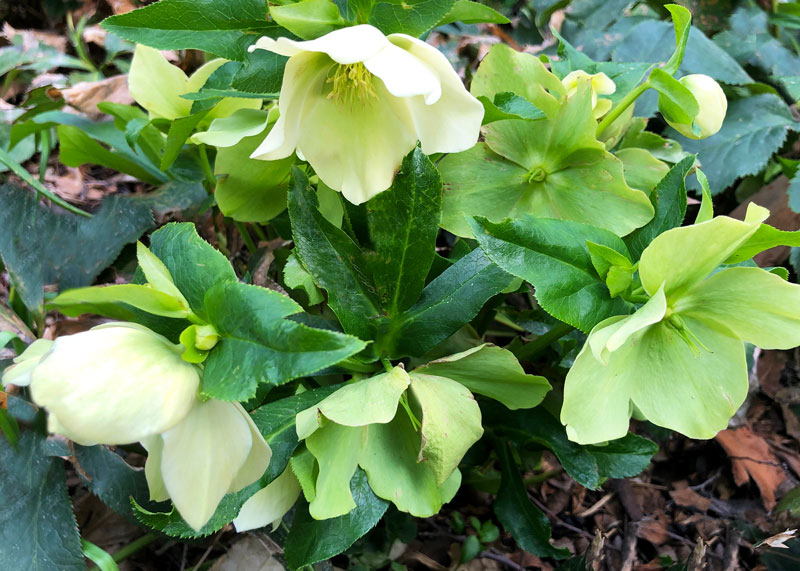
If you had asked me 20-plus years ago what a hellebore is, I couldn’t have told you. But now that I’ve gardened under lovely mature trees here in North Texas for two decades, I can describe hellebores in the blink of an eye. They are fabulously long-blooming, mounding evergreen plants — champion perennials in the shade garden.
I started years ago with just a couple of these “Lenten roses” (Helleborus orientalis), which are not related to roses, but do have copious rose-like blossoms. Now I have them planted in both front and back, in shade and partial shade. They are delights in every season, but especially so when the plants are loaded with countless blooms — flowers that hang like bells almost as large as teacups.
Imagine a plant that starts blooming well before the daffodils (in February here in Collin County) — when most trees are leafless and frost still threatens — and then keeps on blooming in the shade of those trees until summer temperatures begin to soar. Who could dream of mounds of beautiful, dark-green palmate leaves underpinning the garden all year ‘round — emerging through snow or ice in late winter, looking almost tropical through the summer, and then bursting with vigor as autumn leaves scatter and another winter approaches?
My mature hellebore mounds are two or three feet in diameter, and a foot or two in height. The plants are unbothered by insects or disease, they don’t mind alkaline soil, and they are truly Texas-tough. When I plant new ones, I am attentive to their water needs for the first couple years, especially in the summer heat. But after that, the water requirements are modest. Hellebores don’t want wet feet — another reason they can be happy under trees, where there is competition for moisture.
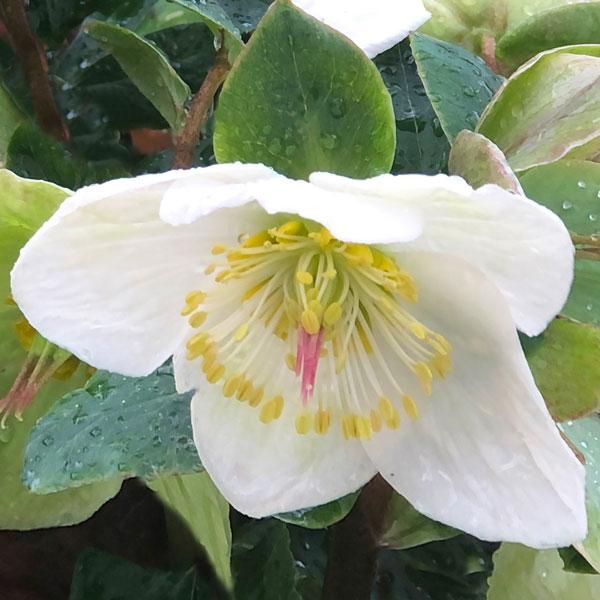
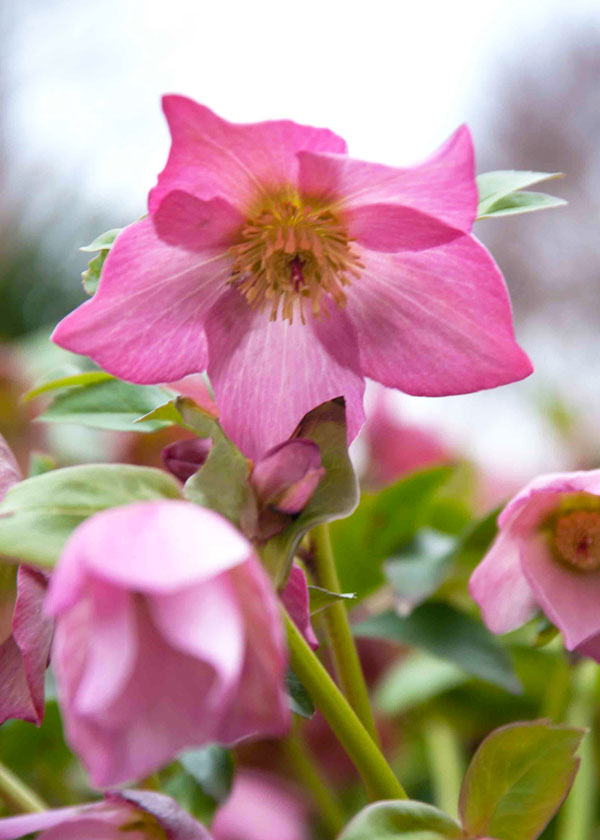
Hellebore flowers last an inordinately long time — with the five petals of each blossom changing, as the days go by, from the original color (white, cream, pink, orchid, etc.) to green. That is because the five “petals” are actually maturing sepals, which stay in place for weeks. The true petals (“nectaries”) are small and tucked close to the center of the blossom beside the anthers and stamen.
Hellebores fit gracefully into the landscape. Some of mine help fill space at the bases of leggy deciduous shrubs and small trees like my dwarf almond. They coexist beautifully with companion plants like wild violets, setcreasea, artemisia, irises and spring bulbs. They look great with taller plants like cast iron plant and oakleaf hydrangea planted behind them.
The Chicago Botanic Garden staff writes, “Gardening in shade can be challenging for gardeners who want to grow great plants. That’s where hellebores come to the rescue. They grow in part- to full-shade areas and prefer moist, well-drained soil with plenty of organic matter. Once they’re established, they are tough plants that withstand drought and neglect.” Elsewhere, the writers offer this advice: “If you plant them under deciduous trees, the leaves will receive full sun in winter, but will be protected in summer by the overhead shade.”
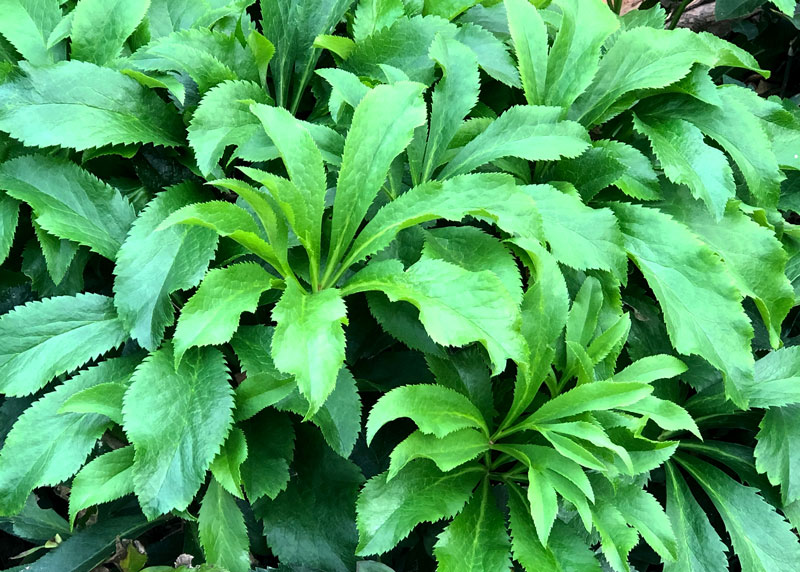
Bloggers at The Spruce (thespruce.com) write, “[Hellebore] foliage remains attractive into the summer, so they are suitable for splashy, mass plantings. They also complement foundation plantings and are ideal for woodland gardens.”
Just a word of warning about hellebores: Their degree of toxicity is not particularly clear, but it’s more than likely they could be harmful to animals or young children inclined to taste them. Hellebore poisoning is rare, but history and folklore offer a sampling of tales about armies using hellebores to poison an enemy’s water supply, witches using hellebores to become invisible, or medieval parents using hellebores to cure their children’s worms. As with many plants that have complex uses in medicine, do not self-prescribe.
Carolyn Skei is Collin County Master Gardener emerita. Beyond that, she was editor of Neil Sperry’s Lone Star Gardening, Neil Sperry’s Gardens Magazine, and this publication e-gardens. Even beyond that, Carolyn is our friend.
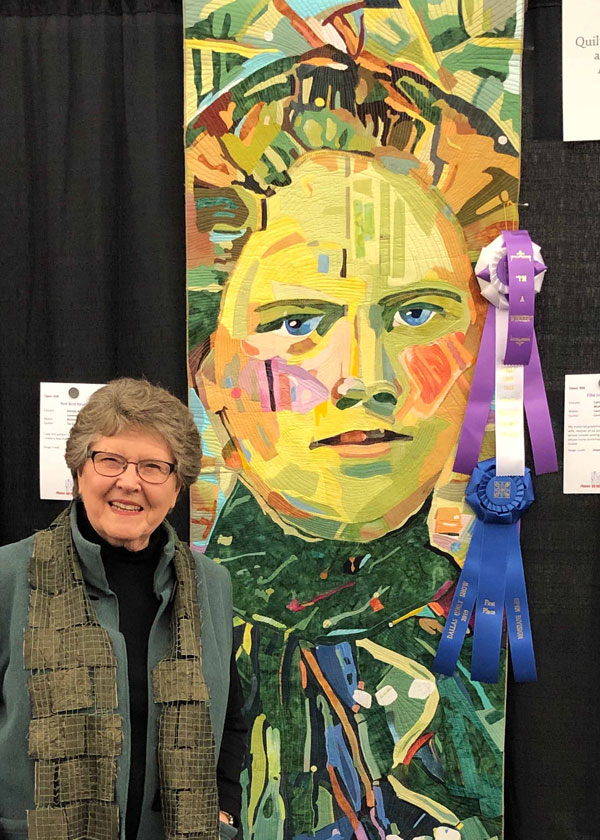
• And, as if all those plaudits were not enough, Carolyn is also a nationally recognized quilter. Here’s one she created from an old photo of her Texas grandmother. You can tell by the ribbons it was a hit. So is Carolyn! (Click to see the detail more closely.)